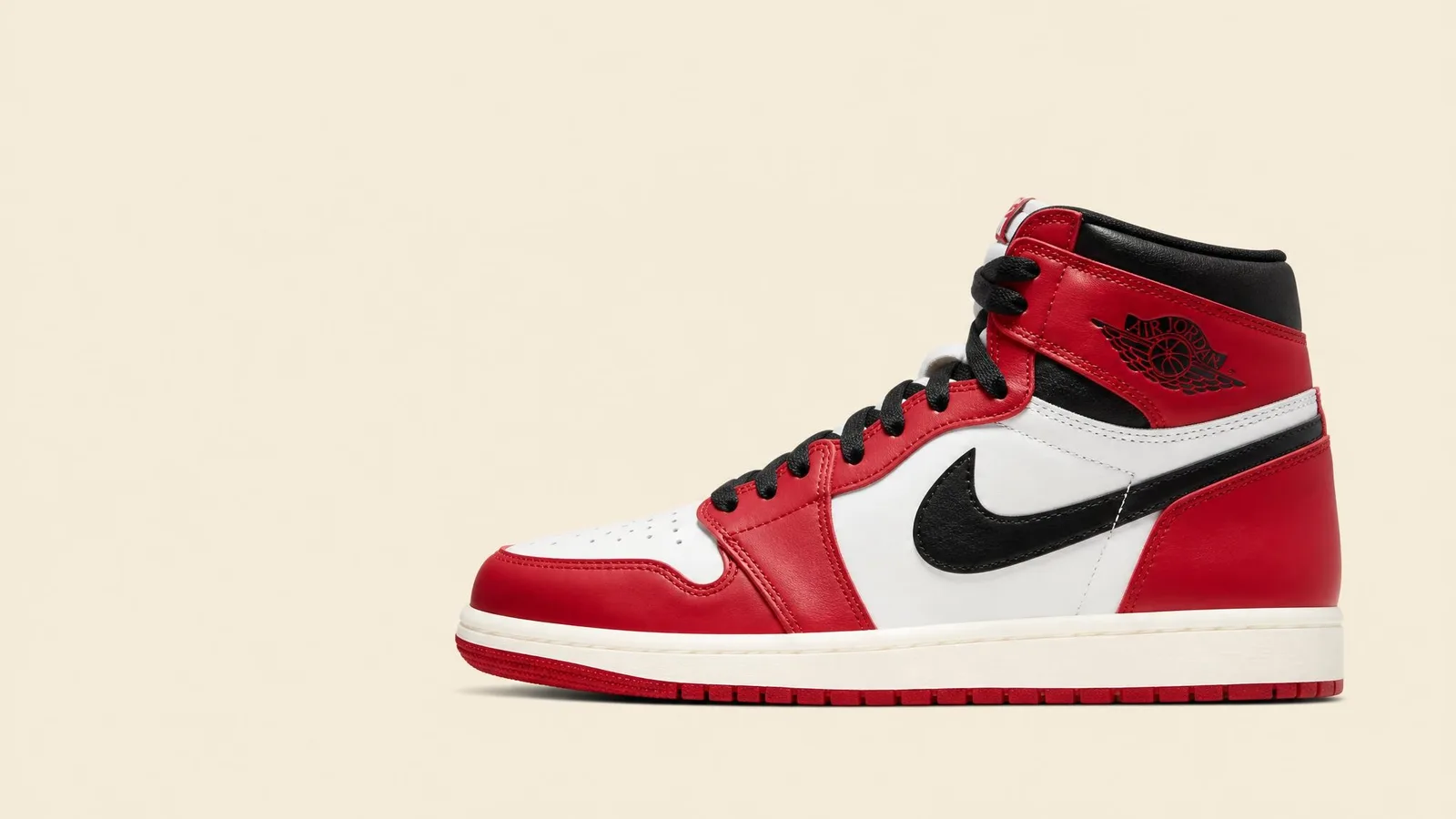
The year of the release is the first thing that sets the price of a Jordan 1 Chicago. The name alone tells you nothing useful.
"Jordan 1 Chicago" is a nickname shared by at least 5 distinct releases spanning 1985 to 2022, each carrying its own style code and its own resale market. Platform observations captured on November 3, 2026 showed asks from around $152 for the Lost and Found to $842 and above for the 2015 Retro High OG. The 1985 original sits in a different category entirely.
One shoe that now fills search results alongside the High is the Air Jordan 1 Low OG Chicago (style HQ6998-600, released November 15, 2025). That is a low-top silhouette, a different product from every release covered here.
If you want to know where the Chicago nickname comes from, that is its own story. What matters right now is confirming which release you hold. Check the style code on your tongue label, then find your release in the sections below.
Which Release Do You Have? Check the Style Code First
The style code on the tongue label is the fastest way to confirm which Chicago release you own. Each one carries a unique code:
- 4280: 1985 original
- 130207-101: 1994 retro
- 555088-101: 2015 Retro High OG
- DZ5485-612: 2022 Lost and Found
The 2013 retro style code was not captured in the data used for this article. You can identify the 2013 release by its Jumpman logos on the tongue and heel.
Tongue branding is your second quick check. Nike Air on the tongue means the pair is the 1985 original, the 1994 retro, the 2015 Retro High OG, or the 2022 Lost and Found, which restored Nike Air branding. A Jumpman logo on the tongue narrows it to the 2013 retro. Both marks exist across the releases, so tongue branding narrows the field. The style code confirms it.
If your search results show a low-top pair labelled "Chicago," that is the Air Jordan 1 Low OG Chicago (HQ6998-600), a different silhouette not covered here.
Price by Release: What Platforms Showed on November 3, 2026
For a live rack value estimate on your specific pair, search it in CYKI and see where it sits within the CYKI 100 Jordan cohorts.
Every figure below is a platform snapshot from November 3, 2026. Prices will have moved since. This is not investment advice. No price observation here should be treated as a guaranteed return.
1985 original (style 4280, retail $65 on September 16, 1985)
No dated sales range was captured for this pair. The only figure observed was a single ask of $25,059 on Flight Club's Chicago landing page, with no size shown and no confirmed sale behind it. That number is one seller's ask, nothing more.
The 1985 pair is a thin sales data object. It trades by auction, private sale, and individual asks rather than a steady marketplace feed. Valuing it with the same confidence as a shoe with thousands of recent transactions is not possible.
1994 retro (style 130207-101)
eBay showed listings from $379 across 25-plus results on November 3, 2026. The 1994 retro stayed close to the original, with minor tweaks to the ankle shape and the toe-box perforations. Most pairs are now over 30 years old. Condition dominates the spread in that listing range.
2013 retro (no style code captured)
The 2013 release moved Jumpman logos onto the tongue and heel, replacing Nike Air branding. No price observation was captured for this release.
2015 Retro High OG (style 555088-101, retail $160 on May 30, 2015)
Stadium Goods showed this release at $842 and above on November 3, 2026. A single size-13 listing appeared at $2,110, illustrating why shoe sizes affect resale value. Sizes were not readable on other platforms. The 2015 pair sits in a structurally different price tier from the Lost and Found.
2022 Lost and Found (style DZ5485-612, retail $180 for adults, released November 19, 2022)
Platforms showed asks from about $152 to $304 on November 3, 2026. Flight Club's Chicago page showed $152. The Flight Club product page showed $172. StockX showed a separate listing at $200 ($214 with fees). A StockX bid showed $304 with no size shown. Grade-school sizing showed at $100 on Flight Club.
The spread exists because different platforms reflect different seller behaviour and fee structures, not because of size differences the data did not confirm.
Condition and Size: The Two Levers on Every Release
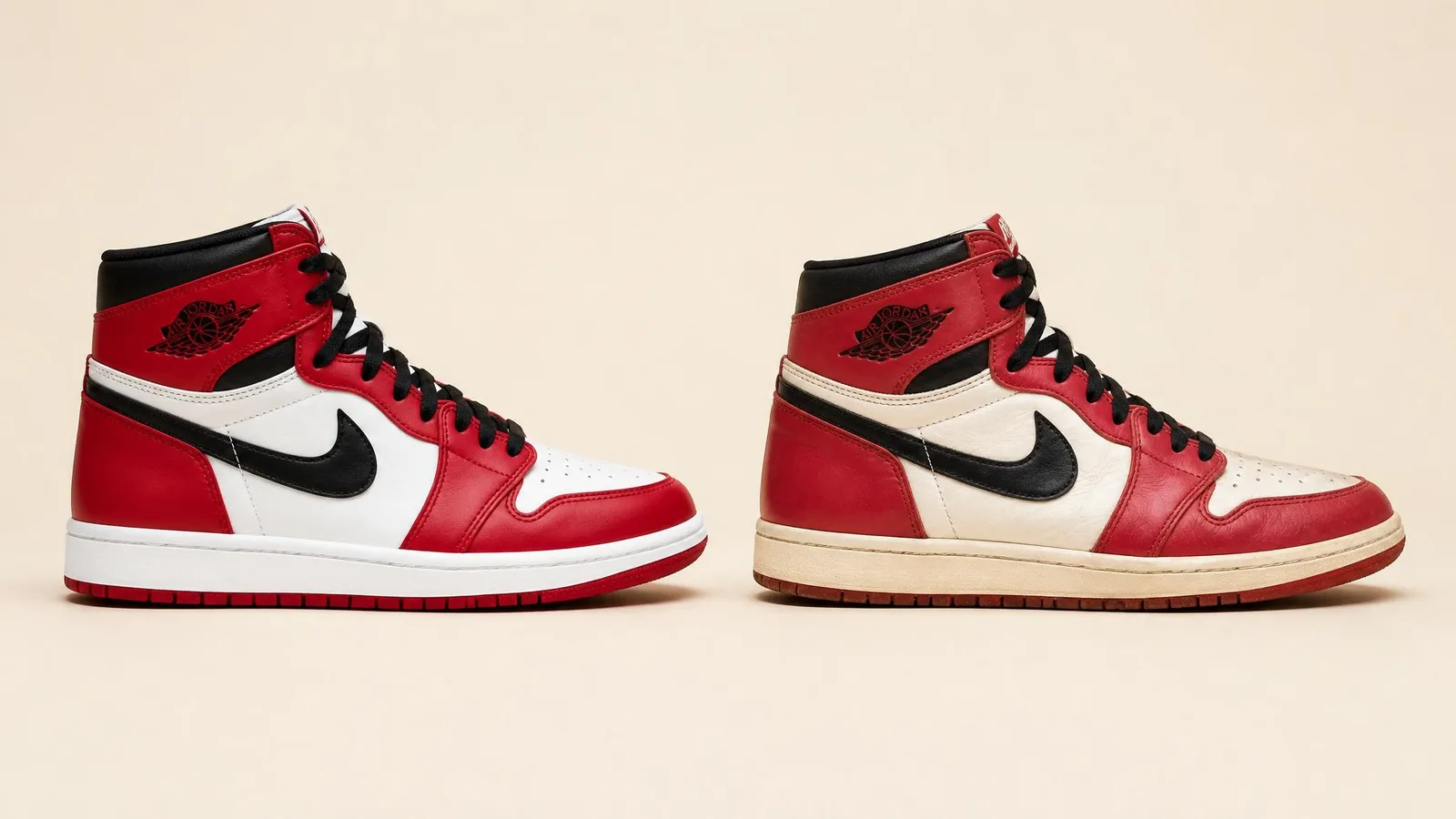
On a 40-year-old pair like the 1985 original, condition is the dominant lever. Cracked leather, crumbling midsoles, and missing original box or laces each pull the value in one direction. A dead stock pair with the original box and all laces occupies a different price tier from a worn or visibly degraded pair, even for the same style code and size. If you are evaluating a vintage pair, learn how to grade sneaker condition before committing to any ask.
The same logic applies to the 1994 retro. Most 1994 pairs in circulation show some degree of age-related degradation. Condition grading is the first thing a serious buyer will evaluate before committing to a listing in that range.
Size is the second lever on every release. The size-13 listing for the 2015 pair at Stadium Goods illustrates how far outlier sizes can diverge from the entry price. Mid-range sizes typically carry the most liquid market. Sizes at either end of the run tend to command premiums or discounts that have nothing to do with the shoe's history or hype.
For collectors who hold a 1985 original or a high-value 2015 pair, that single shoe may represent the majority of their collection's rack value. That concentration changes how you think about wearing, insuring, and storing it. If you are in that position, read about when one pair is most of the value.
Lost and Found: Spotting a Fake Jordan 1 Chicago
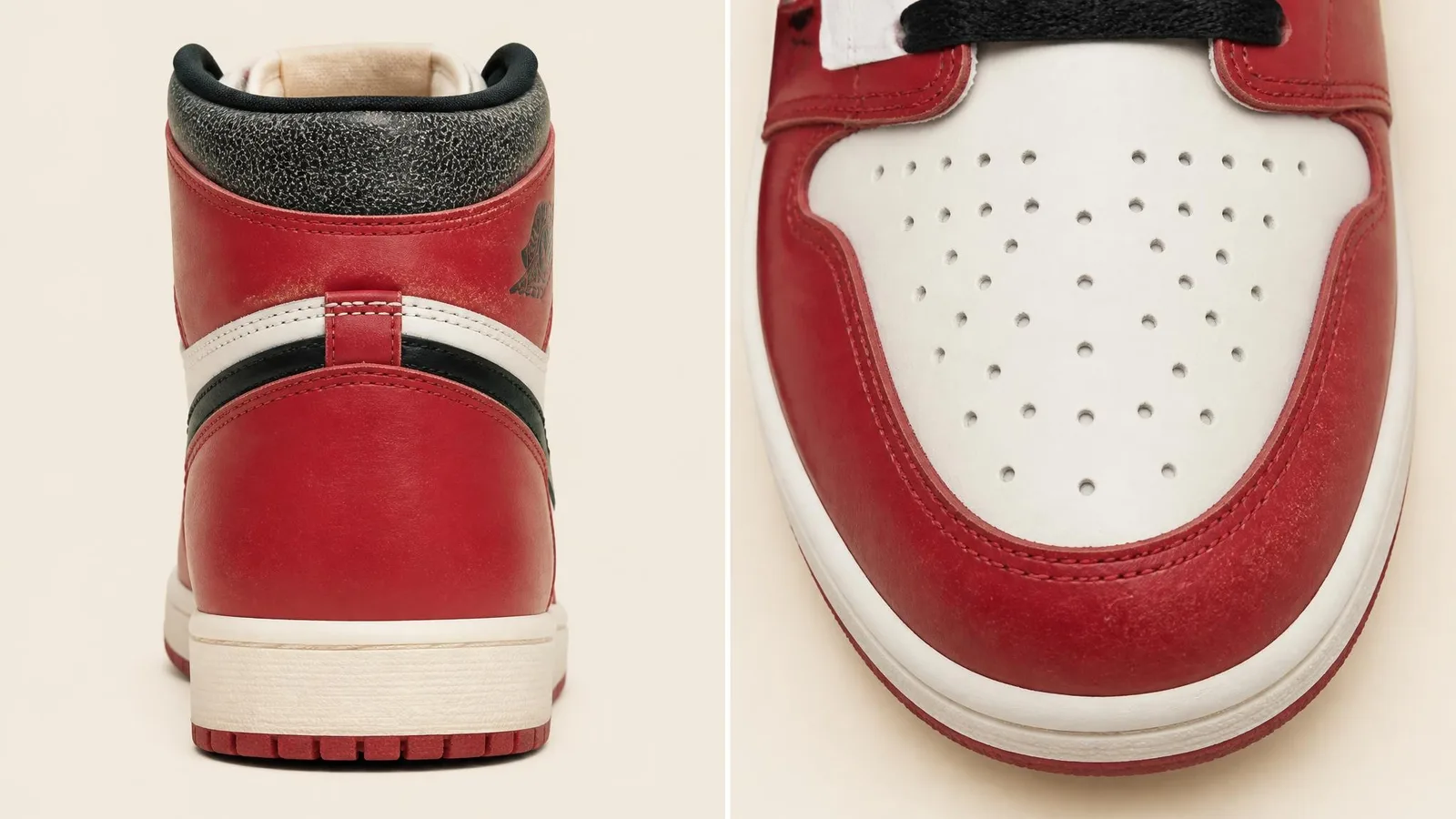
The Lost and Found is one of the most counterfeited Chicago releases in circulation. Two tells separate a real pair from a fake, both observable without specialist tools.
From behind, the authentic Lost and Found shows a distinct hourglass shape at the heel. That tapering silhouette is a structural feature of the real pair, and counterfeit versions do not replicate it cleanly. Legit Grails, in a guide updated October 14, 2026, identifies this as one of the most reliable visual checks.
On the toe box, counterfeit pairs show visibly larger perforations than the authentic pair. Perforation size is difficult to replicate at scale, which makes it one of the more consistent tells, a point the same Legit Grails guide reinforces.
These 2 checks are tells, not a complete authentication process. If you want to know what authentication services cover, including third-party verification options, that resource walks through the full landscape.
Frequently Asked Questions
What is the Air Jordan 1 Lost and Found?
The Lost and Found (style DZ5485-612) released November 19, 2022 at $180 retail for adults, a figure Nike confirmed on its own product page. It was designed to look like a pair recovered from storage, with an aged, cracked leather finish and a distressed retro box. It is a High OG silhouette with Nike Air on the tongue and the most recent of the 5 major Chicago Retro High OG releases.
What was the original retail price of the Air Jordan 1 Chicago?
The 1985 original (style 4280) retailed at $65 on September 16, 1985, a figure confirmed on the StockX product page accessed November 3, 2026. The 1994 retro, the 2015 Retro High OG at $160, and the 2022 Lost and Found at $180 each carried higher retail prices, reflecting 4 decades of inflation and market positioning.
Is the Jordan 1 Low Chicago the same shoe as the High?
No. The Air Jordan 1 Low OG Chicago (style HQ6998-600) is a low-top silhouette that released November 15, 2025. It is a distinct product from the Retro High OG. It now appears alongside High listings in search results for the Chicago colourway, which is a source of confusion for buyers. The price observations in this article cover the High only.
How much is a 1985 Jordan 1 Chicago worth?
No confirmed sales range for a 1985 pair was captured in the November 3, 2026 data pull. The only figure observed was a single ask of $25,059 on Flight Club, with no size shown and no confirmed transaction behind it. The 1985 pair is a thin-data object. Its value is set by auction and private sale rather than a steady marketplace feed, and condition is the dominant variable.
What to Do Next with Your Chicago
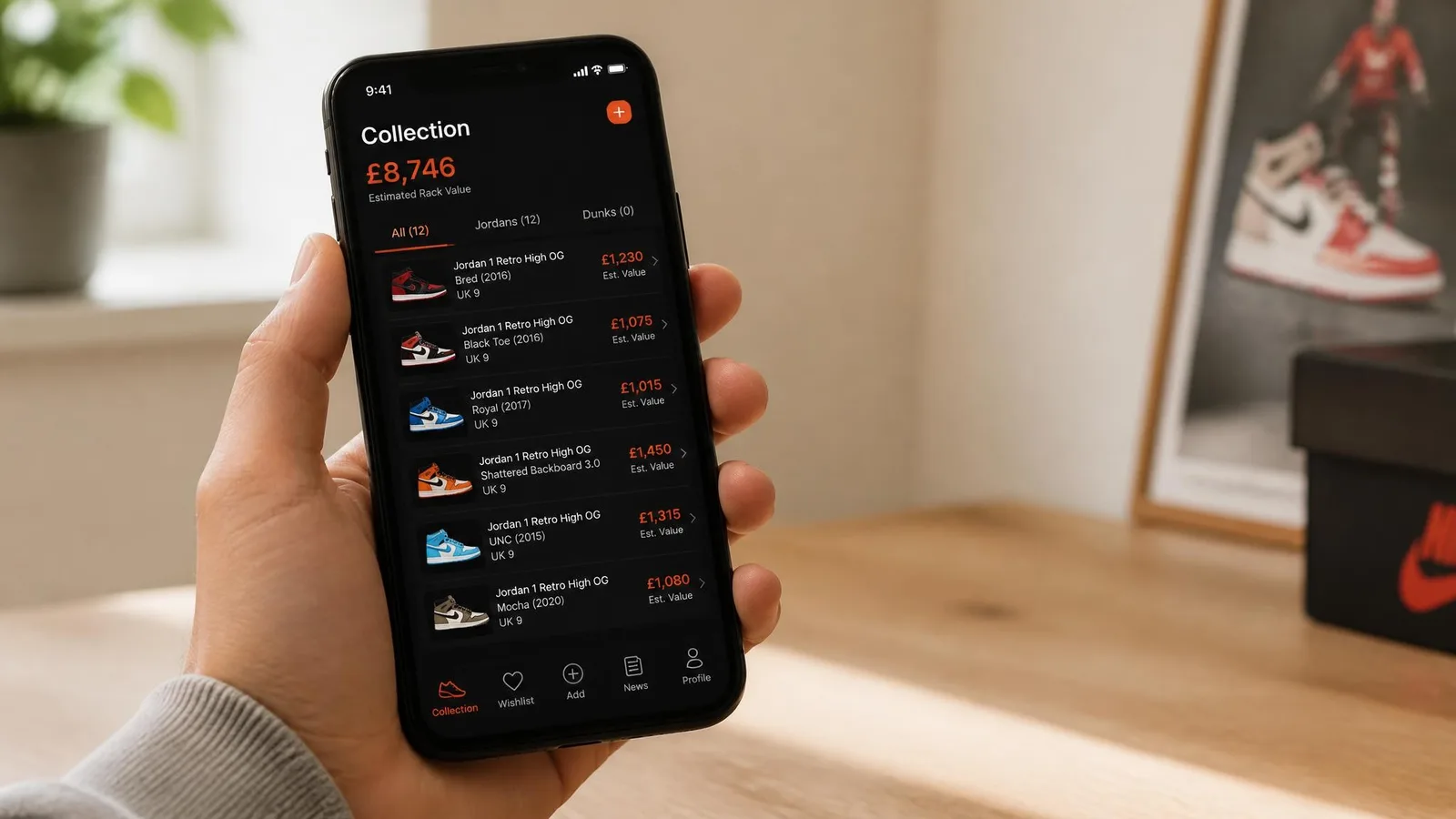
You now know which release you hold and what platforms were showing for it on a single day. The next step is a live rack value estimate that accounts for your specific release, size, and condition inputs, not a generic platform ask. CYKI treats rack value as an estimate based on resale marketplace data, and for thin-data pairs like the 1985 original, it describes the data quality alongside the number so you know how much weight to put on it.
Search the year you own in CYKI and see how it treats a pair with thin sales.
If you want to catalogue your full Jordan collection after identifying your Chicago, you can track your Air Jordan collection from one rack.