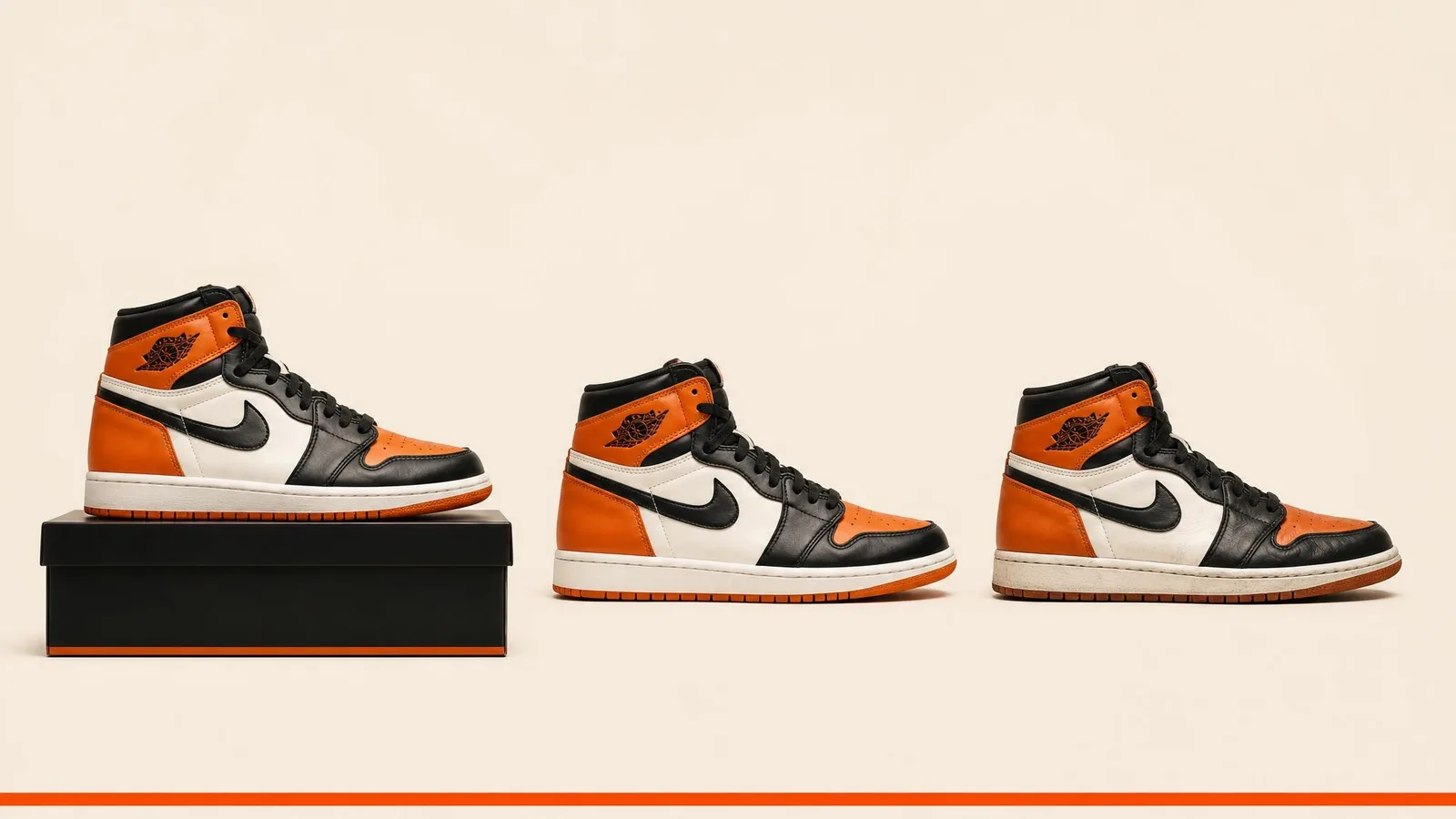
Sneaker condition labels are inconsistent. One seller's "VNDS" is another seller's "lightly worn", while a third may call the same pair 9/10. An honest grade therefore starts with physical evidence, not the label attached to a listing.
The most useful approach is to answer two separate questions:
- What is the pair's wear state? Is it unworn, tried on or worn?
- What is its overall condition? Check the uppers, outsoles, yellowing, structural integrity, odour, box and accessories.
That distinction matters because deadstock describes wear history; it does not automatically mean flawless. An unworn pair can still have yellowing, sole separation, storage odour, a damaged box or missing accessories. Those issues can reduce desirability and value without changing the fact that the shoes were never worn.
Grade your pair before comparing it with marketplace listings. The condition you record affects its rack value estimate, and understanding how CYKI values your collection will help you interpret that estimate correctly.
What Deadstock, VNDS and Worn Actually Mean
These labels describe broad wear states. They are not universal guarantees of quality.
Deadstock (DS) generally means unworn. For conservative self-grading, use it only when the pair has no signs of ground wear or use. Record storage-related flaws and missing packaging separately rather than treating "deadstock" as a synonym for "perfect". Platform definitions can be broader: for example, StockX says some sneakers may pass its new-condition verification after being unlaced or tried on for fit.
VNDS (Very Near Dead Stock) is community shorthand for a tried-on or minimally worn pair that remains close to new condition. JD Sports' sneaker glossary uses a similar definition, but there is no universal VNDS standard. Treat the label as a seller's claim that still needs to be checked against photos and disclosed flaws.
Worn covers every level of use below VNDS, from lightly rotated to heavily worn. Numerical labels such as 9/10, 8.5/10 and 8/10 can add context, but they are not standardised either. A written description of the creasing, tread loss, heel drag, staining and odour is more useful than a number on its own.
B-Grade is a separate category. It normally refers to an authentic pair that did not meet the manufacturer's usual quality standard, often because of a cosmetic production flaw. A B-Grade pair is not necessarily worn and should not be graded as though the "B" describes its wear state.
The central rule is simple: the label describes the claim; the physical evidence determines whether the claim is credible.
Why Platform Standards Differ
Marketplaces do not translate condition labels in exactly the same way.
StockX. On the StockX Verified Marketplace, sneakers must be brand new and include the original box. StockX's sneaker guidelines add that pairs may pass after being unlaced or tried on for fit, and that limited box damage or age-related discolouration may be acceptable. Its Listings Marketplace separately uses New, New - Other and Used condition levels, with buyers directed to the individual listing's photos and notes.
GOAT. Sellers enter a condition and may be required to provide photographs for used items or items sold as new with defects. GOAT tells sellers to show damage, discolouration and flaws clearly. Its process is more structured than an unsupported "VNDS" claim, but a buyer should still inspect the listing-specific photos rather than assume that a community label maps to a fixed number of wears. You can review GOAT's current seller guidance for the latest requirements.
eBay. Footwear may be listed as New or Pre-owned. For eligible pairs covered by eBay's Authenticity Guarantee, the authenticator checks that the item is consistent with the listing title, description and images as part of the inspection. Condition is therefore seller-described, but eligible authenticated listings are not simply accepted without comparison to the listing.
The practical lesson is to compare like with like: the same SKU, size, wear state, flaws, accessories and type of price. A VNDS asking price is not a reliable comparison for your pair until you have checked what "VNDS" means in that specific listing. Understanding why trading apps show different prices will also help you compare figures with the right level of scepticism.
The 6 Condition Checks That Matter Most
Every defensible grade rests on observable evidence. Inspect these six areas before choosing a condition tier.
1. Upper wear and creasing
Check the toe box, eyestays, collars and medial and lateral panels. Look for permanent creases, scuffs, scratches, paint loss, pilling, staining and material deformation. Judge the pair in the context of its construction: soft leather, patent leather, suede, knit and mesh do not show wear in the same way.
Deep toe-box creasing usually points to repeated wear. A faint flex line from trying on a shoe may be compatible with a near-new description, but it should still be disclosed.
2. Outsole wear and heel drag
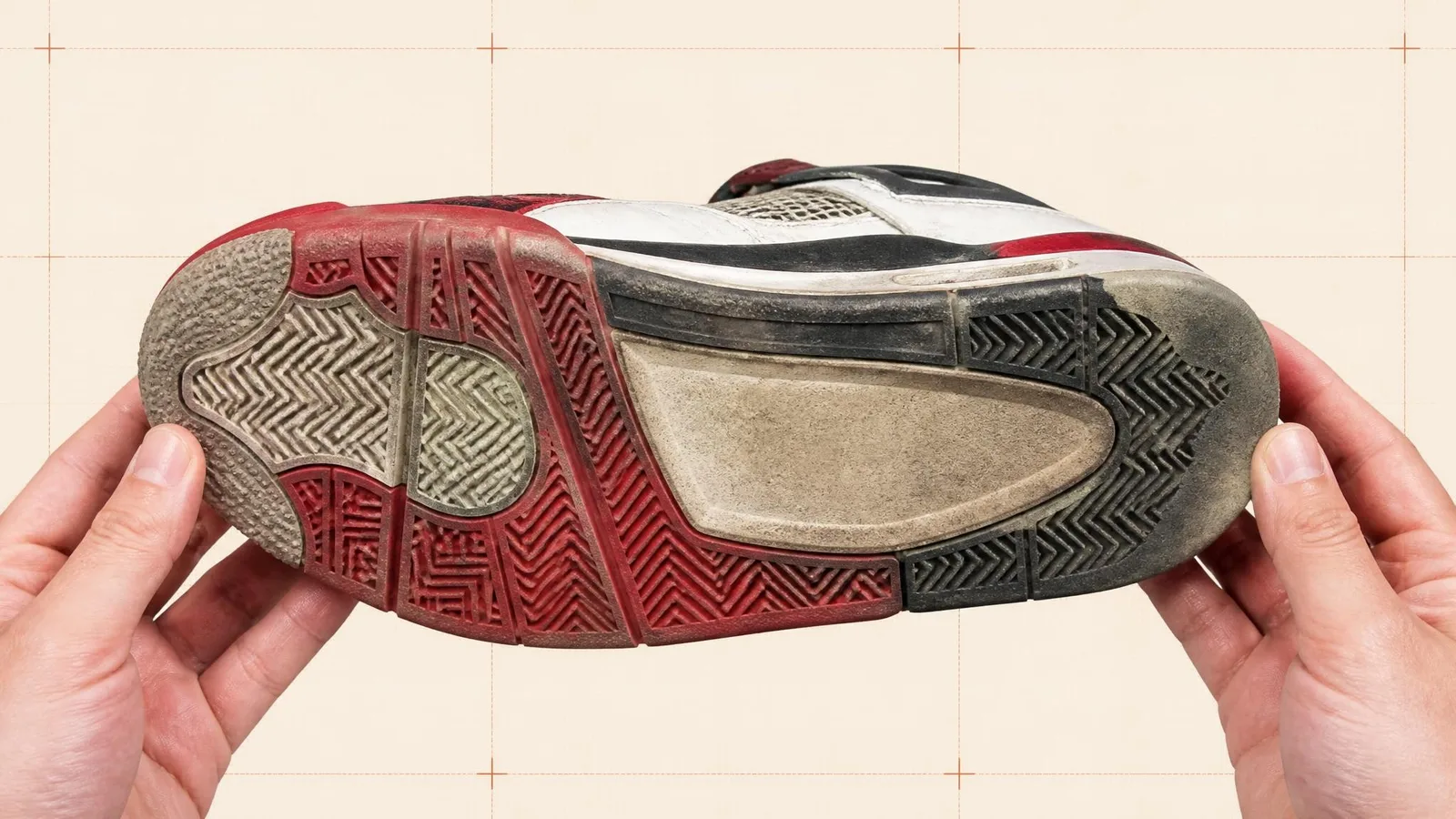
Outsole wear is some of the clearest evidence of ground contact. Inspect the full tread pattern, especially the heel and ball of the foot. Note smoothing, dirt embedded in grooves, star loss on relevant models and uneven heel drag.
A clean outsole supports a higher grade, but it does not prove that a pair is unworn. Cleaned soles can hide light use, so compare them with creasing, insole wear and interior lint.
3. Yellowing and discolouration
White and translucent components can yellow through exposure to light, heat, oxygen and humidity. Glue, foam, rubber and clear plastics may age at different rates, so inspect the midsole, outsole, mesh, tongue and visible adhesive separately.
Yellowing can reduce buyer demand even when a pair is unworn. It is best recorded as an age or storage-related condition issue, not as proof of wear. Cosmetic treatments may improve the appearance of some materials, but they do not restore the pair to its original state and may affect originality or long-term durability. Proper storage can slow further change; see these practical storage and display tips.
4. Sole separation and structural ageing
Check the bond between the upper, midsole and outsole, particularly around the toe and heel. Look for gaps, lifting edges, crumbling foam, hardened rubber, cracked paint and cloudy or damaged air units where relevant.
An unworn pair can develop structural problems in storage. That pair may still be unworn, but it should not be described as flawless or priced against a structurally sound pair without an adjustment.
5. Odour and interior wear
Smell the inside of each shoe and inspect the insoles, sockliners, collars and tongue lining. Sweat, smoke, mildew, heavy fragrance or cleaning chemicals can affect buyer interest. Also look for missing size stickers, rubbed-off insole logos, lint, staining and compressed padding.
Odour cannot be assessed from ordinary listing photos, so disclose it in writing. Do not use fragrance to mask a problem; a strong scent may create another condition concern.
6. Box and accessories
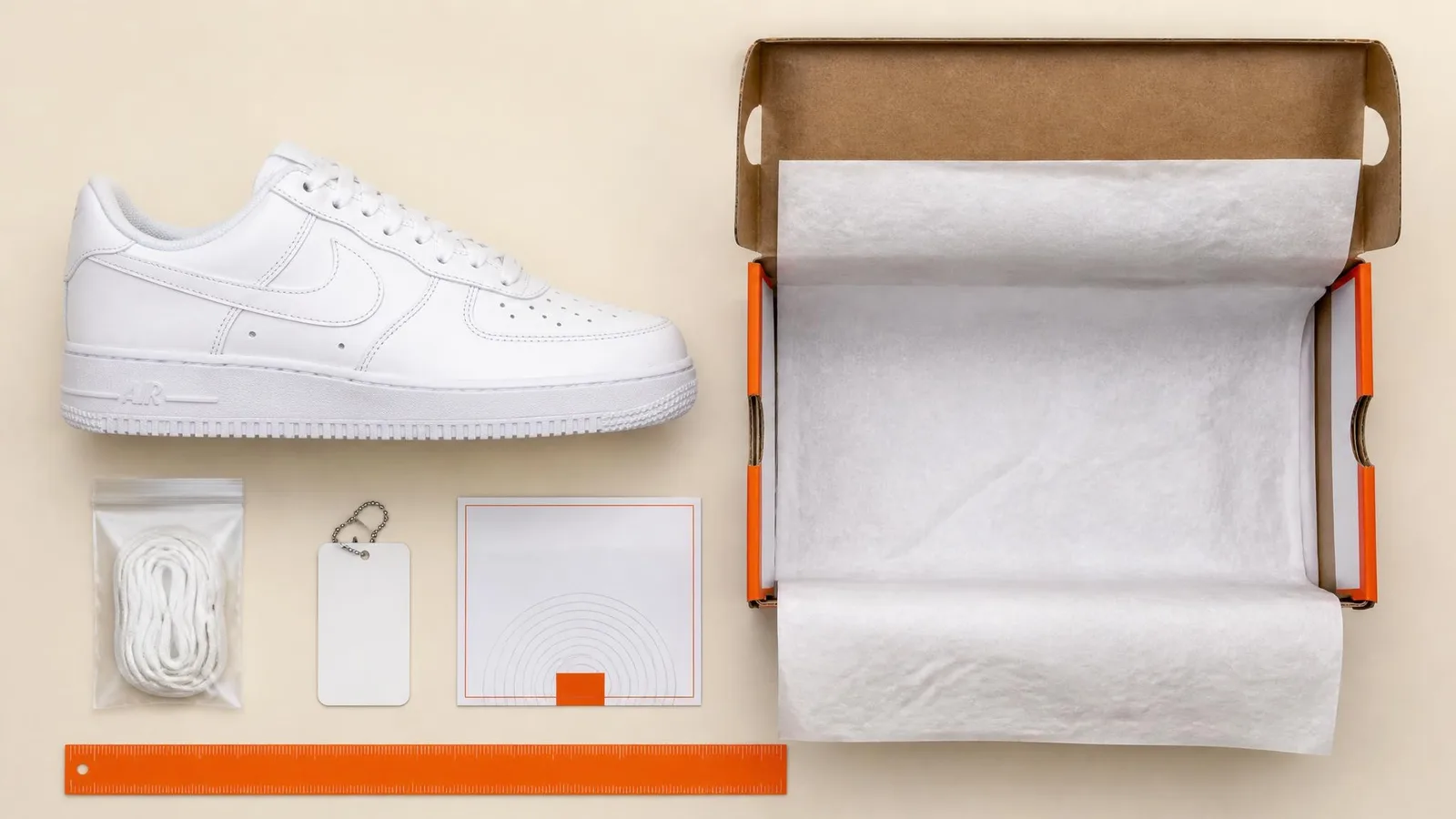
Record whether the pair includes its original box, correct box label, tissue, spare laces, lace bags, hangtags, inserts and any release-specific accessories. Photograph box crushing, tears, water damage, writing and label damage.
Completeness often matters most for limited releases and collector-led models such as Air Jordan 1s and Nike SB Dunks. Its effect on price varies by model and buyer, so compare your pair with sales that have the same packaging and accessories.
A Consistent Inspection and Photo Checklist
Use neutral daylight or a colour-accurate light source, a plain background and no beauty filters. Photograph both shoes, not just the cleaner one.
- Toe boxes and uppers: Take a straight-on image, a low side angle and clear medial and lateral views. Capture creases, texture changes, scuffs and stains.
- Outsoles and heels: Photograph each full outsole, then both heels from behind. Include close-ups of tread loss, star loss, dirt or heel drag.
- Midsoles and bond lines: Photograph both side profiles and close-ups of yellowing, paint cracks, glue gaps or separation.
- Interiors: Remove loose insoles where this can be done safely. Photograph insole logos, sockliners, size tags, collar wear and interior staining.
- Box and accessories: Photograph the box label, all sides of the box and every accessory laid out clearly.
- Written condition note: Record odour, repairs, cleaning, replacements and flaws that do not show clearly in photos.
Keep the inspection date, SKU, size, selected grade and notes together. If the physical evidence contradicts your first impression, change the grade. A checklist only works when the evidence wins.
How to Choose an Honest Grade
Use the highest tier that all the evidence supports, not the highest tier that one clean photograph might suggest.
**Deadstock: **The pair is unworn and shows no signs of use. Disclose any ageing, defects or missing items separately. Don't use if: There is outsole wear, heel drag, wear-related creasing or other evidence of use.
**VNDS: **The pair was tried on or worn minimally and remains close to new, with only very light evidence disclosed. Don't use if: There is clear tread loss, deep creasing, persistent odour, significant staining, or repeated-wear damage.
**Worn / numerical grade: The pair shows use beyond VNDS. Give a number only with photos and a written flaw description. Don't use if: The number is being used to hide or minimise specific defects.
Do not automatically turn an unworn pair into a worn pair because its box is missing or its sole has yellowed. Instead, record the wear state and the condition issues separately. That produces a more accurate description and a fairer comparison.
How Condition Connects to Your CYKI Rack Value Estimate
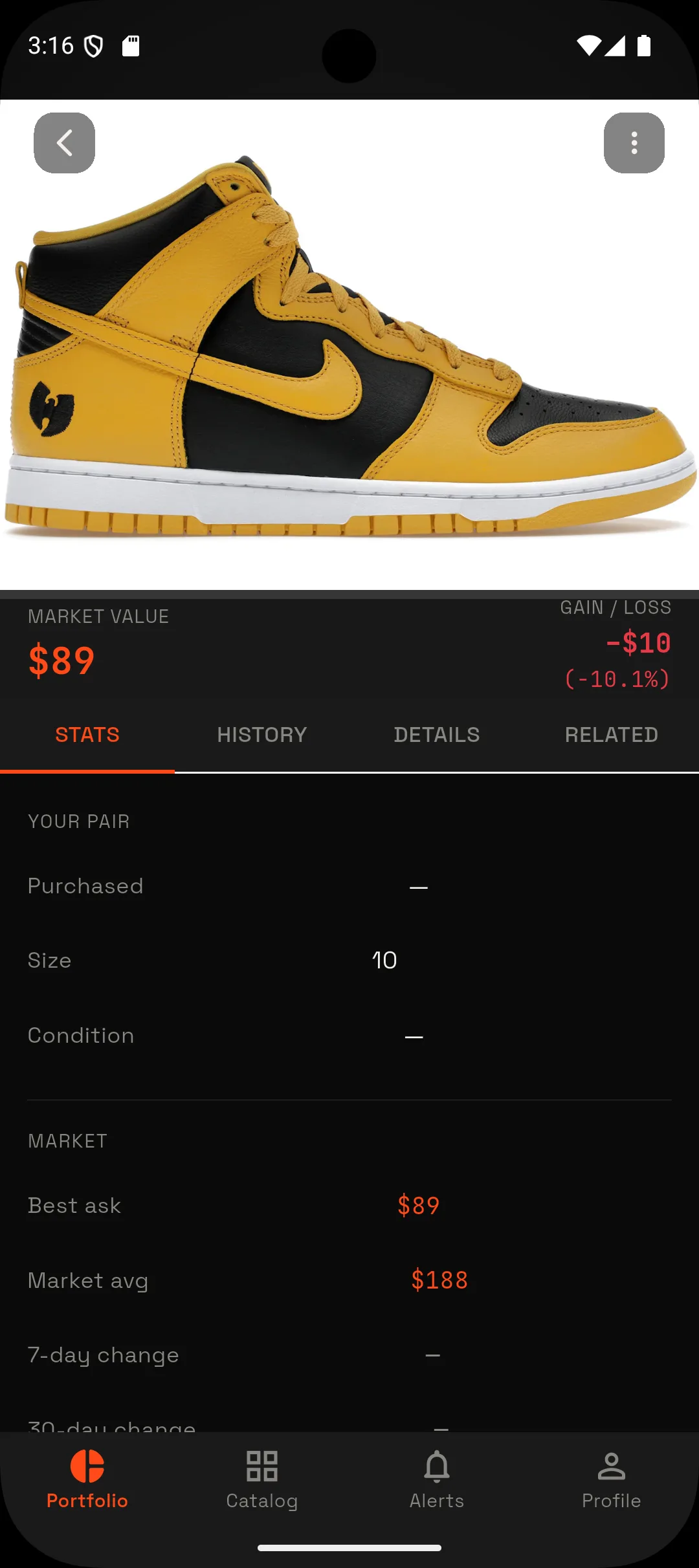
CYKI begins with a reference value derived from resale marketplace data. Its pricing feed covers deadstock sales; it does not contain measured sales for every used-condition grade. CYKI then applies a condition reduction based on the grade you select. The reduction increases as the grade falls.
That distinction is important. A condition-adjusted rack value is an estimate, not proof that an identical worn pair recently sold for that amount. CYKI describes the reductions as its own conservative judgement rather than measured used-pair transaction data. You can read the full explanation of how CYKI values your collection.
If an 8/10 pair is left ungraded or recorded as deadstock, it receives no condition reduction and its estimate may be overstated. Grade the pair using the checklist first, then update the condition in your rack before comparing values.
Condition is only one part of the result. The eventual sale price can also depend on the exact size, timing, platform, fees, photographs, packaging and the individual buyer. Rack value is a tracking estimate, not a guaranteed offer or payout.
Frequently Asked Questions
What does VNDS mean in sneakers?
VNDS stands for Very Near Dead Stock. It usually describes a pair that has been tried on or worn minimally but remains close to new. Because there is no universal standard, check the photos, outsole, creasing, interior and written disclosures before accepting the label.
What is the difference between VNDS and deadstock?
For conservative self-grading, deadstock means unworn. VNDS means tried on or minimally worn. Platform rules may use different wording or allow limited try-on, so read the marketplace's current condition policy instead of assuming the community terms translate exactly.
Can a deadstock pair have yellowing or sole separation?
Yes. Deadstock describes wear history, while yellowing and sole separation describe physical condition. An unworn pair can age badly in storage. Disclose those issues and compare it with similarly aged pairs rather than flawless examples.
Does box condition affect sneaker resale value?
It can, especially for limited releases and collector-focused models. The original box and release-specific accessories make a pair more complete, but the size of the price effect varies. Whether you approach the hobby as a sneaker collector vs sneaker reseller, compare like-for-like examples rather than assuming one universal box premium.
Does creasing affect sneaker value?
Usually, but the effect depends on the model, material, crease depth and buyer. Permanent toe-box creasing is evidence of wear and can move a pair below VNDS. Use comparable sales or listings with similar visible wear rather than applying a fixed percentage.
Does smell affect resale value?
Yes. Sweat, smoke, mildew and heavy fragrance can reduce buyer interest and may cause a pair to be treated as inconsistent with its listing if the issue was not disclosed. Record persistent odour honestly because buyers cannot assess it from photos.
How does CYKI adjust an estimate for condition?
CYKI starts with a reference value based on deadstock resale data, then reduces that value according to the condition grade selected by the user. The adjustment is an estimate rather than a measured sale price for an identical used pair.
The Bottom Line
Do not grade a sneaker from one label or one flattering photograph. Separate wear state from overall condition, inspect the same six areas every time and document anything a buyer would want to know.
Then compare your pair only with listings that match its SKU, size, wear, flaws and completeness. That process will not produce a guaranteed sale price, but it will give you a condition grade, and a rack value estimate, that you can defend.