
A legit check is an expert opinion on whether a pair is authentic, issued at a specific moment, using either photos or physical inspection. The result can be a PDF certificate, a physical tag, or a written verdict. What it covers, what it costs, and whether the next buyer accepts it all depend on which service you choose. Not every option works the same way, and none of them guarantees what most collectors assume.
This guide puts legit check authentication services compared across 6 providers and 5 dimensions: CheckCheck, Legit Check By Ch, LegitApp, StockX Verified, GOAT authentication, and the eBay Authentication Guarantee. It covers what each service inspects, what the result actually proves, and what it leaves out. For a broader look at how authentication fits into the collector app ecosystem, see The Best Sneaker App for Collectors Compared.
What Legit Check Authentication Services Actually Cover: A Side-by-Side Comparison
The table below covers 6 services across 5 dimensions. Every vendor-specific figure is the vendor's own published claim, not an independently verified benchmark.
| Service | Check Method | Output Format | Turnaround | Cost | What the Result Covers |
|---|---|---|---|---|---|
| CheckCheck | Photo submission (dual-expert review) | Digital certificate / verdict | Varies by plan (vendor's published range, as of 2024 site) | Varies by plan; consult vendor site for current pricing | Authenticity opinion on the submitted images |
| Legit Check By Ch | Photo submission (100% human verification, per legitcheck.app, accessed 2024) | Digital verdict / certificate | Approximately 30 minutes for standard verification, per legitcheck.app (accessed 2024) | Varies by service tier; consult vendor site for current pricing | Authenticity opinion on the submitted images |
| LegitApp | Photo submission (AI plus human expert review, per LegitApp Google Play listing, accessed 2024) | Digital certificate / verdict | Varies by plan | Varies by plan; consult vendor site for current pricing | Authenticity opinion on the submitted images |
| StockX Verified | In-hand physical inspection at StockX authentication centers | Physical verified tag attached to the item | Part of the transaction timeline | Included in platform transaction fees | Authenticity confirmed for that specific StockX transaction only |
| GOAT Authentication | In-hand or photo review depending on listing type | Verification status on the GOAT listing | Part of the transaction timeline | Included in platform transaction fees | Authenticity confirmed for that specific GOAT transaction only |
| eBay Authentication Guarantee | In-hand inspection by third-party authenticators for qualifying items above a price threshold | Authenticated tag attached to the item before forwarding to buyer | Part of the transaction timeline | Included in the eBay sale (no separate fee to buyer) | Authenticity confirmed for that specific eBay transaction only |
A note on marketplace programs: StockX, GOAT, and eBay authenticate as part of a sale on their platform. You cannot commission any of these services independently. If you already own the pair and want a standalone check, only the 3 third-party services in the table offer that.
Legit check service accuracy rates are another dimension collectors ask about. Every accuracy figure published by these services is self-reported. Treat those numbers as the vendor's marketing claim with a publication date, not as an audited benchmark.
Photo Check vs. In-Hand Inspection: What the Method Actually Changes
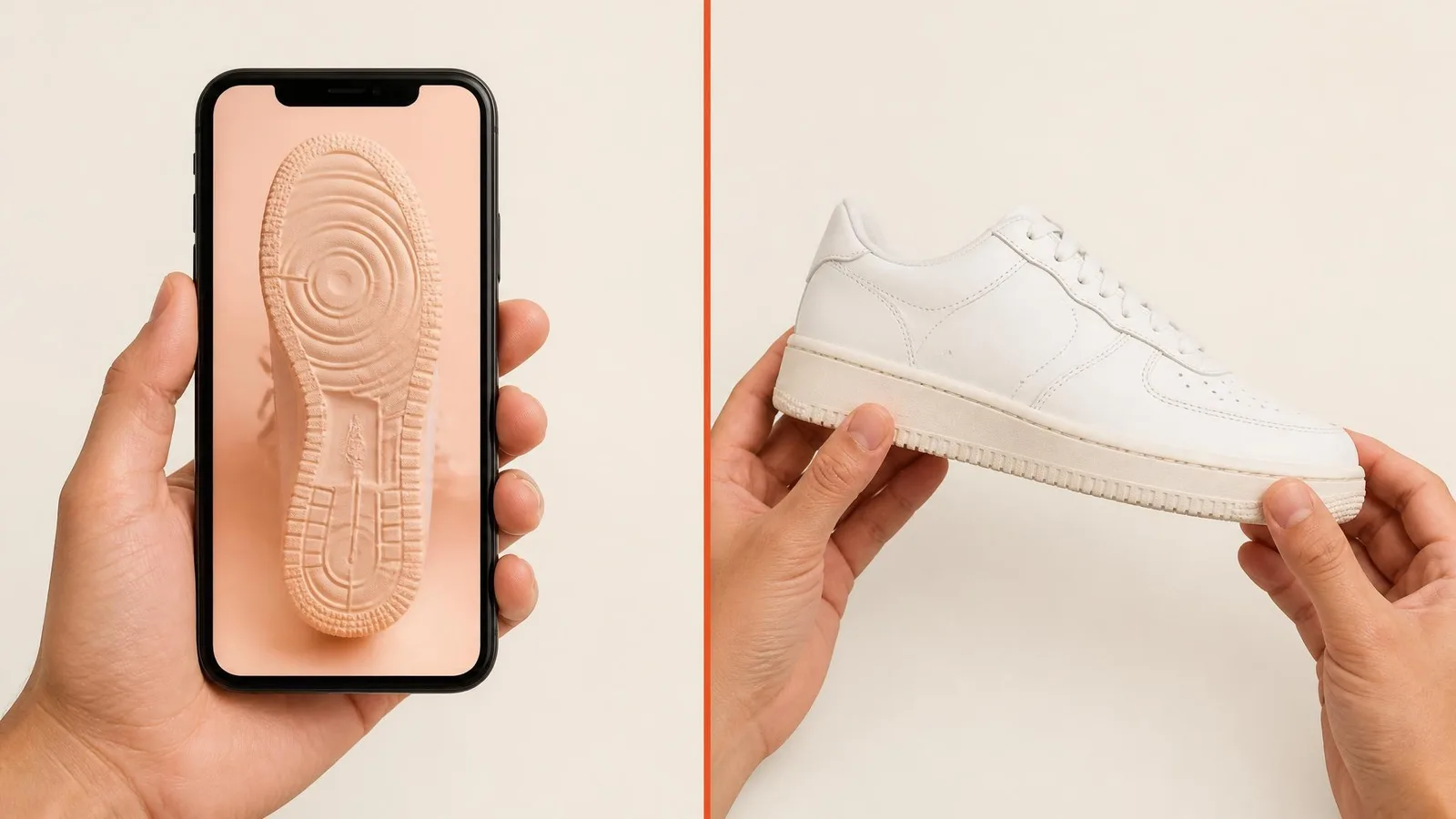
Photo authentication versus in-hand inspection for sneakers is the single biggest variable in what a service can actually assess.
A photo check relies on whatever you submit. Image resolution, lighting, and angle coverage all affect what the authenticator can see. A blurry heel shot or a washed-out box label limits the verdict before any expertise enters the picture. You are the photographer, and the quality of the check starts with the quality of your images.
In-hand inspection is a different scope entirely. An authenticator holding the pair can assess weight, material texture, stitching depth, sole flexibility, and glue application. None of those attributes translate through a screen. A photo can show a font mismatch on a size tag. It cannot show that the midsole foam is too stiff or the leather grain is wrong.
Most third-party services, including CheckCheck, Legit Check By Ch, and LegitApp, operate primarily or entirely via photo submission. That is a deliberate trade-off: photo checks are faster, cheaper, and do not require shipping the pair anywhere. The convenience is real.
The trade-off matters most when the stakes are highest. For grails, rare collaborations, or pairs with significant resale value, the gap between what a photo can reveal and what a physical inspection can catch grows wider. A photo check is a useful screening tool. It is not the same depth of inspection as hands-on examination.
Marketplace Authentication vs. Third-Party Legit Check Services
Marketplace authentication versus third-party legit check services is a structural difference, not a quality difference.
Marketplace programs from StockX, GOAT, and eBay authenticate as part of a specific transaction on that platform. The authentication confirms the pair for that sale, on that platform, at that moment. It is not a standalone service you can request for a pair sitting in your closet.
Whether StockX authentication transfers to a private sale: it does not. The StockX verified tag confirms that pair passed inspection for a StockX transaction. It carries no formal weight on GOAT, with third-party services, or in a private sale. The same applies to GOAT verification and the eBay Authentication Guarantee tag. Each is platform-specific.
The eBay Authentication Guarantee for sneakers works through third-party authenticators who inspect qualifying items above a price threshold before the item ships to the buyer. The program covers sneakers among other categories. Like StockX and GOAT, the result is part of the transaction, not a portable certificate.
Third-party services work differently. CheckCheck, Legit Check By Ch, and LegitApp issue a result you own: a PDF, a digital certificate, or an expert verdict that you can present to any future buyer. The catch is that acceptance depends entirely on whether that buyer recognizes and trusts the issuing service. There is no universal standard.
Neither type of authentication is universally accepted. A marketplace tag proves provenance on 1 platform. A third-party certificate proves an opinion from 1 service. Both are useful. Neither is definitive everywhere.
What a Certificate Actually Guarantees (and What It Does Not)

What a legit check certificate actually proves is narrower than most collectors expect.
A certificate records 1 expert's opinion, based on the images or item submitted, at the time of the check. It is not a legal warranty. It does not bind the service to any outcome if the verdict later turns out to be wrong.
Most services explicitly disclaim liability in their terms of service. If the pair is later confirmed fake by another party, the certificate does not entitle you to a refund from the authentication service. Read the terms before you pay.
A certificate does not guarantee acceptance on resale platforms. StockX, GOAT, and eBay authenticate items through their own programs and do not defer to third-party certificates. Showing a CheckCheck PDF to a StockX buyer does not bypass StockX's own inspection process.
A certificate also says nothing about condition, completeness, or anything beyond authenticity. If the pair has undisclosed wear, a missing insole, or a swapped box, the certificate does not address any of that.
The disagreement problem is real. A 2020 thread in the r/Sneakers community on Reddit documented a case where Legit Check App returned an authentic verdict and CheckCheck returned a fake verdict on the same pair. Neither service offered a resolution mechanism. That divergence does not mean either service acted dishonestly. It reflects differences in methodology, the specific authenticator assigned, image quality, or genuine ambiguity in the pair itself. When services disagree, neither verdict is automatically correct.
Legit check certificate limitations and what is not covered rarely appear on vendor pages. The certificate is a tool, not a guarantee. Treat it as supporting evidence for your next sale, not as an insurance policy.
What to Keep After a Check

Knowing what to keep after a sneaker authentication matters as much as getting the check itself. Your paper trail is your proof if a future buyer asks questions.
- The certificate file or result PDF. Download it in full resolution immediately. Some services do not store results indefinitely, and a screenshot of a login screen is not the same as the original file.
- Your submission photos. The images you sent are part of the evidentiary record. If a buyer disputes the result later, your submission set shows exactly what was assessed.
- The physical tag, if one was issued. Marketplace tags (such as the StockX verified tag) should stay with the pair. Removing them can affect the pair's resale standing on that platform.
- Correspondence with the authentication service. Email receipts, order confirmations, and any follow-up communication form your paper trail if a dispute arises.
- The pair's record in your collection. Whether you add pairs manually or use a migration feature later, attaching the certificate and submission photos to the pair's record in CYKI keeps everything in 1 place rather than scattered across email threads and screenshot folders.
For a full breakdown of why each element matters and how long to keep it, read [what to keep after a check].
Note: The URL for this linked guide (topic 65) must be confirmed by the account team before publication.
Frequently Asked Questions
How long does CheckCheck take to return a result?
CheckCheck's turnaround varies by the plan you select. The service describes itself as dual-expert luxury authentication, with faster options available at higher tiers. Check the current plan details on getcheckcheck.com for the most accurate turnaround estimate, as vendor-published timelines can change.
Is LegitApp good for sneaker authentication?
LegitApp covers sneakers as 1 of several luxury goods categories, combining AI analysis with human expert review. Its Google Play listing (accessed 2024) states the platform serves over 2.5 million users worldwide. LegitApp is a legitimate option for sneaker checks, though its multi-category focus means its sneaker-specific depth may differ from services built exclusively around footwear.
What should you do when 2 legit check services disagree on the same pair?
Disagreement between services can reflect differences in methodology, the individual authenticator assigned, the quality of images submitted, or genuine ambiguity in the pair. Neither result is automatically correct. Consider resubmitting a higher-resolution image set to 1 or both services. If the pair's value justifies it, opt for an in-hand inspection service where the authenticator can physically examine the item.
Do you need a legit check if you bought from StockX or GOAT?
The marketplace's own authentication covered that transaction on that platform. If you plan to resell the pair privately or on a different platform, a third-party certificate may carry more weight with your specific buyer, since marketplace tags are not universally recognized outside the issuing platform.
Does a legit check certificate transfer to the next buyer?
The certificate itself can be shared with any future buyer. Whether it carries weight depends on whether that buyer recognizes and trusts the issuing service. There is no universal standard of acceptance across platforms or private sales.
Attach the Result to Your Rack
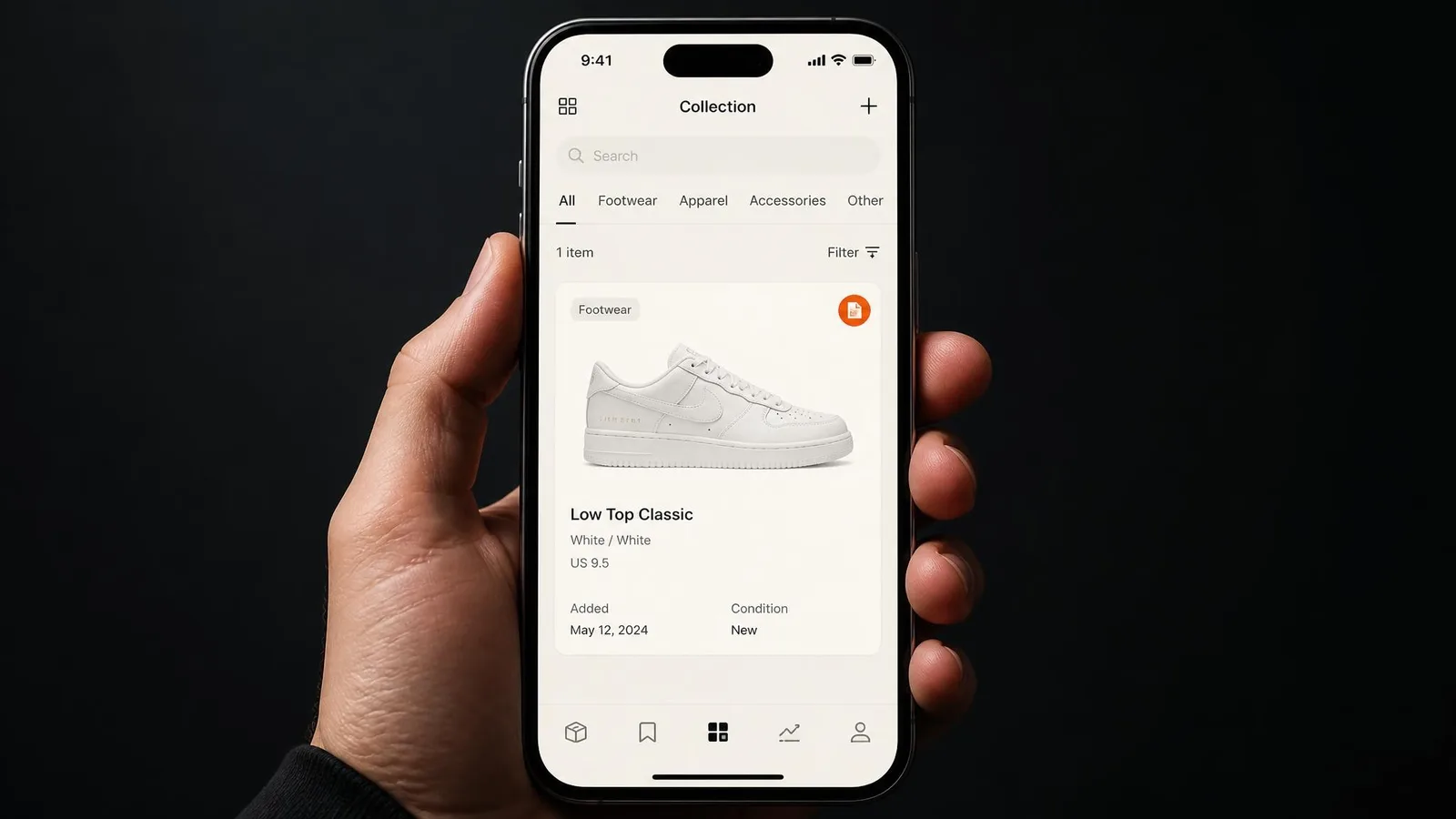
You have the certificate, the photos, and the tag. The practical next step is attaching the authentication result to the pair's record in CYKI, so the paper trail lives with the pair instead of across email threads and camera rolls. Whether you add pairs manually or use a migration feature later, the result stays connected to the pair it belongs to.
Rack value in CYKI is an estimate based on resale marketplace data, not a guaranteed figure. The authentication result and the valuation serve different purposes, and both are worth keeping in the same place.