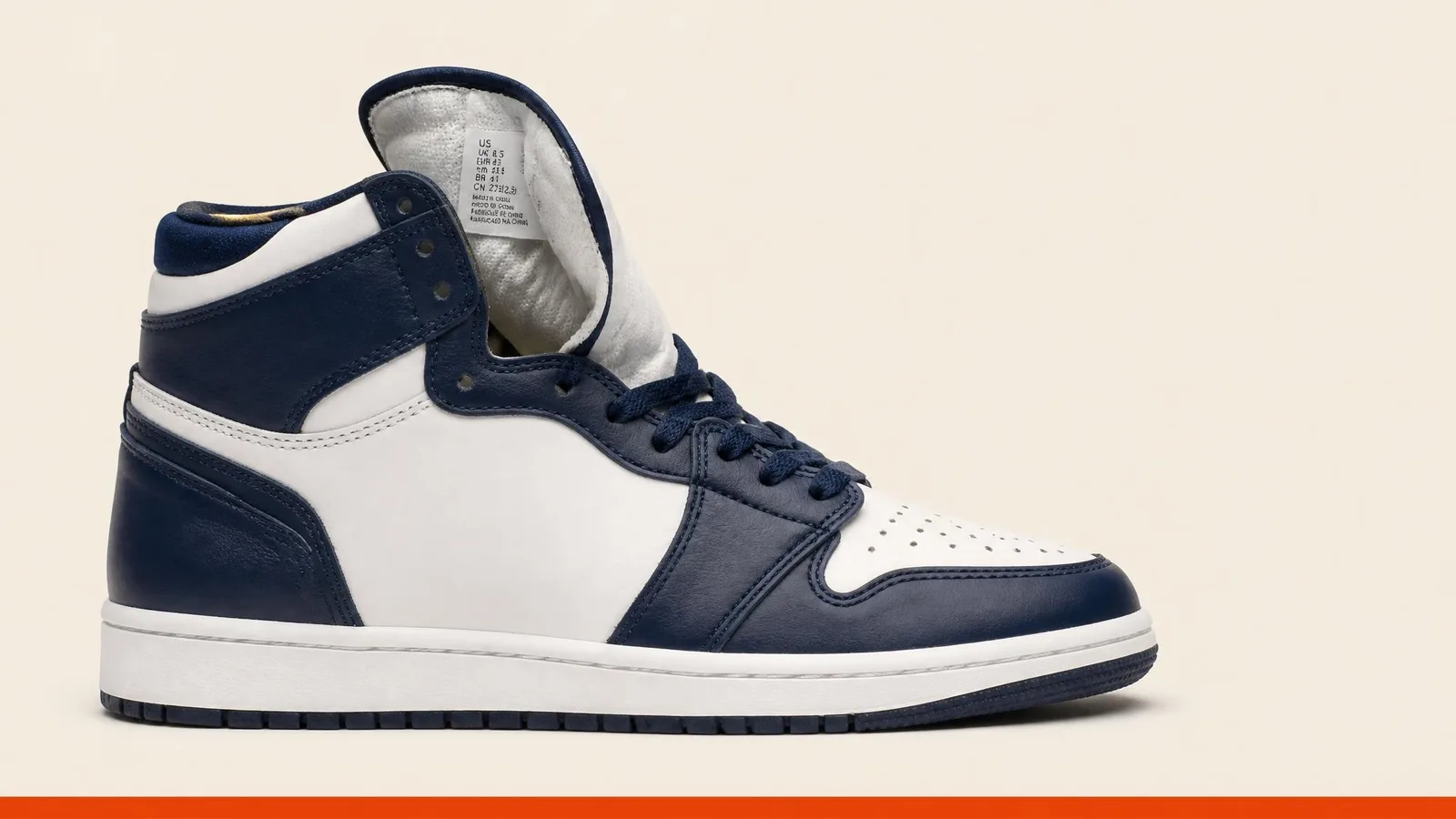
You have picked up a shoe, flipped the tongue back, and found a string of letters and numbers you cannot decode. Here is what sneaker style codes mean: the style code is the manufacturer's unique identifier for 1 specific model and colourway combination. It is printed on the tongue label and the box. Of every code on that shoe, it is the most precise identifier you have.
There are 4 distinct identifiers a collector typically encounters on a label and box: the style code, the colourway code, the model number, and the SKU. Each one tells you something different, and none of them tells you everything. This article breaks down all 4, explains what each does and does not confirm, and shows you why the style code is the right starting point for an accurate collection record. One thing it will not cover: authentication. Knowing a style code does not confirm a pair is genuine.
Every Code on That Label
-
Style code. The manufacturer's identifier for a specific model and colourway combination. On Nike and Jordan Brand, it follows a base-number-hyphen-suffix format (for example, a string like xxxxxx-xxx). The base number identifies the silhouette. The 3-character suffix after the hyphen identifies the colourway. Adidas uses a 5-to-6-character alphanumeric string with no hyphen. The style code is the most precise identifier on the shoe, a convention the sneaker community has standardized around, as documented in Retailed.io's sneaker dictionary.
-
Colourway code. The suffix after the hyphen in a Nike or Jordan Brand style code. This is a manufacturer-internal designation. It does not map to a standard color-matching system like Pantone. The same suffix number can represent different actual colors across different silhouettes. What the number after the hyphen in a Nike style code means is simply which colourway the manufacturer assigned to that production run.
-
Model number. The identifier for the silhouette across all colourways and all production years. "Air Jordan 1" is a model number reference, not a style code. It tells you the shape. It does not tell you which pair. The gap between a sneaker model number versus a style code is the gap between "which shoe" and "which exact version of that shoe." That distinction matters because model-level names overlap with nicknames, and why nicknames like Bred and Chicago exist is a separate layer of collector language.
-
SKU. Assigned by the retailer on top of the manufacturer's style code. A retailer SKU may include additional characters encoding size, region, or warehouse location. In casual collector use, SKU and style code are treated as interchangeable. They are technically different things. The meaning of a sneaker SKU depends on which retailer issued it, and that retailer-specific data rarely travels with the pair after purchase.
New Balance is worth a separate note. Its model numbers encode cushioning tier and intended purpose in the digit positions, a system Gear Moose's guide to New Balance model numbers breaks down in detail. That makes the New Balance numbering system more descriptive at the model level than anything Nike or Adidas uses.
Where to Find the Style Code
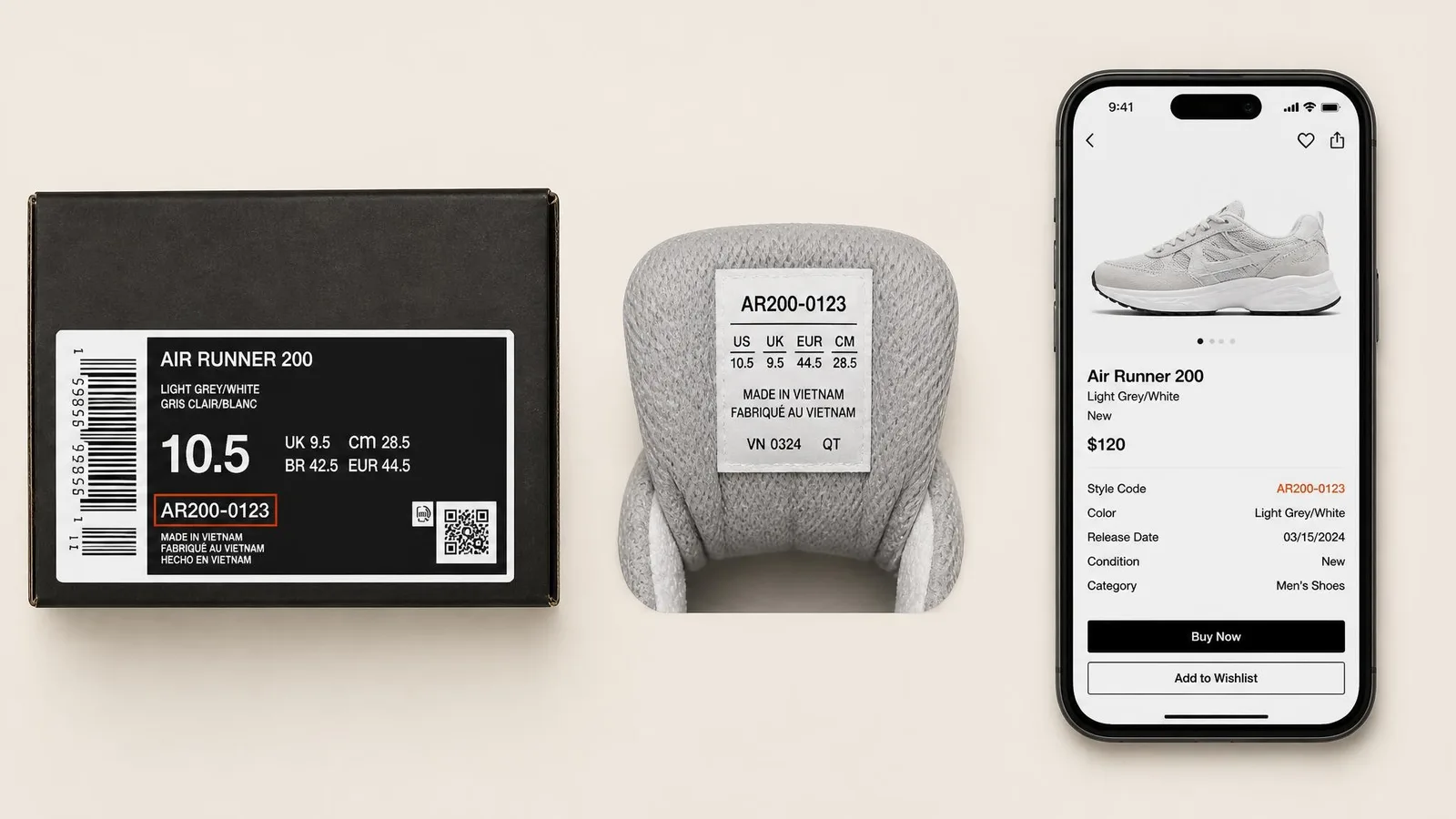
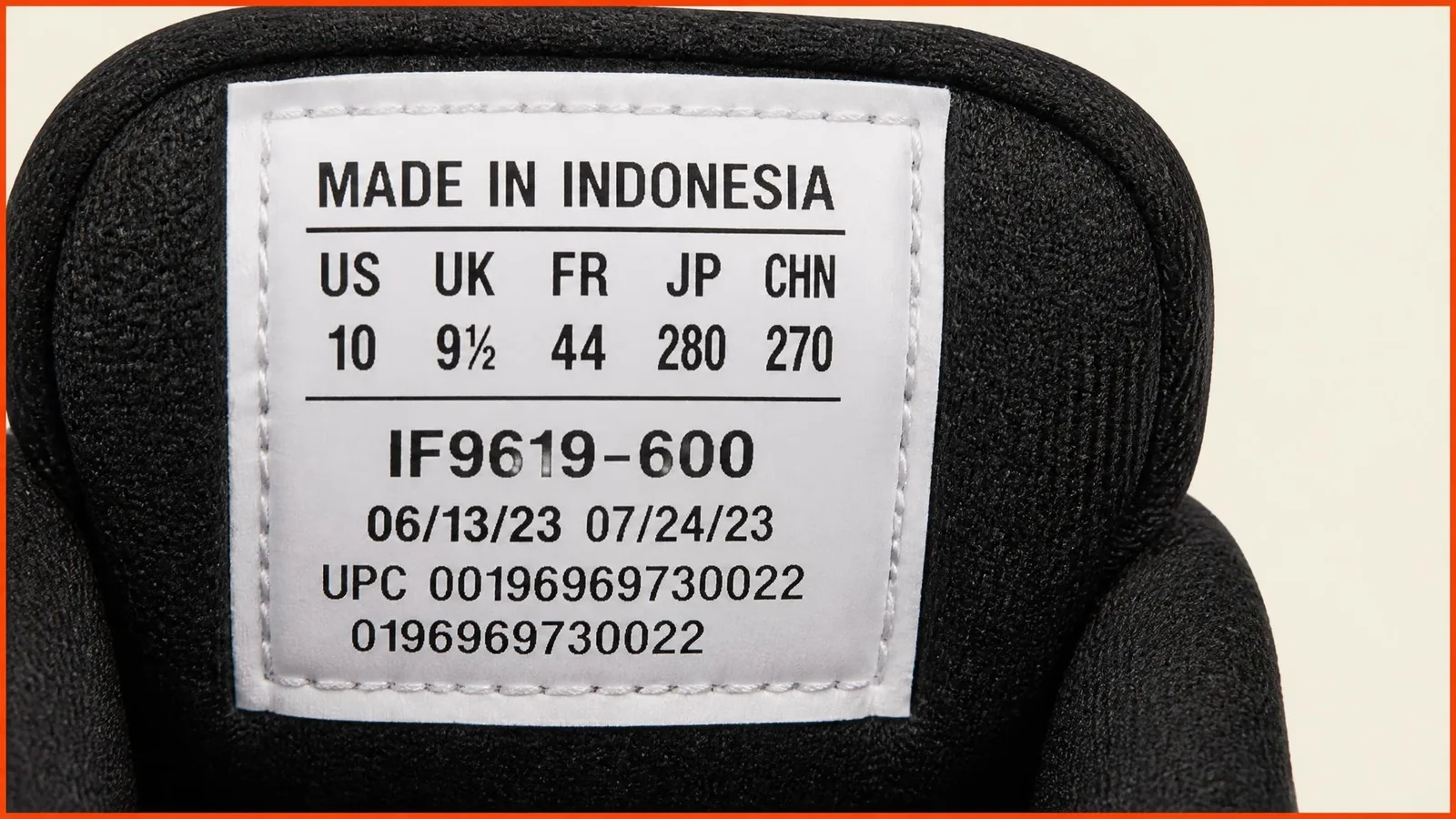
- Tongue label. On Nike and Jordan Brand footwear, the style code appears on the tongue label sewn inside the shoe, a placement Sneaktorious's sneaker dictionary confirms. It is typically the longest alphanumeric string on the label, formatted as the base number, a hyphen, and a 3-character suffix. Adidas uses its shorter alphanumeric string in the same general location. Where to find the style code on a sneaker label comes down to looking for the longest code on that tag.
- Box end panel. On the end panel of the retail box, the style code appears alongside the size, colourway name, barcode, and country of manufacture. It is usually the field labeled "Style" or "Style No." Where the style code appears on the sneaker box is consistent across most Nike and Jordan releases: always on the end panel sticker.
- Marketplace listings. On StockX and GOAT, the style code appears as a searchable field in the product details section. Buyers use it to confirm the exact colourway before purchasing rather than relying on the listing title or a nickname.
- When the box is gone. If the box is missing, the tongue label is the primary reference. If both are gone, a marketplace listing for the confirmed model and colourway is the next best source. The code is the same everywhere it appears.
What the Style Code Tells You and What It Does Not
The style code identifies the model and colourway. That is its entire job. It does not encode size. Size is a separate field on the label and box. It does not encode production run volume. It does not encode release year.
A matching style code does not prove a pair is authentic. Counterfeit manufacturers copy style codes directly from authentic labels. The code tells you what a pair should be. It does not tell you whether the pair in your hand is genuine. Physical inspection or a specialist verification service is a separate process entirely, and knowing how to grade sneaker condition is part of that process. Whether a style code proves a sneaker is authentic has a clear answer: it does not.
The colourway suffix, those 3 characters after the hyphen in a Nike or Jordan Brand code, identifies an internal colourway designation. It is not a precise color standard. The same suffix can represent visually different colors across different silhouettes.
Knowing what a style code cannot tell you is as useful as knowing what it can. When you are building a collection record, a wrong identifier creates a wrong valuation. Getting this distinction right at the start saves you from compounding errors across your entire rack.
Why Codes Get Reused Across Releases
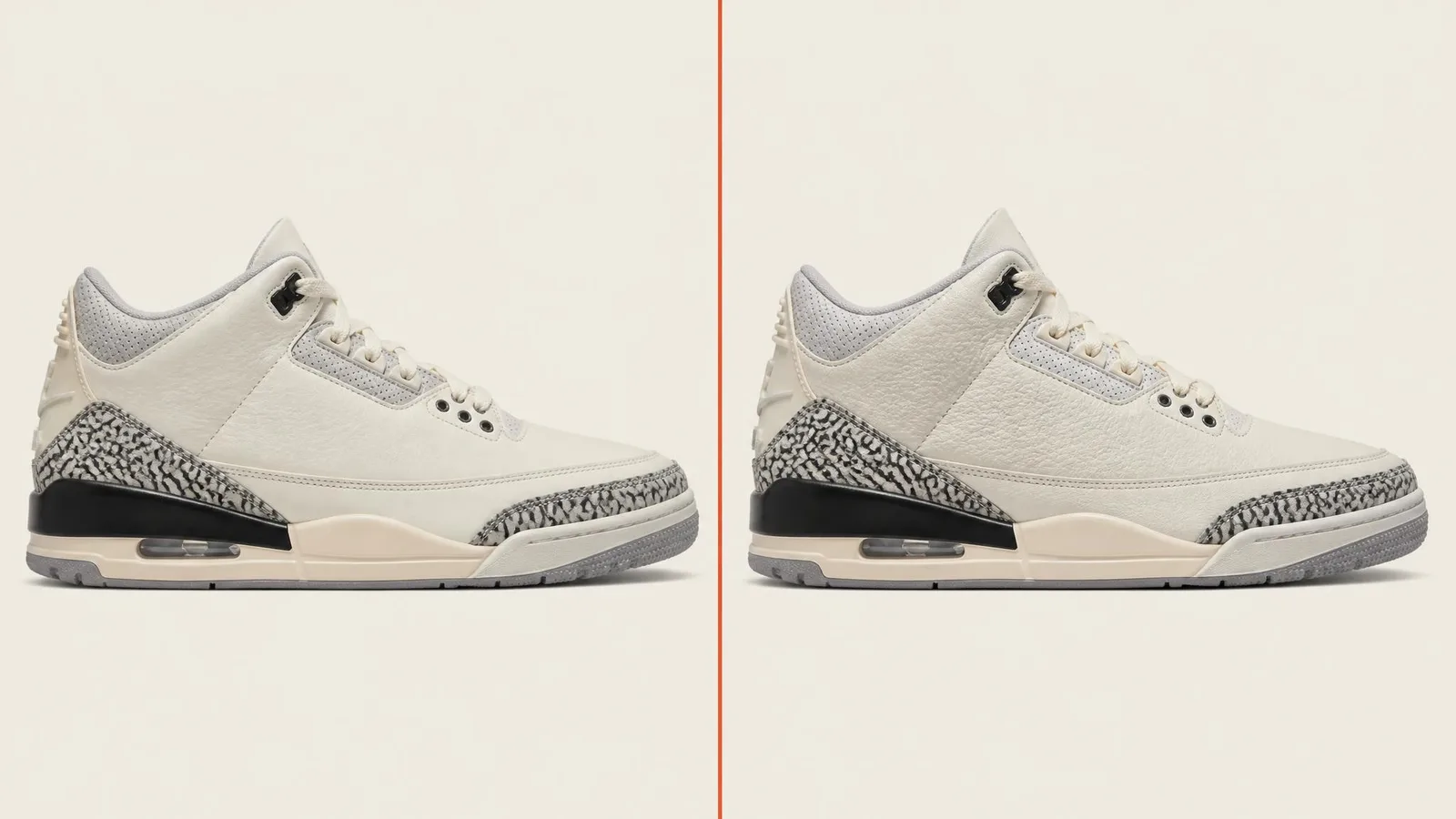
When a Nike or Jordan Brand silhouette is retroed or reissued, the original colourway suffix is frequently reassigned to the new production run. 2 pairs with the same style code can differ in materials, construction details, and resale value. This is why the same style code can appear across different releases, and it creates real ambiguity for anyone tracking a collection.
The style code alone is not always sufficient to distinguish a vintage original from a modern retro at a glance. The manufacturing year stamped elsewhere on the label provides the additional context needed to separate them.
For collectors using a sneaker style code for collection tracking, this matters directly. Your rack value estimate is only as accurate as the specific release you have logged. A retroed pair and its original are not the same asset, even when they share a code. The price gap between an original release and a retro of the same colourway can be significant, and logging the wrong one means every number downstream, from sneaker cost-basis P&L to any comparison against a benchmark like the CYKI 100, starts from the wrong baseline.
The Style Code Is the Key to an Accurate Collection Record
Nicknames are cultural shorthand. A nickname like "Bred" or "Chicago" refers to a colourway concept applied across multiple releases, multiple silhouettes, and multiple years. The nickname alone does not return a specific resale price point. It returns a page of loosely related results.
The style code is precise enough to identify 1 specific colourway of 1 specific silhouette. When you search a catalogue by style code, you get 1 result, or a clearly bounded set of results distinguished by release year, rather than a mixed page of model generations.
When your collection record uses the correct style code, the rack value estimate your tracker returns is based on resale marketplace data for that exact pair. It is not an averaged figure across a broadly named colourway family. That estimate will always be an estimate, not a guarantee. But an estimate built from the right identifier is useful. An estimate built from a nickname is noise. For a closer look at how that estimate is calculated, the sneaker resale value calculator and collection estimate breaks it down.
An inaccurate identifier in your collection record is not just a labeling problem. It means your cost-basis P&L, your rack value, and any comparison against a benchmark are calculated from the wrong baseline. Using a sneaker style code to keep an accurate collection record is the single most reliable way to avoid that. For a full picture of what to record in your sneaker collection, that guide walks through every field worth capturing.
Search by Style Code, Not by Nickname
Searching a catalogue or marketplace by nickname returns every colourway that has ever carried that name across every silhouette. Searching by style code returns the exact pair. Sneaker nickname versus style code accuracy is not a close contest.
Communities like Reddit's r/WhatsThisShoe use the style code as the primary identification tool, a practice documented across years of the subreddit's sticky posts. The code bypasses ambiguity created by regional naming differences and nickname variations. It is the same in every market. Understanding why nicknames like Bred and Chicago exist helps you see why the code is more reliable.
In practice: find the style code on the tongue label or box end panel. Enter it into the search field in the catalogue or marketplace. Confirm the result matches the pair you are holding before you file it.
The CYKI catalogue is searchable by name or by style code. Searching for sneakers by style code is the faster, more accurate route to the right entry, especially for retroed or multi-colourway silhouettes.
FAQ
Does the style code prove my sneakers are authentic? No. Counterfeit manufacturers copy style codes from authentic labels. The code identifies what a pair should be, not whether it is genuine. Authentication requires physical inspection or a specialist service.
Why do 2 pairs with the same style code have different resale prices? Retro and reissue releases frequently reuse the original colourway suffix. 2 pairs can share a style code but differ in materials, construction year, and resale value. The manufacturing year on the label gives you the context to tell them apart.
What is the difference between a style code and a SKU? The style code is assigned by the manufacturer and identifies the model and colourway. A retailer SKU is assigned by the retailer and may include characters for size, region, or warehouse. Collectors use the terms interchangeably, but they are technically distinct.
Is the model number the same as the style code? No. The model number (for example, Air Jordan 1) identifies the silhouette across all colourways and release years. The style code identifies 1 specific colourway of that silhouette in a specific release.
Where is the style code on the sneaker box? On the end panel, in the field labeled "Style" or "Style No.," alongside the size, colourway name, and barcode.
Find It in CYKI and File the Pair
The style code is the shortest path from the label in your hand to the correct entry in a catalogue. Search the CYKI catalogue by style code, confirm the colourway, and file the pair. Whether you add pairs manually or use a migration feature later, getting the identifier right at the start means your rack value estimate and cost-basis P&L are calculated from the right baseline.
Rack value in CYKI is an estimate based on resale marketplace data, updated regularly. For a full explanation of how that estimate is built, what happens when recent sales data is limited, and how data gaps are communicated rather than hidden, the CYKI methodology page lays it out.
Search the CYKI catalogue by style code and file the pair.