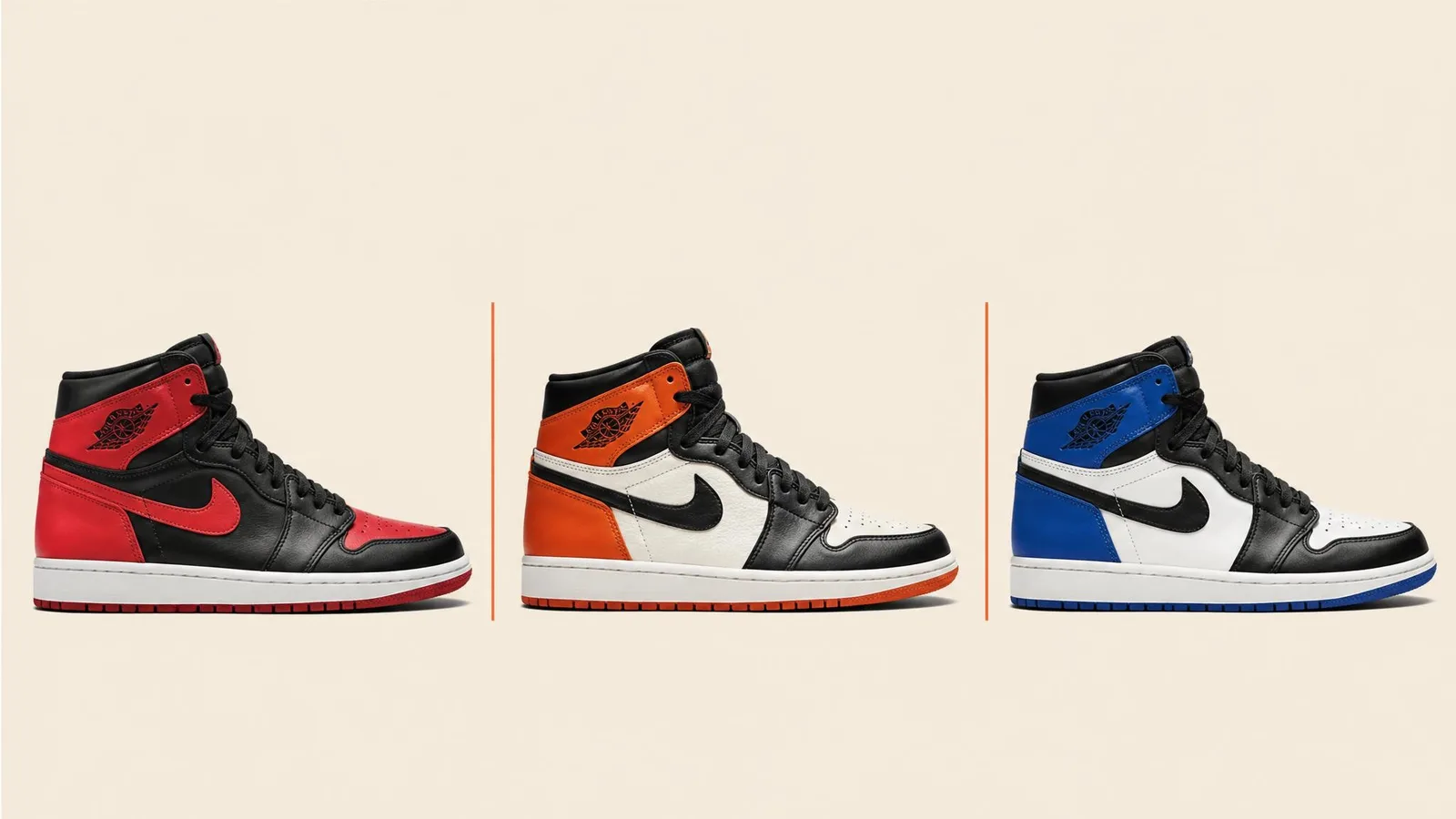
The same colourway nickname can appear on multiple Air Jordan releases across different decades. If you track your collection using only nicknames and sizes, it is easy to confuse one release with another.
A useful Jordan catalogue should record seven core fields: model, release year, release type, colourway nickname, official style code, size category and condition. Together, these fields identify the release you own and give you a stronger basis for organising and estimating the value of your collection.
That structure is what separates a working inventory from a flat list you may quickly outgrow. If you want a sneaker collection spreadsheet alternative, you can rack your Jordans in a structured sneaker catalogue.
Why a Colourway Nickname Is Not Enough
Chicago, Bred and Royal are familiar names, but a nickname is not a unique identifier. The same name may be used for an original release, several retros or related versions of a silhouette. Each release can differ in materials, construction, availability and market value.
If your collection record relies only on a nickname, distinct releases can collapse into one ambiguous entry. You may know that you own a Jordan 1 Chicago, for example, without knowing which release year or version it is.
Use the colourway nickname as a search and sorting label, not as the entire record. The other fields provide the detail needed to distinguish one release from another.
The 7 Fields Every Jordan Catalogue Record Needs
Building a dependable Air Jordan inventory starts with understanding what to record in a sneaker collection. For each pair, capture these seven fields:
- Model. Record the silhouette, such as Air Jordan 1, Air Jordan 3 or Air Jordan 11. This is the main way to group your collection, but it does not identify a specific release.
- Release year. Record the year of the release you own. The same model and colourway can return several times, and each release may have a different market value.
- Release type. Mark the pair as an original release, retro or another relevant version. If the product name includes an official designation such as "Retro High OG," record that wording too.
- Colourway nickname. Add the familiar collector name, such as Chicago, Shadow or Bred. It is useful for browsing and search, but should not be treated as a unique identifier.
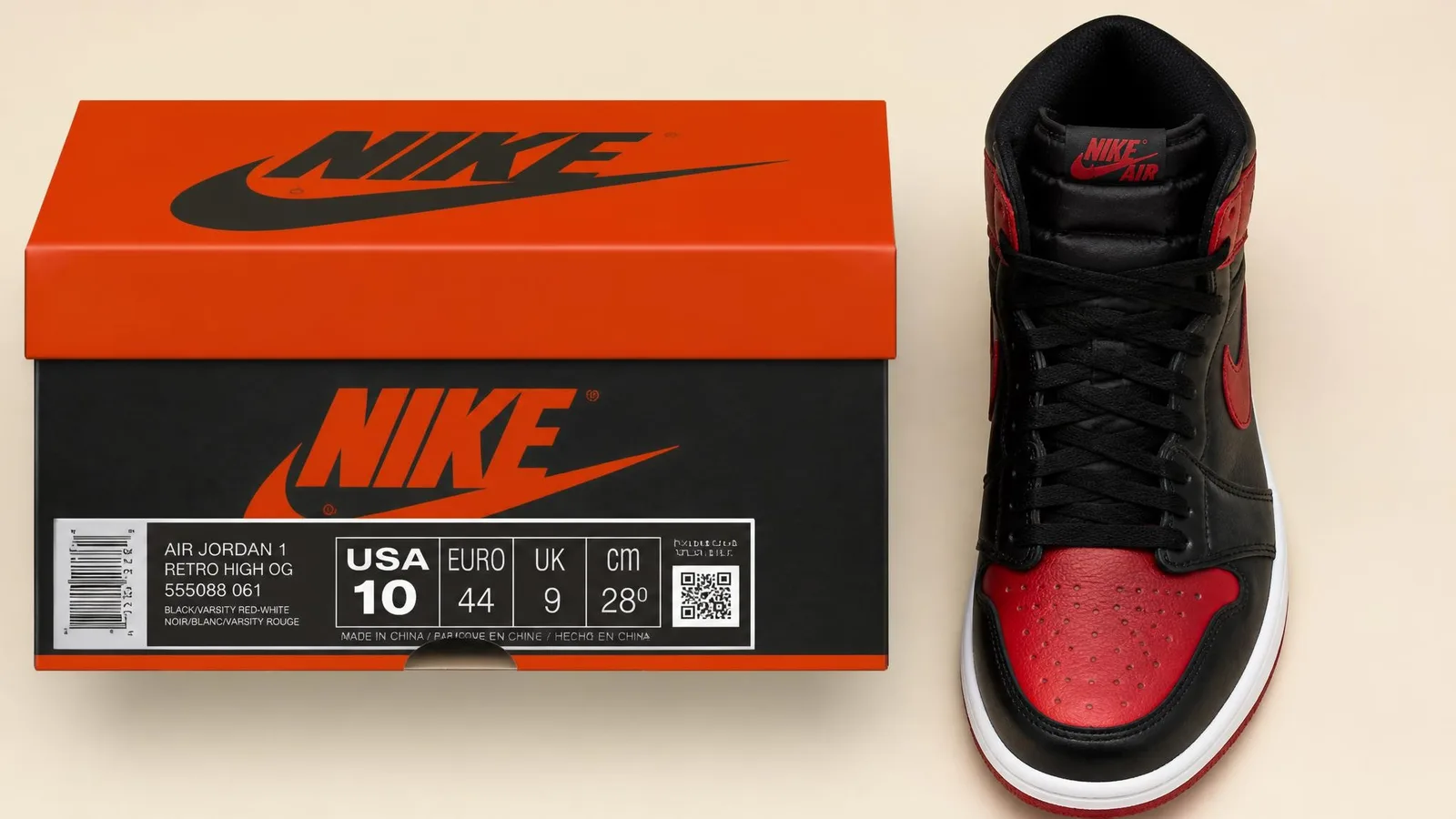
- Official style code. Record the code printed on the box label or size tag. For many modern Nike and Jordan releases, it appears as six digits, a hyphen and three more digits, for example,
123456-001. Use the code exactly as printed. - Size category. Include both the size and its category, such as Men's US 10 or GS US 5Y. A number without its sizing system can be ambiguous.
- Condition. Record whether the pair is dead stock, used or heavily worn, and update the entry as its condition changes.
These fields identify a release-level record. If you own more than one pair with the same seven fields, add an internal inventory ID, purchase date or storage location so each physical pair remains distinct.
How Air Jordan Model Numbers Help Organise a Collection
Numbered Air Jordan models give you a natural first level of organisation. Grouping by model lets you view every release of a silhouette together, for example, all your Air Jordan 4s across different years and colourways.
The model alone is not enough. It will not distinguish an earlier retro from a later retro of the same colourway. Pair it with the release year and style code to identify the release more precisely.
When adding a pair, check the box label and the size tag rather than relying on a seller's listing title or a nickname alone. If you are comparing tools, this collector app comparison can help you assess how different apps handle collection records.
Retro vs Original: Why the Difference Matters
An original release belongs to a model's initial release period. A retro is a later re-release of an earlier silhouette or colourway. Retros may resemble the original closely, but they can differ in materials, shape, branding, production details and market value.
Recording both the release type and year prevents different versions from being merged. "Air Jordan 1 Chicago" is incomplete; "Air Jordan 1 Retro High OG Chicago, 2015" is a much more useful catalogue description.
You may also see "OG" in an official product name or in collector terminology. Because usage can vary, record the product name and style code shown on the label instead of inferring release details from "OG" alone.
How to Find the Official Style Code
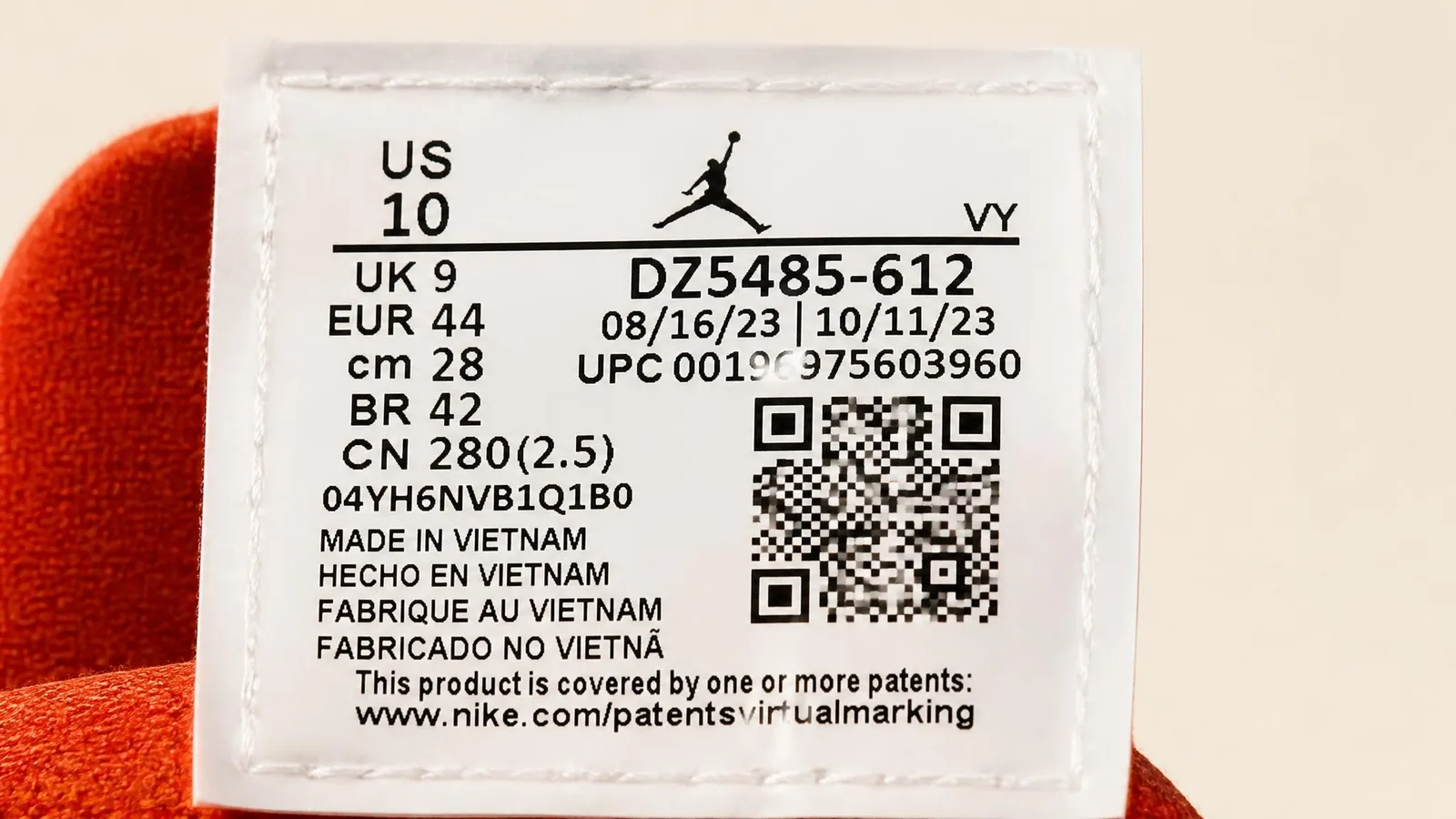
On modern Air Jordans, the official style code is usually printed on the box label and the size tag inside the shoe. It commonly follows a format such as 123456-001: a six-digit product code followed by a three-digit colour code.
The style code is one of the best ways to separate similarly named releases. Search the exact code and compare the model, colourway and release information with reputable product records. Also check the production dates on the size tag when researching a release, as the style code identifies the product rather than an individual physical pair.
Record the code when you first add a pair. Reconstructing records for pairs you already own is possible, but it takes more time than capturing the details at the start.
Size Category and Condition Affect Collection Value
Size is more than a number. Men's, women's, grade school and other sizing categories may serve different market segments. Record the category explicitly so you compare your pair with the relevant listings and sales.
Condition also has a major effect on value. A simple three-tier system is a useful starting point:
- Dead stock (DS): Unworn. Note separately whether the original box and accessories are included.
- Used: Worn but well maintained, with limited signs of use.
- Heavily worn: Clear wear, damage, staining or material deterioration.
Because condition descriptions can be subjective, add photos and short notes where possible. This guide to grading sneaker condition can help you apply your categories consistently.
Worked Example: Separating Two Similar Jordan 1 Records
Imagine you own two Air Jordan 1 Retro High OG pairs that share the same colourway nickname but were released in different years. Your catalogue could record them like this:
FieldPair APair BModelAir Jordan 1Air Jordan 1Release yearYear AYear BRelease typeRetro High OGRetro High OGColourway nicknameSame nicknameSame nicknameOfficial style codeCode from Pair A's labelCode from Pair B's labelSize categoryMen's US 10Men's US 10ConditionUsedDead stock
The nickname and model are identical, but the release year, style code and condition keep the records separate. Use the actual information printed on each pair and box rather than copying placeholder or seller-supplied details.
A Simple Workflow for Adding Each Pair
Use the same process every time you add a Jordan to your catalogue:
- Check the box label and the size tag.
- Record the model and full product name.
- Add the release year and release type.
- Enter the exact style code.
- Record the size and sizing category.
- Assess the current condition and note included packaging or accessories.
- Add photos, a purchase date and an internal ID if you want pair-level tracking.
A consistent workflow reduces missing data and makes future valuation, insurance or resale research easier.
How CYKI Applies This Structure
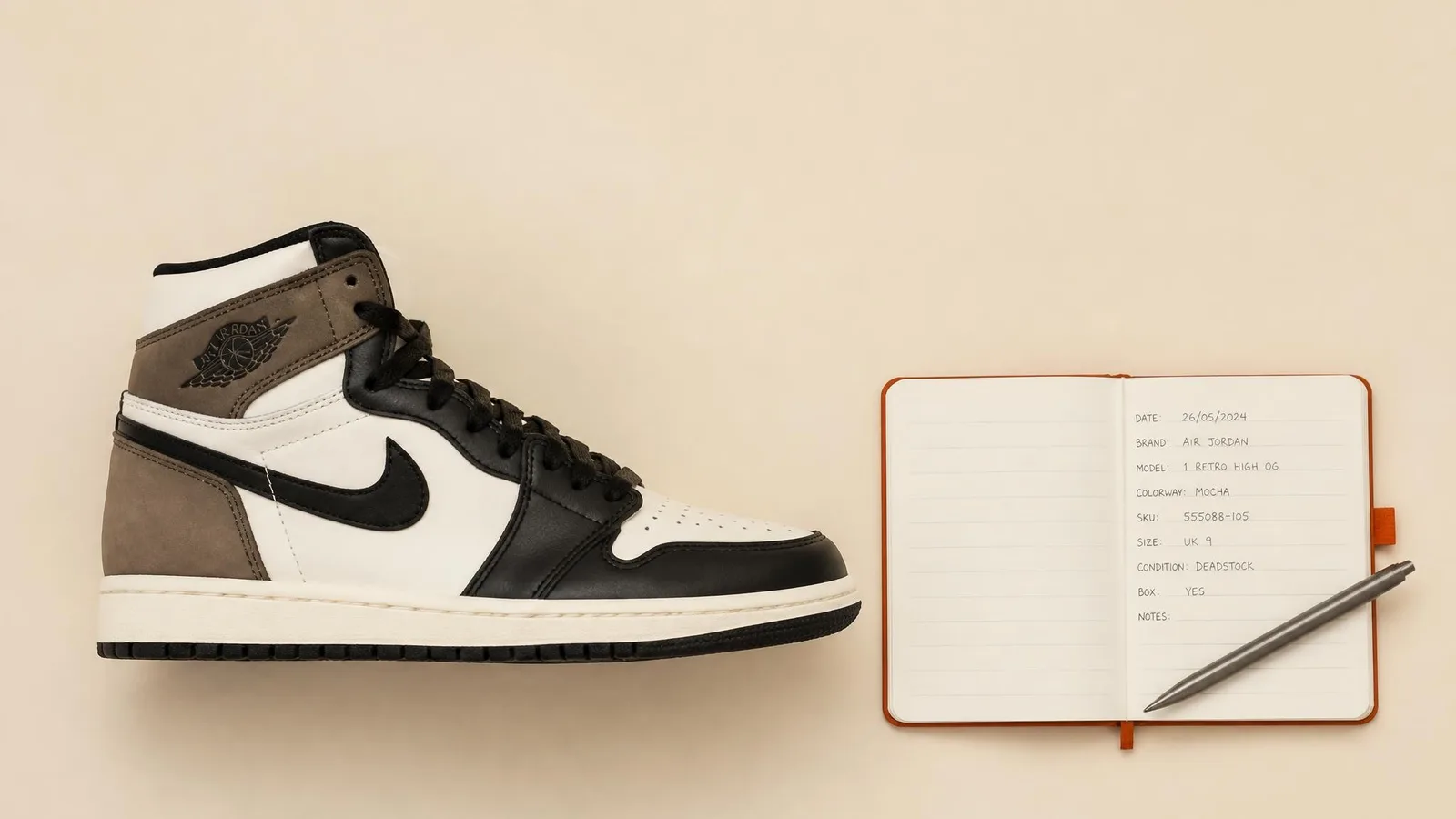
CYKI provides a structured sneaker catalogue for recording key details about each pair. It is designed to organise a collection and provide rack value estimates informed by resale marketplace data.
The CYKI 100 offers a benchmark for Jordan cohort performance against the broader sneaker market. Once your collection is catalogued consistently, you can compare models without relying on nicknames alone.
Whether you enter pairs manually or migrate an existing list, the goal is the same: create a distinct, complete record for every release in your rack.
Frequently Asked Questions
What is the best app for cataloguing a Jordan collection?
Look for an app that records the model, release year, release type, colourway, style code, size category and condition. Photos, notes, export options and value estimates are also useful. The best choice is the one that lets you keep complete records and retrieve or export your data easily.
Is a spreadsheet good enough for tracking Jordans?
A spreadsheet can work well for a small collection and gives you control over your fields. It becomes more labour-intensive when you want current value estimates, images, release data or mobile access. A dedicated sneaker collection spreadsheet alternative may reduce that manual work. You can also learn more about estimating your collection value.
Does grade school sizing affect resale value?
It can. GS and men's pairs may have different supply, demand and comparable sales. Always record the sizing category and use sales data for the same release, size category and condition when estimating value.
How do I distinguish Jordan retros from different years?
Start with the style code on the box label or size tag, then confirm the release year and full product name. If two records still appear identical, compare production dates, packaging and trusted product references.
How should I record a pair I plan to wear?
Record its condition when you add it, then update the entry after wear. Keeping dated photos and short condition notes creates a clearer history than relying on memory.
Conclusion
Knowing how to track an Air Jordan collection means recording enough detail to distinguish one release from another. Model, release year, release type, colourway nickname, style code, size category and condition form a dependable seven-field foundation. If your rack also holds Dunks, the same principles apply with an extra classification layer. The Dunk collector's guide to organising GRs, SBs and collaborations covers that taxonomy.
For pair-level tracking, add an internal ID, purchase information, storage location and photos. With a consistent system, you can see exactly what you own, research its value more accurately and manage your collection as it grows.
Rack your Jordans by exact model, release and size in your sneaker catalogue.