You wrote down "Jordan 4 grey" and a price. A year later, that description matches 4 different pairs in your size, and the price you recorded was before fees and shipping. You have a list, but you cannot actually search it, verify it, or trust it.
Here is what information to log for each sneaker so your rack becomes a real record: style code, model name and colourway, size with system, cost basis, purchase date and source, condition and completeness, and a personal photo with a one-line note. These are the 7 fields that make a sneaker collection searchable, verifiable, and knowable. Most collectors record the name and maybe a price, then stop there. The 7 fields below are the ones that actually do the work later.
1. The Style Code (SKU)
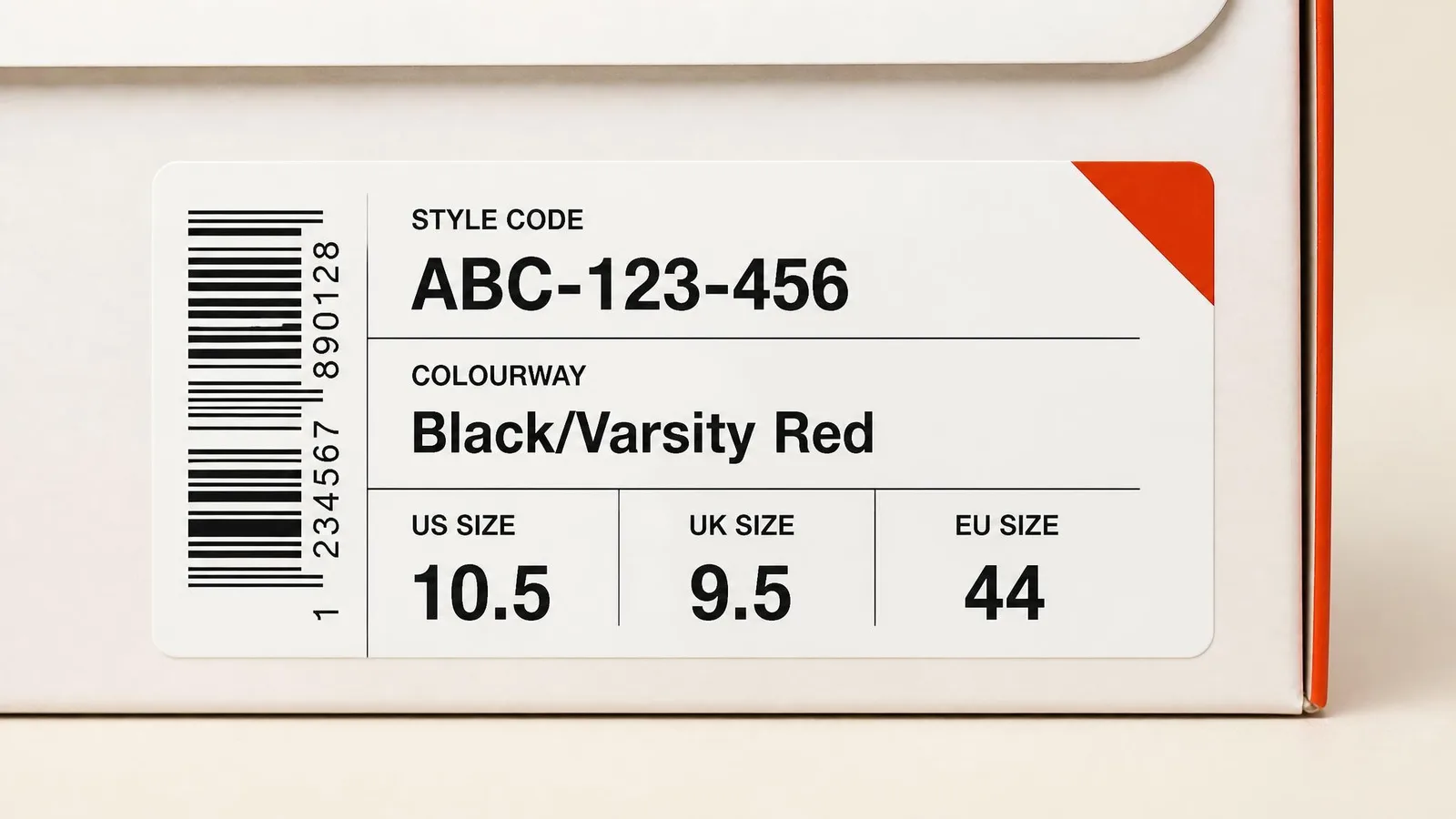
Record the style code exactly as it appears on the box label or tongue tag, hyphens included. This is the sneaker style code SKU explained in its simplest form: a string of letters, numbers, and hyphens (typically formatted like ABC123-456) that identifies not just the model but the specific colourway, production run, and size-run origin.
The model name is not a unique identifier. "Jordan 4 grey" could refer to the Cool Grey, the Frozen Moments, the Paris, or another release entirely. Each has a different style code, a different retail price, and a different resale history. Only the SKU resolves that ambiguity.
When you need to look up a resale price, file an insurance claim, or write an accurate listing, the style code is the field that makes the search precise. Without it, you are guessing which pair cost $190 and which cost $85. If you want to find the code quickly, tools built for sneaker cataloguing let you search by SKU and store it alongside the rest of your record.
Write it down once. It takes 10 seconds. It saves you from ever confusing 2 pairs again.
2. Model Name and Colourway, Written the Way the Market Writes It
Record 2 things: the nickname you use and the official colourway descriptor from the box label.
"Bred" is how you talk about the pair. But StockX and GOAT list it by the official colourway descriptor, which might read "Black/Varsity Red" or a platform-specific variant. This is the resale market sneaker colourway naming gap that catches collectors off guard. You search your nickname, the marketplace returns nothing, and you end up reading the wrong listing for the wrong pair.
The official colourway name sits on the box label, usually right next to the style code. Record it verbatim rather than from memory. Resale marketplace data is indexed by that official descriptor, not by the name the community gave the shoe.
Having both fields means your records match live listings whenever you check a resale estimate or write one yourself. If you only wrote the nickname, you might be comparing your pair to the wrong listing and reading a price that belongs to a completely different release.
3. Size, with the Sizing System Written Out
Record 3 pieces of information: the number, the sizing system (US, UK, or EU), and the gender or age category (men's, women's, or GS).
A US men's 9 is a UK 8 and an EU 42.5. It is a physically different shoe from a US women's 9 or a GS 7Y. Recording just "9" creates a record that is ambiguous across all of those conventions. In a collection of 20 or more pairs, 2 entries both reading "9" with no further context is a real problem.
The rule is simple: always write the full form. "US 9 Men's" takes 3 seconds longer to type. It eliminates the question of which sizing system you meant, which matters every time you search your records, sell a pair, or compare with a market listing that specifies US, UK, or EU.
If you have the box, all 3 systems are printed on the label. Record them all. At minimum, record the one you use and the gender or age category.
4. Your True Cost Basis
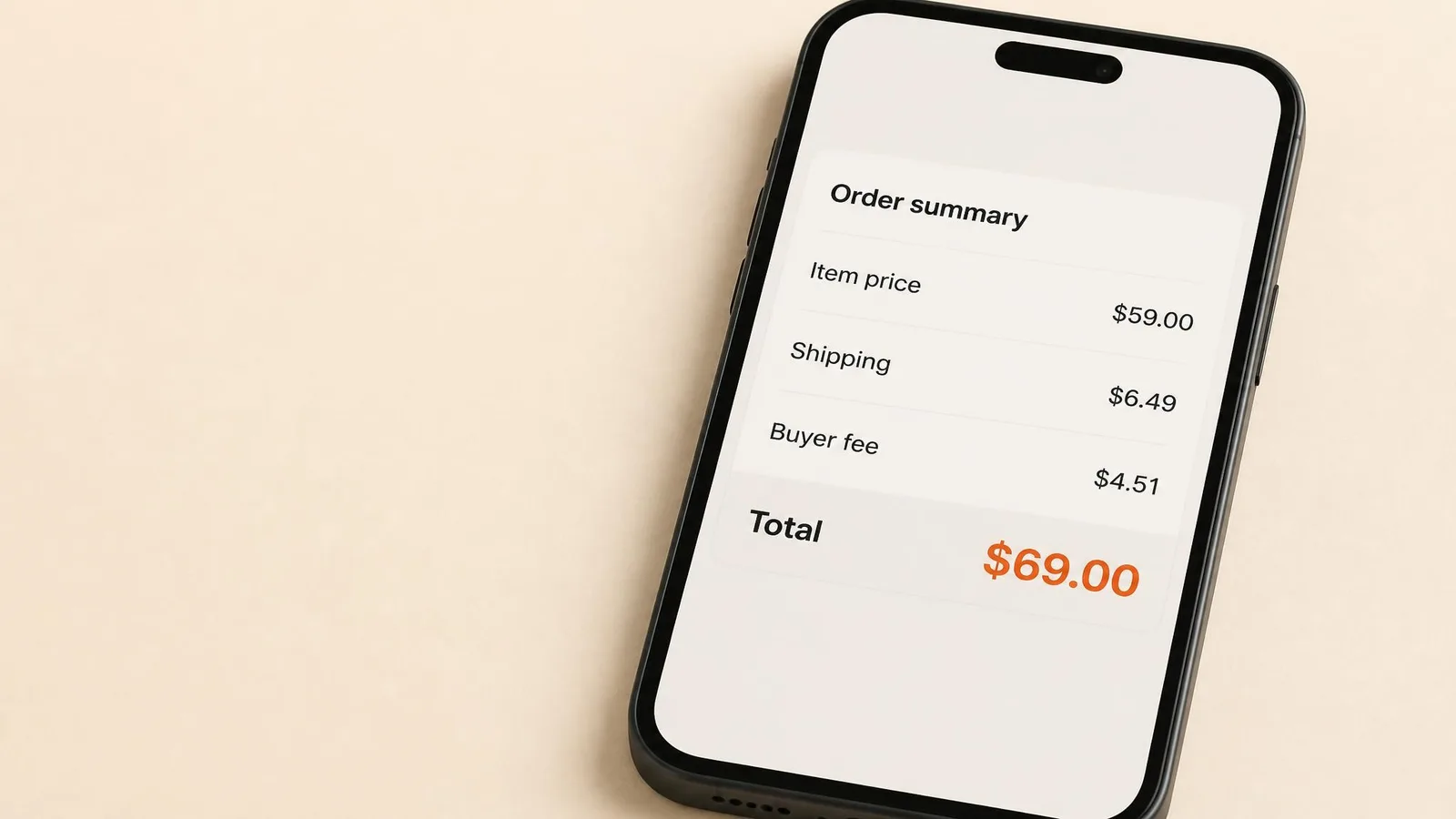
The price on the receipt is not what you paid. Your true cost basis is the purchase price plus tax, plus shipping, plus any buyer fees charged by the resale platform. That is the number you actually spent.
Buyer fees on major resale platforms can add a meaningful percentage to the stated price. A pair listed at £190 might carry a true cost basis above £210 once fees and shipping are included. The gap between what you think you paid and what you actually paid is where sneaker resale value tracking breaks down for most collectors.
Without the all-in number, any profit or loss calculation is an approximation. You might believe you made £40 on a sale when the real figure was £15, or nothing at all. Recording cost basis turns sneaker resale profit and loss tracking from a rough guess into a cost-basis P&L that means something.
Record the true cost at the point of purchase. Going back later to reconstruct fees from order confirmation emails is possible, but it is slow and easy to get wrong. The 30 seconds it takes to add up the total at checkout saves real confusion when you eventually want to know what your collection cost you.
This field matters whether you plan to sell or not. Knowing what you spent is personal record-keeping. It does not require an exit strategy.
5. Purchase Date and Where You Got It
Record the date and the source: retail drop, resale marketplace, local shop, trade, raffle win, or gift.
The purchase date sets the holding period. That is useful context if you ever decide to sell, but it is also just part of the pair's story in your rack. When you look back through 30 or 40 pairs, the timeline of when you bought each one is a record of what you cared about at different points.
The source tells you something practical about your own buying patterns. If every retail cop has been a miss and every resale purchase has landed exactly what you wanted, that is worth knowing the next time a release comes around.
Some of the most personally significant pairs in a collection came from specific moments or specific people. Logging the source preserves that context in a way that "paid £140" never will.
Without a date, you cannot calculate a holding period. Without a source, you cannot distinguish between what you paid at retail and what you paid on the secondary market. Both pieces of information take seconds to record.
6. Condition and Completeness
Record condition using the grades the resale community actually uses: deadstock (unworn, original packaging), VNDS (tried on or worn once indoors, no meaningful sole or upper wear), or worn (with a note on how much).
VNDS is widely understood, but it is subjective. There is no universal standard across platforms. A pair you call VNDS might be graded differently by a marketplace authentication team. Note your own assessment in your records so you have context when comparing your grade to a live listing.
Completeness means the box, extra laces, hang tags, receipts, and any accessories that shipped with the pair. Record what you have and what is missing. On resale platforms, pairs listed without the original box frequently sell for less than the same pair with box. The gap varies by model and buyer demand, but it is consistent enough that knowing whether you have the box is a data point worth capturing.
Record condition at the point you acquire the pair. That gives you a baseline. You can track how the pair changes over time, set a realistic expectation if you list it, and compare your record with marketplace listings more accurately. CYKI accounts for condition in its valuations, and the methodology page explains how those adjustments work and where data gaps exist.
Condition records are useful even if you never sell. They tell you what state the pair was in when it entered your collection.
7. Your Photo and the One-Line Story Behind It
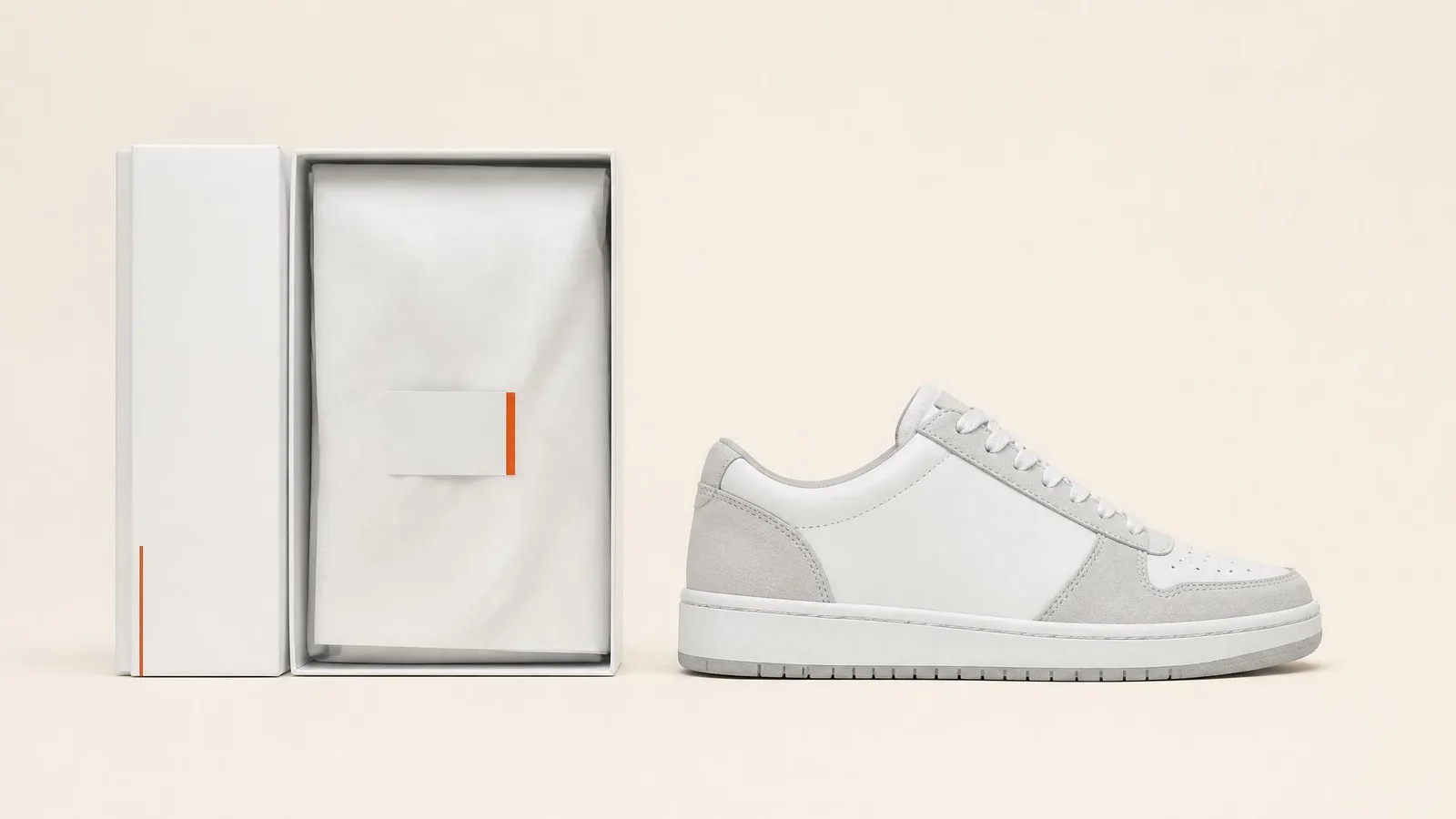
Take your own photo of the pair. Write 1 sentence about why you bought it.
Not a description of the shoe. The reason it is in your collection. "Copped these for my birthday after missing the first drop" is more useful to future you than "classic colourway."
This field has no financial function. It will not change your rack value or your cost-basis P&L. It is the field people are most glad they filled in 5 years later.
Your grails deserve more than a name on a list. A photo you took and a line you wrote is the difference between a record and a memory.
The photo also serves a practical purpose: it documents the pair's condition at the time you acquired it. That gives you a visual baseline alongside the condition grade you recorded, one that is harder to dispute than a word.
Keep the note honest and specific. A single sentence. Future you does not need a paragraph. Future you needs the one detail that makes the pair yours and not just another entry in a spreadsheet.
FAQ: Recording Your Sneaker Collection
Does not having the original box affect sneaker resale value?
Yes, in most cases. Pairs listed without the original box on resale platforms typically sell for less than the same pair with box. The gap depends on the model and the buyer pool. It is not a fixed amount, but it is real enough to be worth recording whether you have the box or not.
How do I track my sneaker purchase history when receipts are gone?
Start from what you can verify: order confirmation emails, platform purchase history, bank or card statements. For older pairs where none of those exist, record your best estimate and note that it is an estimate. An imperfect record is more useful than no record.
What sizing system should I record for my sneakers?
Record all 3 if you have the box: US, UK, and EU. At minimum, record the system you use most and the gender or age category (men's, women's, or GS). The point is to eliminate ambiguity for any future search, sale, or comparison.
How do I value my sneaker collection accurately?
Collection value is an estimate based on real resale activity: what pairs in comparable condition have actually sold for recently, not asking prices. Any figure you see is a snapshot, not a guarantee. Tools that help you understand how to value a sneaker collection should explain their methodology and identify where data gaps exist. If the methodology is not published, the number is harder to trust.
Is a spreadsheet good enough for tracking a sneaker collection?
A spreadsheet can hold the data. It is not built to query it across your full collection, update valuations automatically, or surface insights you did not think to ask for. Spreadsheets are a starting point. Most collectors with more than a handful of pairs eventually outgrow them.
A Collection You Can Query Is a Different Thing from a Collection You Own
Once all 7 fields are recorded, you can answer questions your old notes never could. Which pair. What you paid, all in. What it is estimated to be worth now. Why you own it. That is a collection you can search by SKU, filter by condition, sort by cost basis.
Recording all 7 fields takes about a minute per pair when the tool is built for it. The overhead was never in the data itself. It was in using a system that was not designed for how to catalog a sneaker collection properly.
If you are looking for a sneaker collection app better than a spreadsheet, collectors are already comparing their options. CYKI is built to make every one of these 7 fields fast to record and useful the moment it is saved.
Pre-register for CYKI on Google Play or pre-order CYKI on the App Store.
Your collection, known.