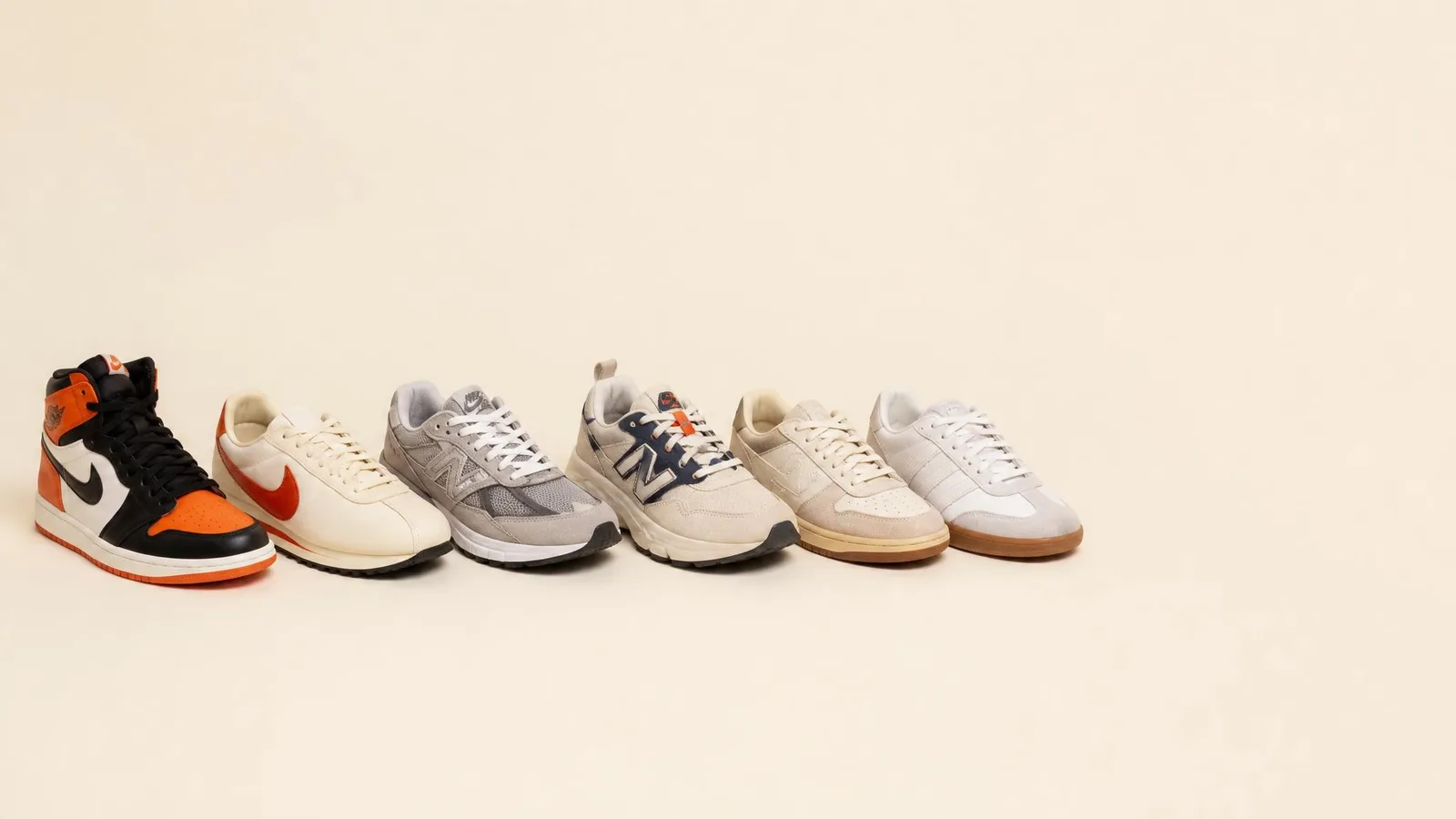
Every drop feels urgent. Every pair on your feed looks essential. After a few months of reactive buying, you look at your shelf and see everyone else's taste staring back at you. Learning how to build a sneaker collection that actually reflects you starts before the next purchase, not after it.
Building a sneaker collection around personal taste means identifying six preferences, turning them into a one-line collecting thesis, and using that thesis to evaluate every future purchase. Pair count, spend, and rarity do not make a collector. Clarity does. A focused 10-pair collection can say more about its owner than 100 pairs bought on impulse.
This guide will help you write that thesis. First, it helps to understand the psychology behind why we collect and why release culture can make your own preferences difficult to hear.
Why Your Collection Keeps Growing Without a Direction
Release culture is built on urgency. Every drop is framed as unmissable, every collaboration positioned as the last chance to own something that matters. That framing is deliberate. It works because it replaces your preferences with a countdown.
Social feeds amplify whatever is loudest, not whatever fits your taste. The most-hyped pair in your timeline may have nothing to do with the silhouettes, material or stories you actually care about. But the algorithm does not know that, and after enough exposure, neither do you.
Collectors often arrive at the same advice: buy slowly, buy what you love, and stop treating every hyped release as essential. The lesson usually comes after a few purchases that felt urgent at checkout but strangely unimportant once they reached the shelf.
The difference is simple. Reactive buying produces a rack that looks like the algorithm built it. Intentional buying produces a rack that looks like you. Grails are not defined by resale price. They are defined by whether you would keep the pair if nobody else ever saw it.
Six Questions That Turn Taste Into a Collection
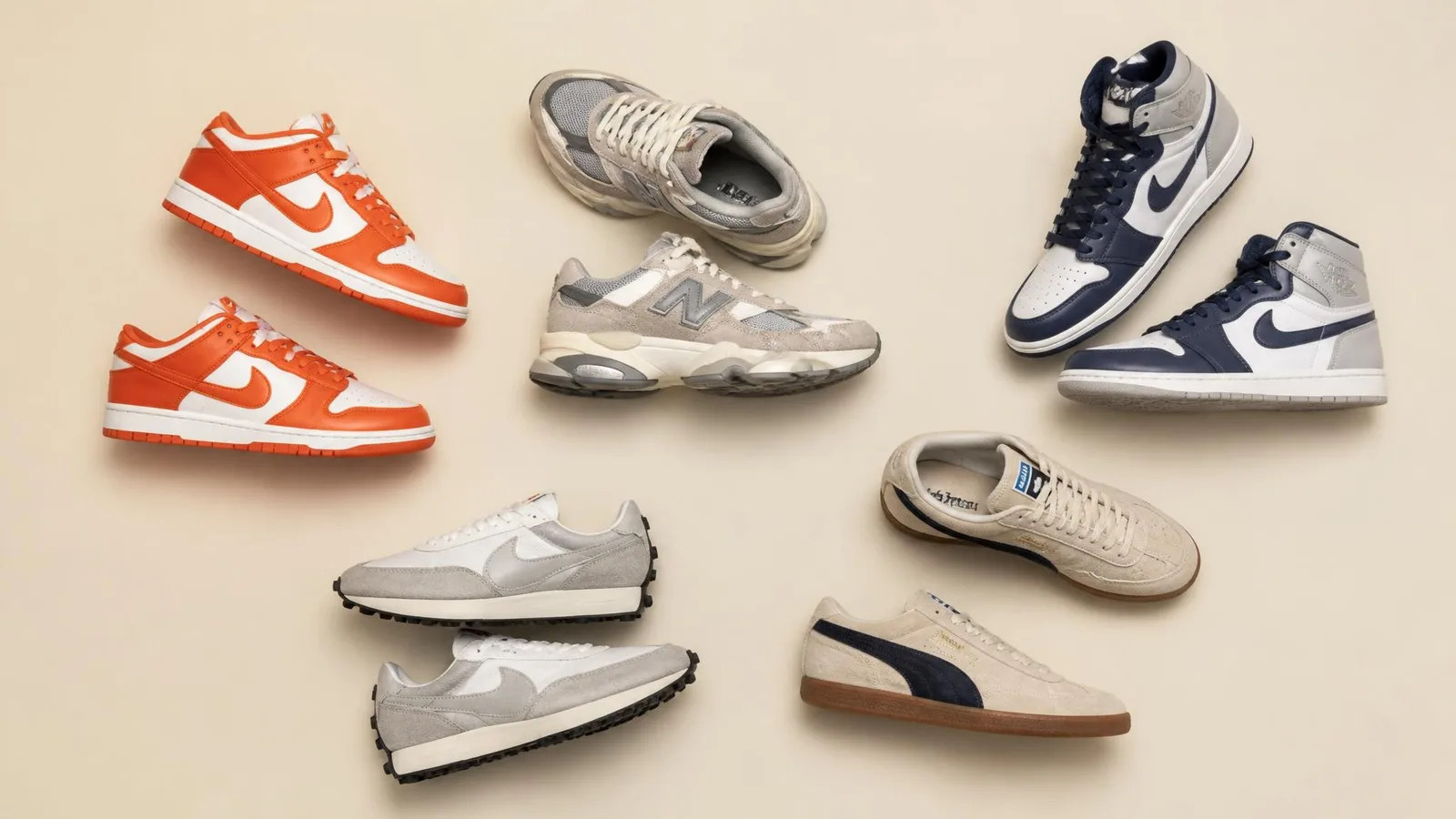
Building a sneaker collection around identity starts with 6 self-reflection criteria: silhouettes, material, era, colour, story and wearability. These are not rules. They are questions you ask yourself to surface a preference pattern you already have but may not have named yet.
You do not need strong answers on all 6. Even 2 or 3 clear preferences reveal a pattern worth following. Specificity is a strength here, not a limitation. Collectors who know they gravitate toward 90s runners or premium leather Dunks make faster, more confident decisions than those who stay deliberately open to everything.
Here are the 6, starting with the ones that tend to surface first.
-
Silhouette. This is often the first loyalty a collector develops. Jordan 1s, Dunks, New Balance 990s, Yeezys: each shape carries a different design language and cultural lineage. Look at the pairs you already own. If one silhouette keeps appearing, that is not a coincidence. That is a signal. Ask which shape you keep coming back to. The answer may be the first organizing principle of your collection.
-
Material. Premium leather, technical mesh, suede, canvas. Pull out every pair you own and note the material split. Most collectors discover a clear lean they never consciously chose. A preference for tumbled leather over knit uppers says something real about your taste, even if you have never articulated it.
-
Era. This criterion connects collecting to design history and personal memory. Are you drawn to 80s basketball originals, 90s running heritage, or 2000s collaborations? Any era is valid. Which era should you collect? Start with the one that already pulls you in. Look at the pairs you love most. If they cluster around a decade, you have your filter.
-
Colour. Often dismissed as surface-level, but a consistent colourway preference is a real organising principle. Neutral tones, bold colour blocking, tonal pairs: if you pulled every pair you actually wear, what colours dominate? That pattern tells you more about your taste than any release calendar.
-
**Story **is the criterion most guides skip entirely. A pair connected to a personal memory, a cultural moment you lived through, or a collaboration that means something to you carries a kind of value that resale marketplace data cannot measure. You do not need to justify story-driven collecting to anyone. A pair that matters to you belongs in your collection regardless of what the market says about it. Some of the best grails in any collection are not the most expensive pairs. They are the ones with a story the owner can tell in 2 sentences.
-
Wearability deserves the same respect. If you have ever wondered whether you should collect sneakers you actually wear, the answer is straightforward: yes, if that fits how you collect. Knowing which pairs are in rotation and which are deadstock is useful information. It is part of understanding your own collection, not a concession. Ask yourself: if you had to pick 5 pairs to wear for the rest of the year, which ones would they be? That answer reveals something real about your priorities. A collecting thesis can include both deadstock pairs and pairs you regularly wear. Neither approach is more legitimate; what matters is knowing the role each pair plays in your collection.
How to Write Your Collecting Thesis in One Line
Before You Buy: The Five-Question Test
When a new pair catches your attention, ask:
- Does it fit at least two parts of my collecting thesis?
- Would I still want it if it received no attention online?
- Does it add something meaningfully different to my collection?
- Can I explain why I want it without mentioning scarcity or resale value?
- Would I rather own this pair than save the money for something that fits my thesis better?
A "no" does not automatically disqualify the pair. It simply tells you whether you are making a considered exception or reacting to the moment.
The thesis does not have to be permanent. It is a current preference filter you can revise as your taste develops. What it gives you right now is a concrete question to ask every time a hyped drop lands: does this fit what I am building?
If a pair does not fit, that does not mean you can never buy it. It means you are buying it as an exception, not out of impulse. That single shift is enough to filter most reactive purchases. Sneaker collecting without chasing hype is not about restriction. It is about knowing why you are spending before you spend.
For a new collector, the principle is simple: define what you love, write it in one line, and ask every purchase either to support that thesis or consciously challenge it.
Once You Have a Thesis, Your Rack Does the Rest
Once your thesis exists, your existing collection looks different. You can see which pairs fit, which were impulse buys, and which are grails you would never trade. That clarity is the whole point.
The natural next step is catalouging what you own. Record what you paid, which pairs you wear, which ones carry a story, and which ones fit your thesis. You can also track estimated resale value, not because the market decides what belongs in your collection, but because cost and value are useful parts of understanding what you own.
CYKI is built for that view. Add each pair to your rack and see your collection, cost basis, and daily market estimates in one place. Your rack becomes a living record of your taste: what fits, what changed it, and what you chose to keep.
Write your collecting thesis. Then open your rack and see which pairs prove it.
Frequently Asked Questions
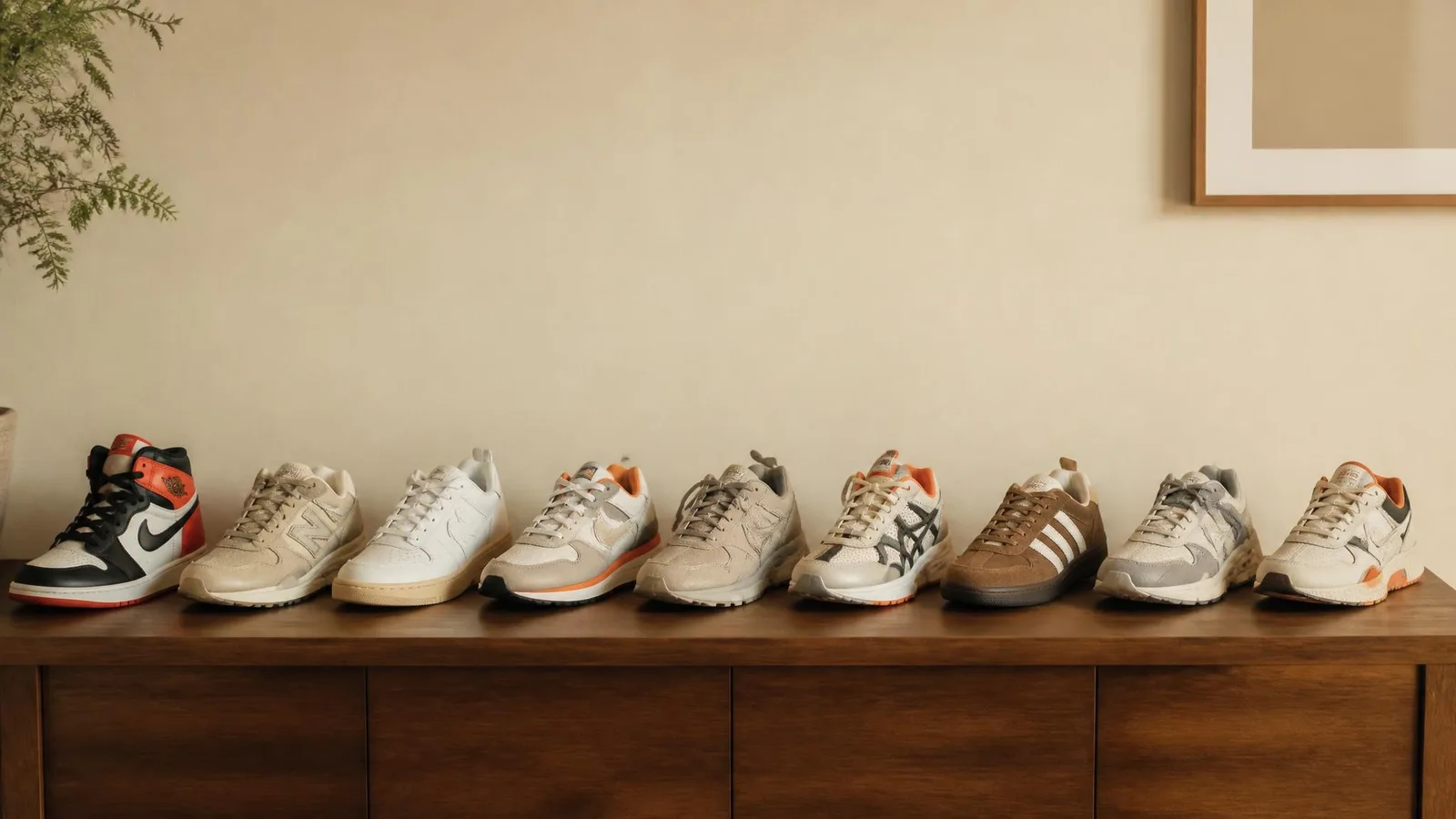
How many sneakers do you need to be a collector? There is no pair-count threshold. A collector is someone who builds intentionally. Five pairs chosen with intention can form a meaningful collection. Owning 200 pairs does not automatically make a collection more personal or considered.
Should I collect sneakers I actually wear? Yes, if that fits your thesis. Wearability is a legitimate collecting criterion. Knowing which pairs are in rotation and which are deadstock is useful self-knowledge, not a compromise.
How do I stop buying hyped sneakers I do not really want? Write your thesis first. When the next drop arrives, the question changes from "do I want this?" to "does this fit what I am building?" That shift filters most impulse buys before you reach checkout.
What era of sneakers should I collect? The era that already draws you in. Look at the pairs you own and love most. If they cluster around a decade or a design movement, you have your answer. There is no wrong era.