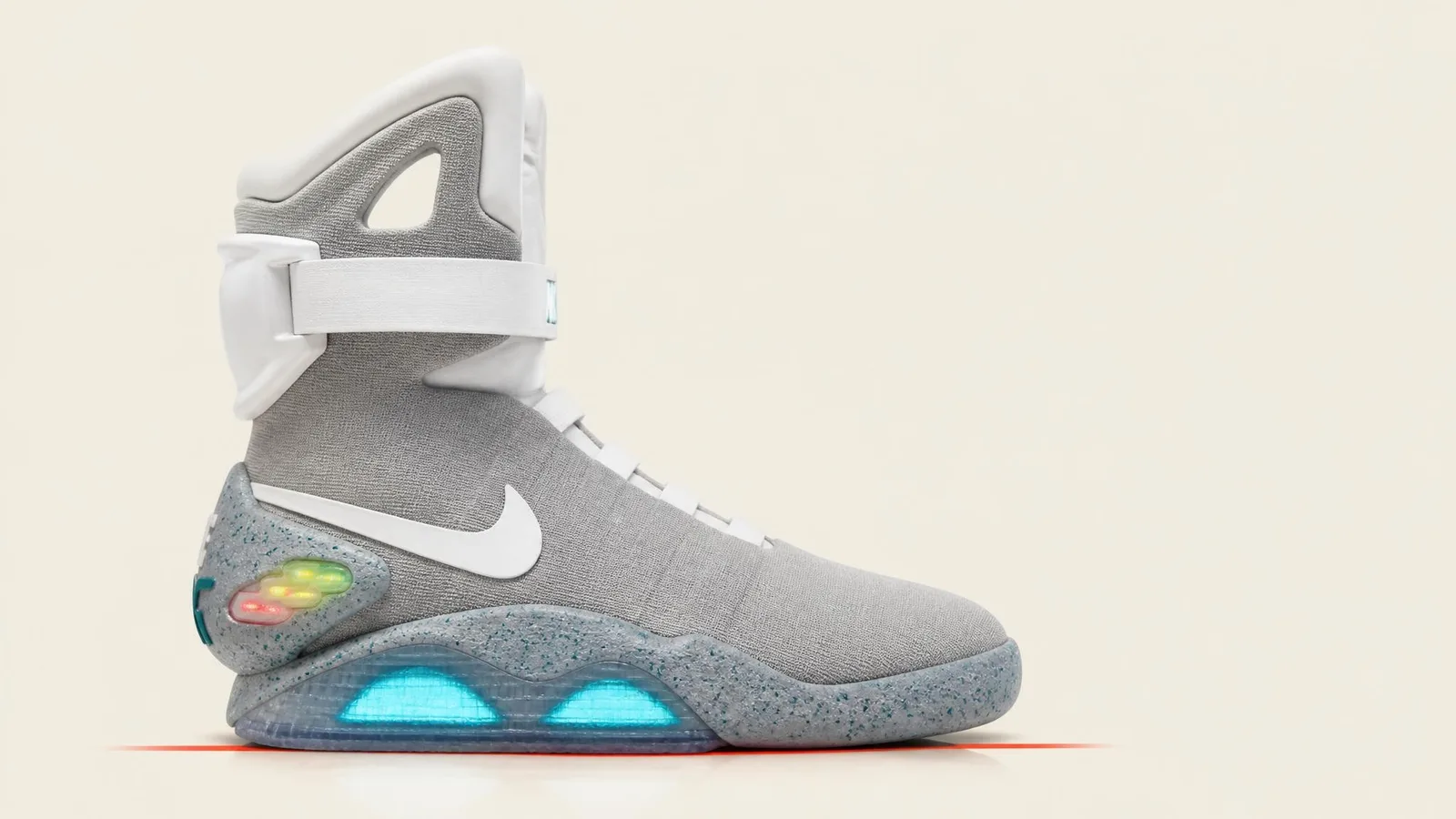
The Nike Mag was never sold at retail. Both releases were charity distributions, and that single fact explains every pricing oddity you encounter on the resale market. The 2011 release produced 1,510 pairs. The 2016 release produced 89. They are functionally different shoes that trade at very different levels. No single figure is what the Nike Mag is worth. Any number you find is a snapshot from a specific date and source, not a guarantee.
How much a Nike Mag costs on the resale market depends on which year you are looking at, whether the electronics work, and how complete the pair is. The Nike Mag resale market is so thin that a single transaction can shift the observed range by thousands of dollars.
How the Nike Mag Was Actually Sold
The Nike Mag charity auction on eBay in 2011 sold 1,500 pairs over 10 days, with 10 additional pairs distributed at events. That brought the total production run to 1,510 pairs. The average winning bid landed at approximately $3,800, and the campaign raised $4.7 million for the Michael J. Fox Foundation for Parkinson's Research.
The 2016 release worked differently. Nike distributed 89 pairs by raffle, not open auction. Winning entries were drawn at random, not awarded to the highest bidder. That campaign raised $6.75 million for the same foundation.
Neither release was a retail product. Nike cannot manufacture more pairs to meet demand. Supply is permanently fixed at 1,510 plus 89. Every pair that is lost, damaged, or destroyed shrinks the available market further. This is what separates Nike Mag pricing from nearly any other sneaker: scarcity here is structural, not the result of hype or artificial limits on a product that could be reissued.
With fewer than 1,600 pairs in global circulation and no possibility of restocks, even basic pricing methodology runs into problems. See how CYKI treats a pair with almost no sales in its methodology.
2011 vs 2016: Two Different Shoes, Two Different Markets
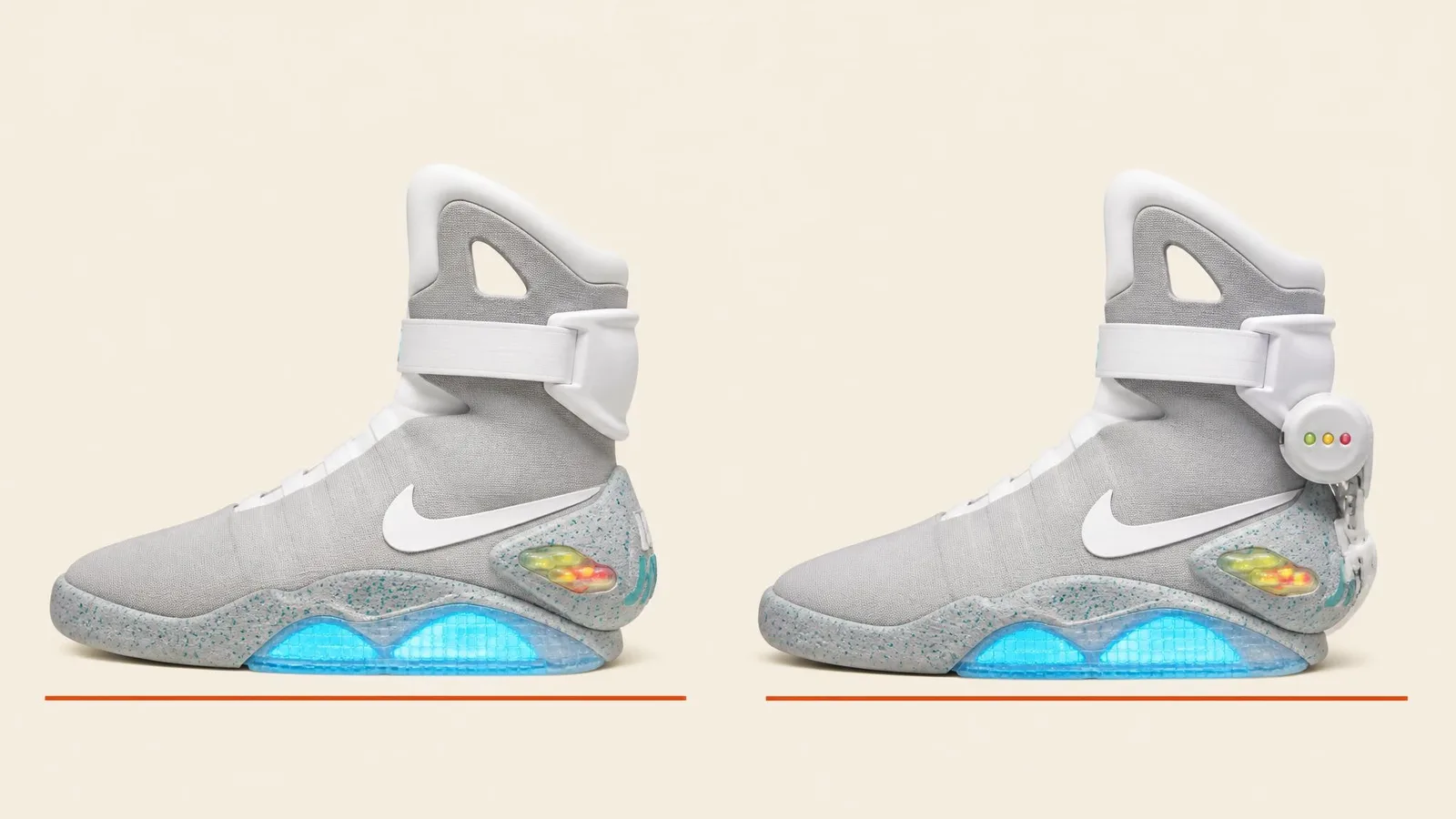
The differences between the 2011 and 2016 Nike Mag go beyond the production number. They are functionally distinct products.
The 2011 Nike Mag (style code 417744-001) laces manually and features LED lighting embedded in the sole. It does not have power lacing. The 2016 Nike Mag with power lacing added a motorized system activated by a button on the heel. This is a meaningful functional difference, not a cosmetic update.
The 89-pair total for the 2016 release is the single most important number when reading its price. At 89 pairs globally, even 1 pair changing hands is a notable market event. A sale of a 2016 Mag can move the observed average in a way that would be impossible for a shoe with thousands of units in circulation.
The 2016 raffle raised $6.75 million for the Michael J. Fox Foundation, a figure that reflects the intensity of demand for fewer than 90 pairs. The 2 releases trade at very different levels precisely because they are not interchangeable. If you are evaluating a pair, establish which year you are looking at before any price figure becomes meaningful.
Where the Numbers Come From
Nike Mag price and resale value figures vary wildly depending on where you look and when. Here is what 2 of the most commonly cited sources showed as of late September 2026.
Complex's price guide lists an average resale of $10,586 for the 2011 Nike Mag and $26,185 for the 2016 pair. These are averages across a small number of recorded sales, not a guaranteed selling price. A single high or low transaction can move the average significantly when the data set is this small.
The Nike Mag last sale on StockX, as observed on 23 September 2026, was $15,744 for the 2011 pair. The lowest ask sat at $19,896 on the same date, and the 12-month sale range stretched from $7,175 to $11,750. That spread, more than $4,500 across 12 months, is the practical consequence of thin sales volume. Sellers and buyers are not always close to agreement, and the gap between what someone is asking and what someone last paid can run into the thousands.
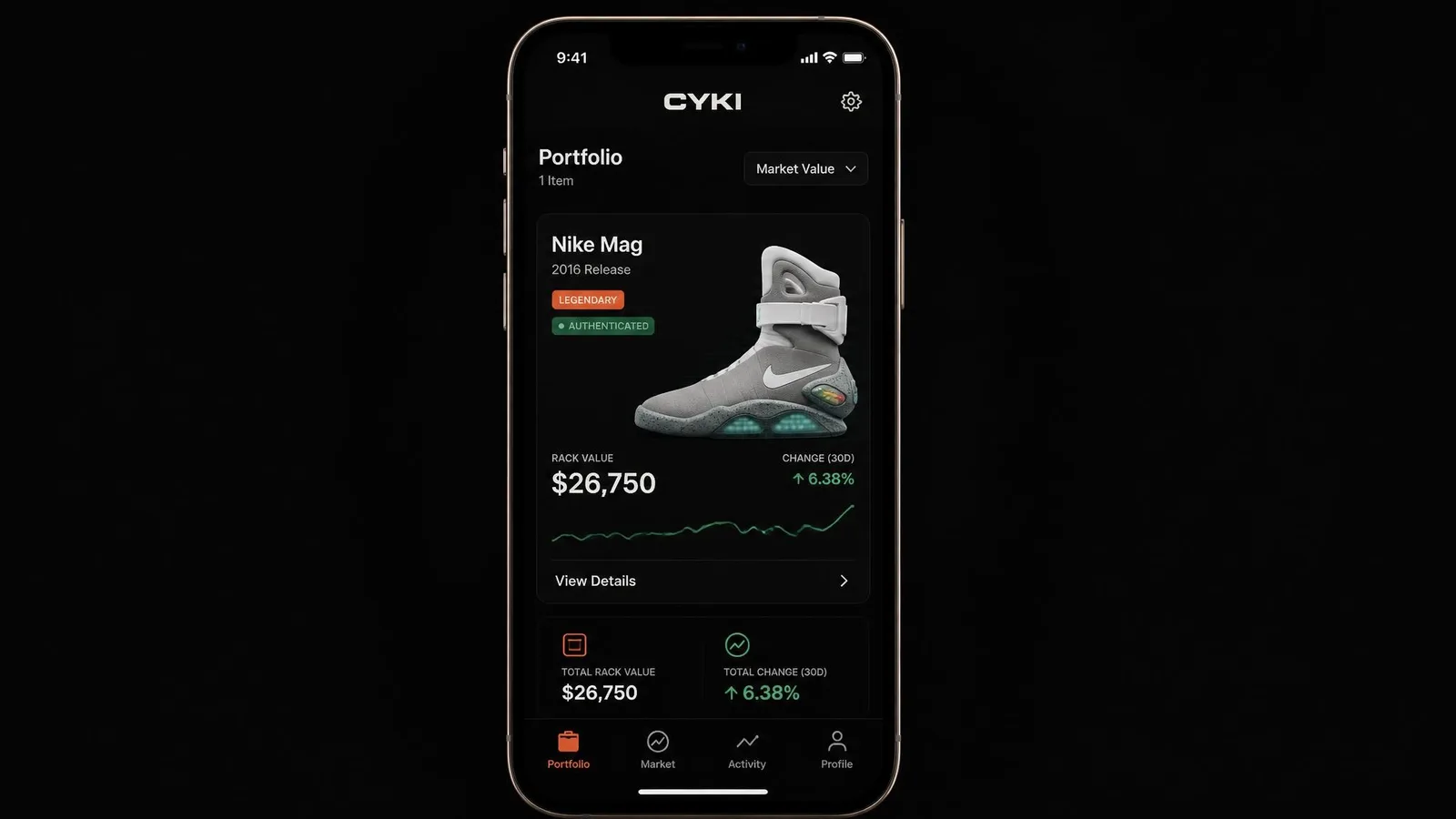
These figures are dated snapshots, not live market rates. Any number you find on a marketplace or price guide should carry a date. For a current rack value estimate based on resale marketplace data, find the Nike Mag in the CYKI catalogue.
What Auction Results Actually Tell You
A 2016 Nike Mag sold for $104,000 at auction. That is a single-event result reflecting 1 buyer's willingness to pay on 1 day under specific auction conditions, not a repeatable market price.
Auction rooms, by design, require the highest bidder to win. When 2 motivated buyers compete for 1 of 89 pairs in existence, the result can exceed any prior reference point by a wide margin. The distance between a $104,000 auction hammer and a $15,744 last sale on a peer-to-peer marketplace is not a contradiction. It is evidence that the Nike Mag resale market is too thin to produce a stable price.
When you see a headline auction figure for the highest recorded auction sale price for a Nike Mag, note the date, the auction house, and whether the conditions are likely to repeat. Treat it as a ceiling data point, not a floor. A ceiling tells you what was possible once. It does not tell you what to expect.
Value Drivers You Can Check Before You Buy or Sell
Before you assign any meaning to a price figure, assess the specific pair in front of you. These variables move a Nike Mag's value independently of market-wide averages.
- Which year. Establish whether the pair is the 2011 or 2016 release. The style code for the 2011 pair is 417744-001. The 2016 pair should have the power-lacing mechanism present and functional.
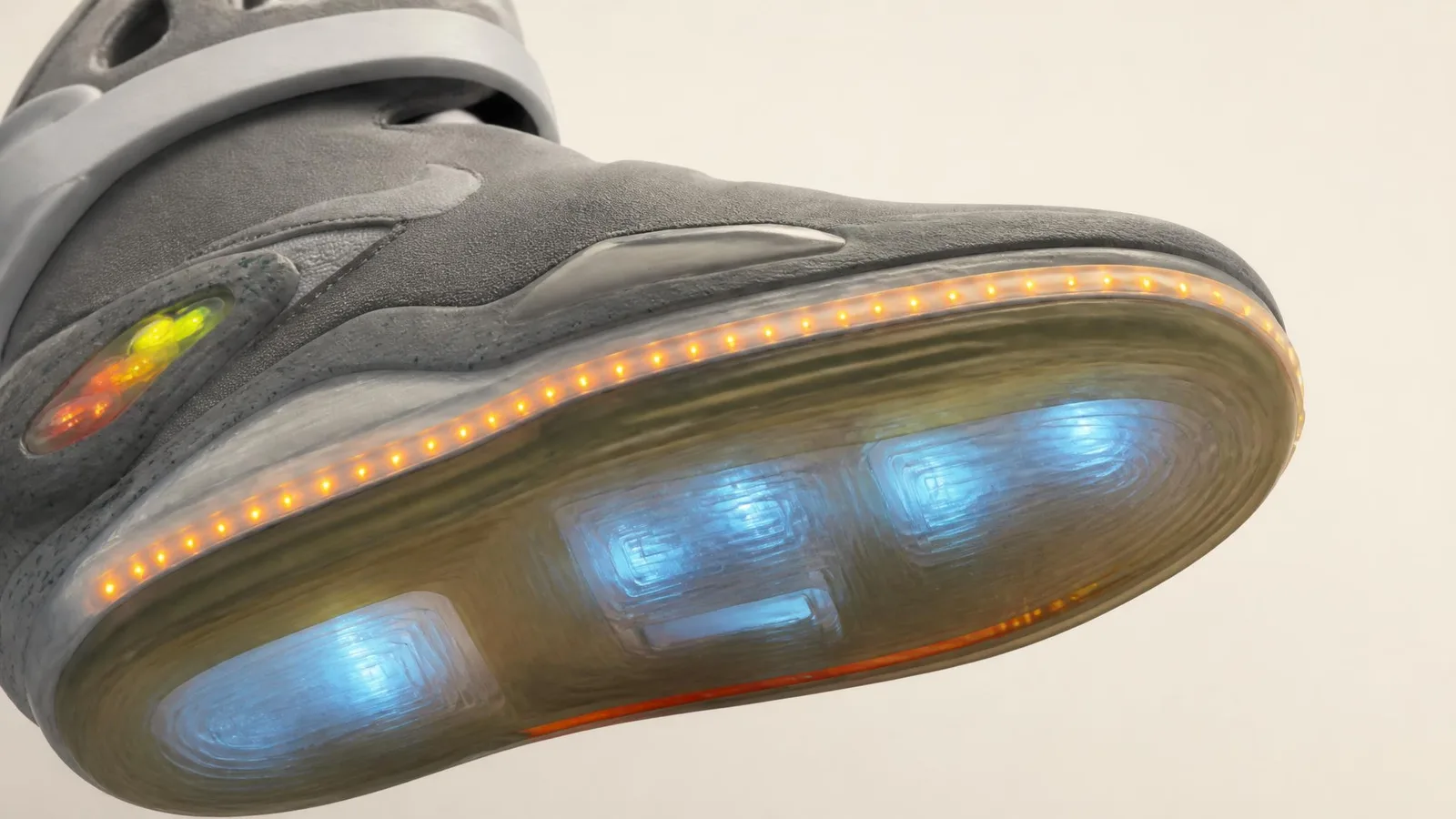
- Working electronics. For the 2011 pair, confirm the LED lighting in the sole activates. For the 2016 pair, confirm the power-lacing button and mechanism respond. Non-functioning electronics represent a meaningful discount factor.
- Original charger. The Nike Mag requires a charging dock. A pair without its original charger trades at a discount because sourcing a verified replacement is difficult. Read more about how to value a pair that is missing its charger or box.
- Original box and packaging. Dead stock condition with box, tissue, and all original inserts commands a premium over a pair that has been displayed or stored loose.
- Provenance. For a pair with fewer than 90 units in global circulation, documented purchase history or proof of original ownership adds value that is difficult to quantify but real.
If you own a Nike Mag, it is almost certainly the highest-value item on your rack. That concentration creates its own set of questions. Read about what it means when one pair dominates your collection's value.
How to Legit Check a Nike Mag and Spot Fakes
At 5-figure prices, knowing how to spot a fake Nike Mag by checking the heel text and Swoosh is a non-negotiable first step.
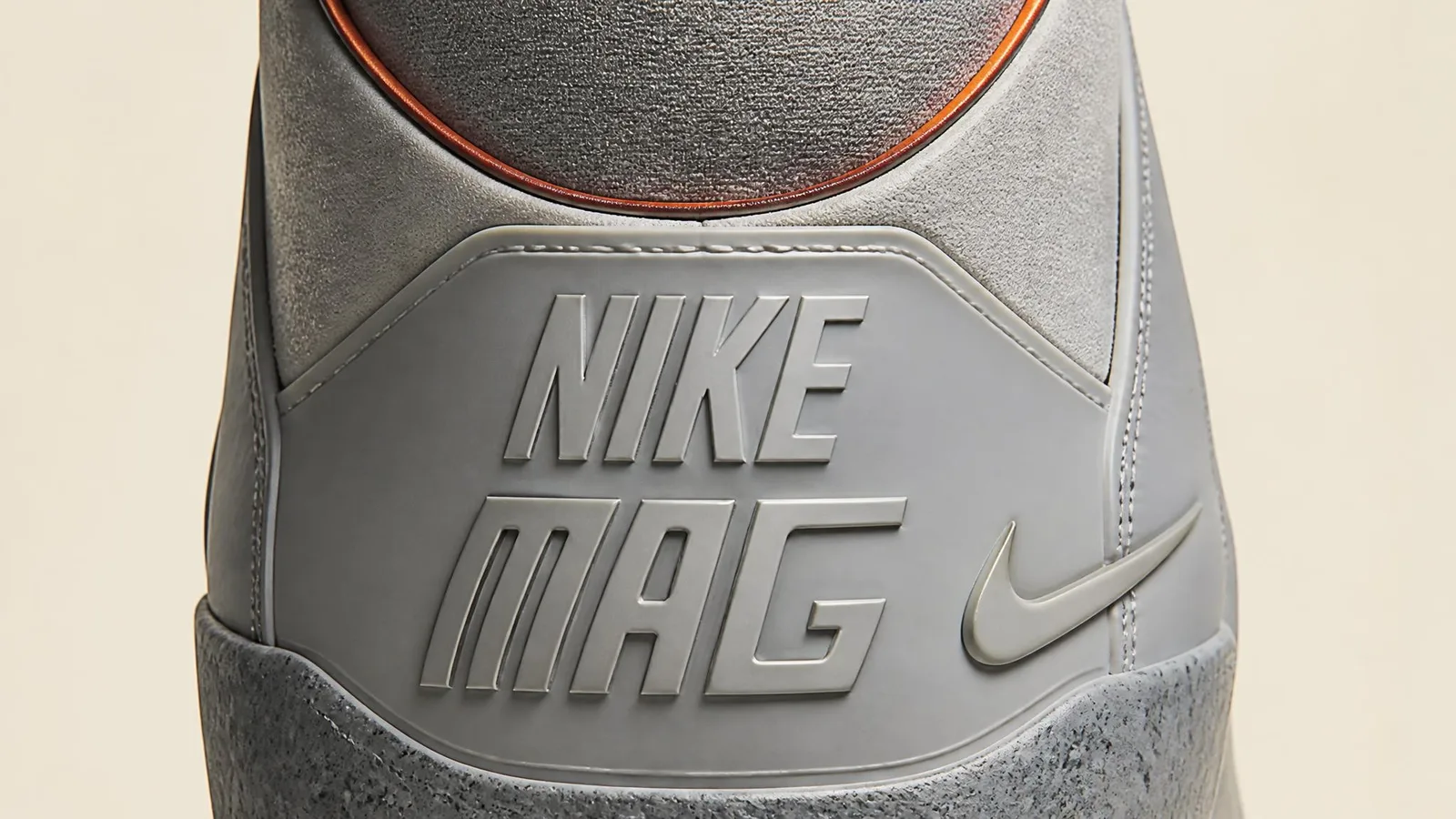
The rear heel text on a counterfeit Nike Mag protrudes too much and looks too thick compared with an authentic pair. On the real shoe, the text sits closer to the surface and has a finer, more precise raised profile. If you can feel the text standing significantly proud of the heel panel, that is a red flag.
The Swoosh on counterfeit pairs is too wavy. On an authentic Mag, the Swoosh follows a specific, controlled curve. Fakes exaggerate this curve in a way that becomes visible once you know what to look for. Place the shoe on a flat surface and examine the Swoosh from directly above.
These 2 checks alone are not sufficient for a purchase decision at this price point. Use them as a first filter, then request authentication from a specialist service before committing to any significant transaction. CYKI's forthcoming legit-check resource (topic 64) will cover Nike authentication in greater detail. Until it publishes, treat any seller who refuses a physical inspection or professional authentication as a warning sign.
Frequently Asked Questions
How many Nike Mags were made in total?
1,510 in 2011 (style code 417744-001) and 89 in 2016, for a combined total of 1,599 pairs. Neither release was a retail product. Both were charity distributions benefiting the Michael J. Fox Foundation.
Does the Nike Mag charger affect resale value?
Yes. A pair without its original charging dock is harder to sell and typically trades at a discount. Replacement chargers are difficult to source, and their authenticity is hard to verify.
What happens to value if the electronics stop working?
Non-functioning LEDs on a 2011 pair or a failed power-lacing mechanism on a 2016 pair represent a meaningful discount. Working electronics are a confirmed value driver for both releases.
What is the highest price a Nike Mag has ever sold for at auction?
A 2016 pair sold for $104,000 at auction. That is a single-event result reflecting specific bidder conditions on 1 day, not a repeatable market benchmark.
Why do prices for the Nike Mag vary so much across platforms?
The Nike Mag resale market is extremely thin. With fewer than 100 pairs of the 2016 release in existence globally, a single sale can move the observed range significantly. Asking prices are not sale prices. A wide spread between the lowest ask and the last confirmed sale is normal for a pair with this few recorded transactions.
Getting a Live Estimate for Your Pair
Static price guides and dated marketplace snapshots tell you where the Nike Mag resale market has been, not where it is today. For a pair with this few recorded sales, the gap between a published average and a live estimate can be substantial.
CYKI builds rack value estimates from actual sales data and explains its methodology openly, including how it handles pairs where confirmed sales are rare. Rack value is always an estimate based on resale marketplace data, never a guaranteed figure or a promise of what you will receive in a sale.
If your pair is missing its charger, box, or has non-functioning electronics, its estimated rack value will differ from a complete, working pair. See how CYKI treats a pair with almost no sales in its methodology. Then find the Nike Mag in the CYKI catalogue and see where your pair sits today.