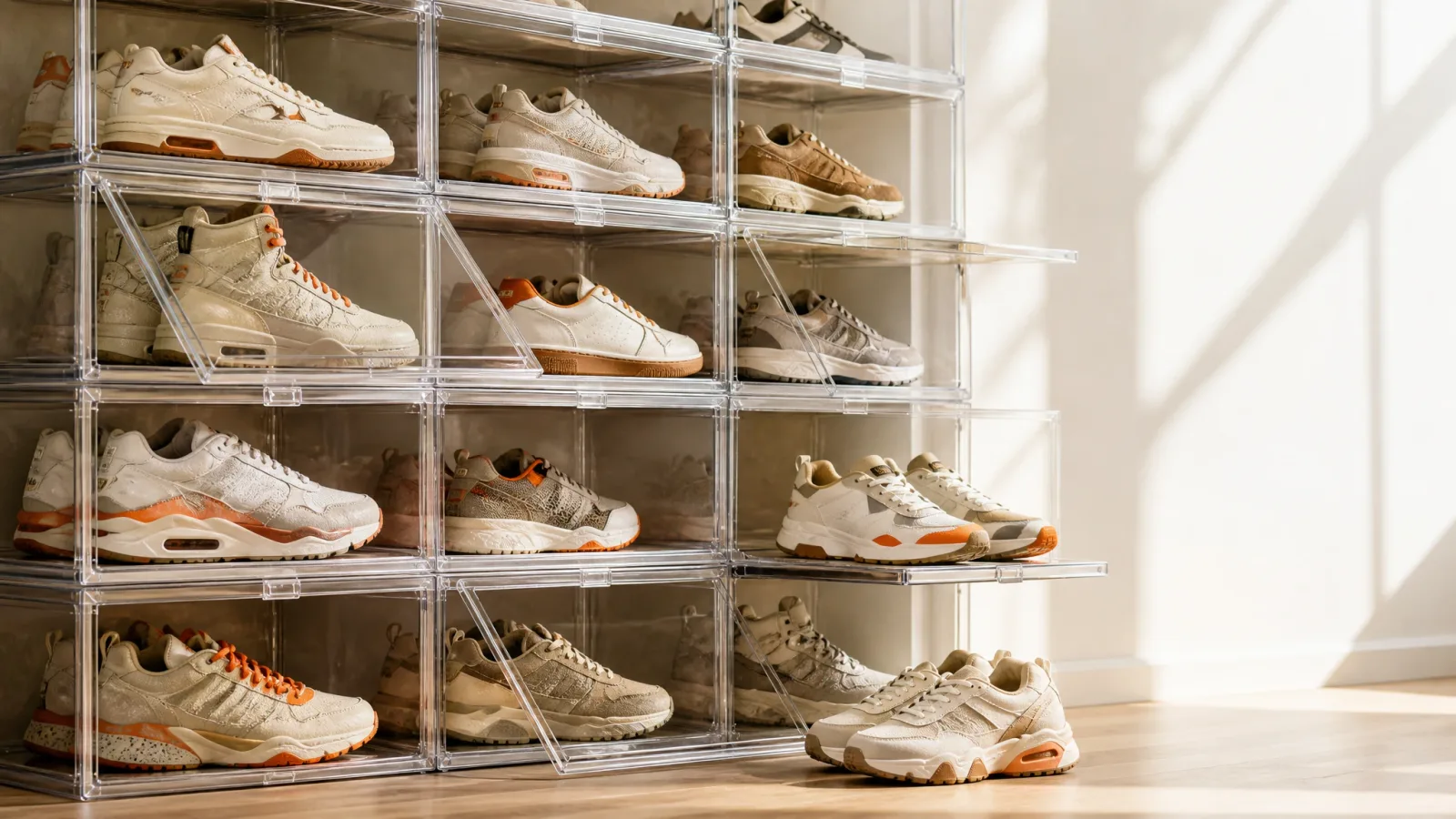
You own enough sneakers that you no longer know exactly what you have, what you paid, or what the collection is currently worth. That moment is the reason this article exists. Most best sneakerhead app lists recommend tools for buying, entering raffles, or flipping pairs. Well, this one is for you, the collector sitting on 10 to 75 pairs, wondering what the whole rack is actually worth today.
The short answer: the best sneaker app depends on your collection size and how you want to use your data. Spreadsheets work for small collections. Marketplaces work for single-pair price checks. But if you want a complete collection view with automated valuations and cost-basis tracking, a dedicated sneaker collection app is the only option that handles all of it.
We'll cover every realistic option: spreadsheets, notes, marketplace watchlists, release trackers, and dedicated collection apps. We'll evaluate each one against the same criteria collectors actually care about.
What Most 'Best Sneaker App' Lists Get Wrong
Search for the best sneakerhead app and the results read like a shopping guide. GOAT. StockX. Nike SNKRS. Sole Retriever. These are all amazing apps built for buying, selling, and tracking drops. They are not collection management tools, and no ranking page in the current search results treats them as such.
A marketplace shows you what a single pair might sell for right now. It does not show you what your whole collection is worth, what you originally paid for each pair, or how your portfolio has moved over the past six months. The collector who owns 30 pairs of mixed hype, personal favourites, and older releases gets almost nothing from a marketplace watchlist beyond a per-pair price lookup.
The decisions a collector wants to make are about holding, wearing, buying, or selling. Those decisions require a complete collection view, cost-basis visibility, and a reliable sense of whether the market is moving for or against you. Most lists of the best sneaker apps don't include this, since it is written for buyers rather than owners.
Every option covered here is measured against the same set of criteria: total collection value visibility, cost-basis tracking, valuation accuracy and methodology transparency, database completeness, ease of adding pairs, platform availability, and price. If an app does not address these needs, it does not solve the collector's problem.
What to Actually Look for in an App to See Your Total Sneaker Collection Worth
Before evaluating any tools, let's define the criteria that matter for managing an existing collection.
- Total collection value in one place. The primary need is a single number reflecting what your entire rack is currently worth, updated without you opening another tab.
- Cost-basis tracking. Knowing what you paid for each pair is the only way to understand unrealised gain or loss. This is where spreadsheets appear useful, but marketplaces fail completely.
- Valuation accuracy and methodology transparency. Will the prices be accurate enough to be useful? That is the trust question every collector asks before committing to a portfolio app. Does the tool use confirmed sale prices or just asking prices? Are data gaps explained or hidden?
- Database completeness. A tool is only as useful as the pairs it recognises. Obscure colourways, regional exclusives, vintage models, and non-hype pairs are frequently missing from databases built around high-volume marketplace transactions.
- Ease of adding pairs. If cataloguing your collection feels like filling out a tax form, you will stop after eight pairs. The setup experience matters as much as any feature on the spec sheet.
- Platform availability and price. Basic filtering: iOS, and Android. Whether a free tier covers the core use case or whether you are paying before you see any value.
Every option in this article is scored against these six criteria. The comparison table later in the piece maps them side by side.
Option 1: Spreadsheets and Notes — Is a Spreadsheet Good Enough for Your Sneaker Collection?
Spreadsheets, notes, screenshots, and resale apps. If that list describes your current system, you are in the majority.
A well-built Google Sheet handles purchase price records and basic inventory surprisingly well. For a collector with fewer than 20 pairs who updates manually and does not need live market pricing, a spreadsheet does the trick. Some collectors have built detailed tracking systems with formulas, conditional formatting, and image columns. That effort deserves respect.
The limitation is structural, not cosmetic. Every time you want to know what a pair is worth today, you are opening StockX or GOAT in a separate tab, searching for the model, finding your size, and copying a number back into your sheet. Multiply that by 30 pairs and you have an evening project, not a quick check.
Spreadsheets offer no visual presentation of the collection, no automated valuation updates, and no benchmark comparison. A spreadsheet tells you what you paid. It does not tell you what you own in market terms.
Notes apps and screenshots are even thinner. Useful for capturing a purchase price in the moment, they provide no aggregation, no totals, and no way to compare pairs against each other or against the broader market.
The real failure point has nothing to do with accuracy. Maintenance is what breaks it. As a collection grows past 20 to 30 pairs, the manual update burden compounds. Most collectors who start with a spreadsheet eventually stop updating it. At that point, the spreadsheet becomes less accurate than doing nothing, because the numbers it shows are stale.

Option 2: Marketplace Apps — StockX vs GOAT for Tracking Sneaker Value
StockX and GOAT are excellent marketplaces. They were built for buying and selling, and they do that job well. As collection management tools, they were not built for that purpose, and it shows.
The most important data distinction in sneaker valuation is the difference between asking prices and confirmed sale prices. Asking prices are seller expectations. Real market value is determined by completed transactions. The gap between the two can be significant, particularly for older models, less liquid sizes, or pairs outside the current hype cycle.
StockX's bid-ask model means its last-sale price reflects a real transaction. That makes it a more reliable per-pair price check than a platform displaying only what sellers are asking. GOAT Group claims over 50 million members across more than 170 countries (GOAT Group, 2023). Scale like that means broad catalogue coverage for popular models, but it does not change the fundamental limitation: neither platform aggregates your collection into a portfolio. Yep, you're right to second-guess that and say, "but StockX does". Well, they did, but abandoned it on March 12, 2026, stating that the decision followed a review of user usage, feedback, and long-term goals
Neither StockX nor GOAT tracks what you paid. Neither shows your total collection value in one number. Neither calculates unrealised gain or loss. Neither compares your portfolio against a broader market benchmark.
For a quick price check on a single popular pair, StockX last-sale data is hard to beat. For understanding what the collection is currently worth as a whole, marketplaces leave you doing the same manual aggregation work a spreadsheet does.
Option 3: Release Trackers and Raffle Apps
Release trackers like the Nike SNKRS app and Sole Retriever are built for the acquisition phase of the collector journey. Finding drops, entering raffles, tracking release calendars. They are good at this specific job.
Once a pair is purchased and on the shelf, these apps have no further role. They do not track what you own, what you paid, or what any of your existing pairs are currently worth. Sole Retriever adds sneaker news and market context (which we find amazing btw), but it does not offer collection cataloguing, portfolio valuation, or cost-basis tracking.
These tools belong in a different part of a collector's toolkit. They solve the "what should I buy next?" problem, not the "what do I already own and what is it worth?" problem. They are not competitors to collection management apps because the job they do is entirely different.
Option 4: The Best App to Catalog Your Sneaker Collection — Dedicated Collection Apps
Dedicated collection apps are built for the post-purchase collector journey. What you own. What you paid. What it is worth today. All in one place, updated without manual effort.
The core advantages over spreadsheets and marketplaces are structural: automated valuation updates, cost-basis tracking baked into the workflow, portfolio-level totals that reflect your entire collection in a single view, and a database purpose-built for cataloguing rather than transaction processing.
The category criterion that matters most is valuation methodology. A dedicated collection app is only as trustworthy as the price data it sources. The standard to look for is real resale activity, updated daily, with gaps explained rather than hidden. If an app always shows a number but never explains where it comes from or flags when data is thin, the confidence you place in that number is a guess.
Database completeness is the second key differentiator. A sneaker inventory app that does not recognise the pairs you actually own is useless regardless of how polished its interface is. Vintage Jordans, regional Dunks, non-hype New Balance colourways. These are the pairs that separate a genuine collector database from a marketplace product catalogue.
Ease of adding pairs is the adoption barrier. The setup experience, finding a pair, selecting a size, and seeing it appear in your collection with a current value, needs to be fast enough that it feels like browsing, not bookkeeping.
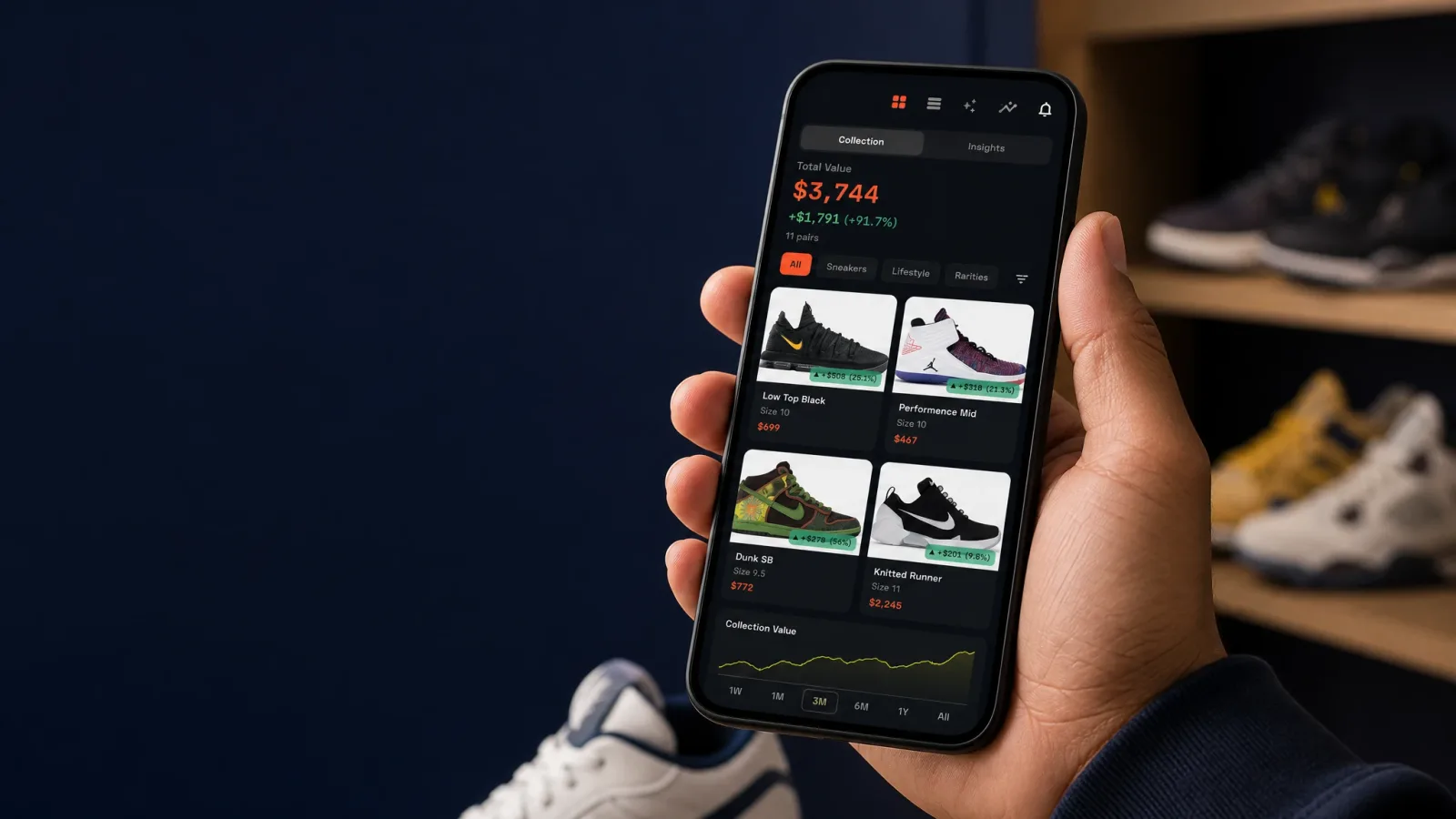
Can You Kicks It (CYKI): A Closer Look
Talking to sneaker collectors, we built CYKI around the rack: a personal collection portfolio where every pair is catalogued with its cost basis and current market value. Find the pair, choose your size, rack it. CYKI handles the pricing from there.
Adding a pair should feel like placing it on a shelf, not filling in a spreadsheet row. Once a pair is racked, its value updates automatically based on real resale activity, updated daily. The valuation data draws from completed transactions, not asking prices. When data for a specific pair or size is thin, CYKI explains the gap rather than hiding it behind a confident-looking number.
That transparency is the direct answer to the question every collector asks before committing to a portfolio tool: will the prices be accurate enough to be useful? CYKI's position is honest. Valuations are based on recent actual sales where possible. Fallbacks and data limitations are identified openly. You can read the full methodology behind how CYKI sources and updates its resale pricing. Let's be honest here: no tool can guarantee a sale price, but CYKI gives you the data and the context to form your own judgment.
The CYKI 100 is a market benchmark that tracks the performance of 100 sneakers as an index. It lets you compare how your rack is performing against the broader sneaker market. If the index is down but your collection is holding value, you know your picks are outperforming. If the index is up and your rack is flat, you know where to look. Read more about the CYKI 100 market benchmark. No spreadsheet offers this. No marketplace offers this.
Here is a bit more info for you about the app
CYKI's database covers +100k sneakers, and is update continiously with new releases that dropped, models, spanning mainstream releases, older catalogues, and less common colourways.
The Platform is available on iOS and Android.
The App has been completely free of any charge since its public release. Yep, we are punching a hole in our own wallets. It won't stop us from adding new features to upskill you as a member of the sneaker collectors community.
The collection is treated as personally meaningful first and financially valuable second. CYKI is a sneaker portfolio tracker built for the collector who cares about both, in that order.
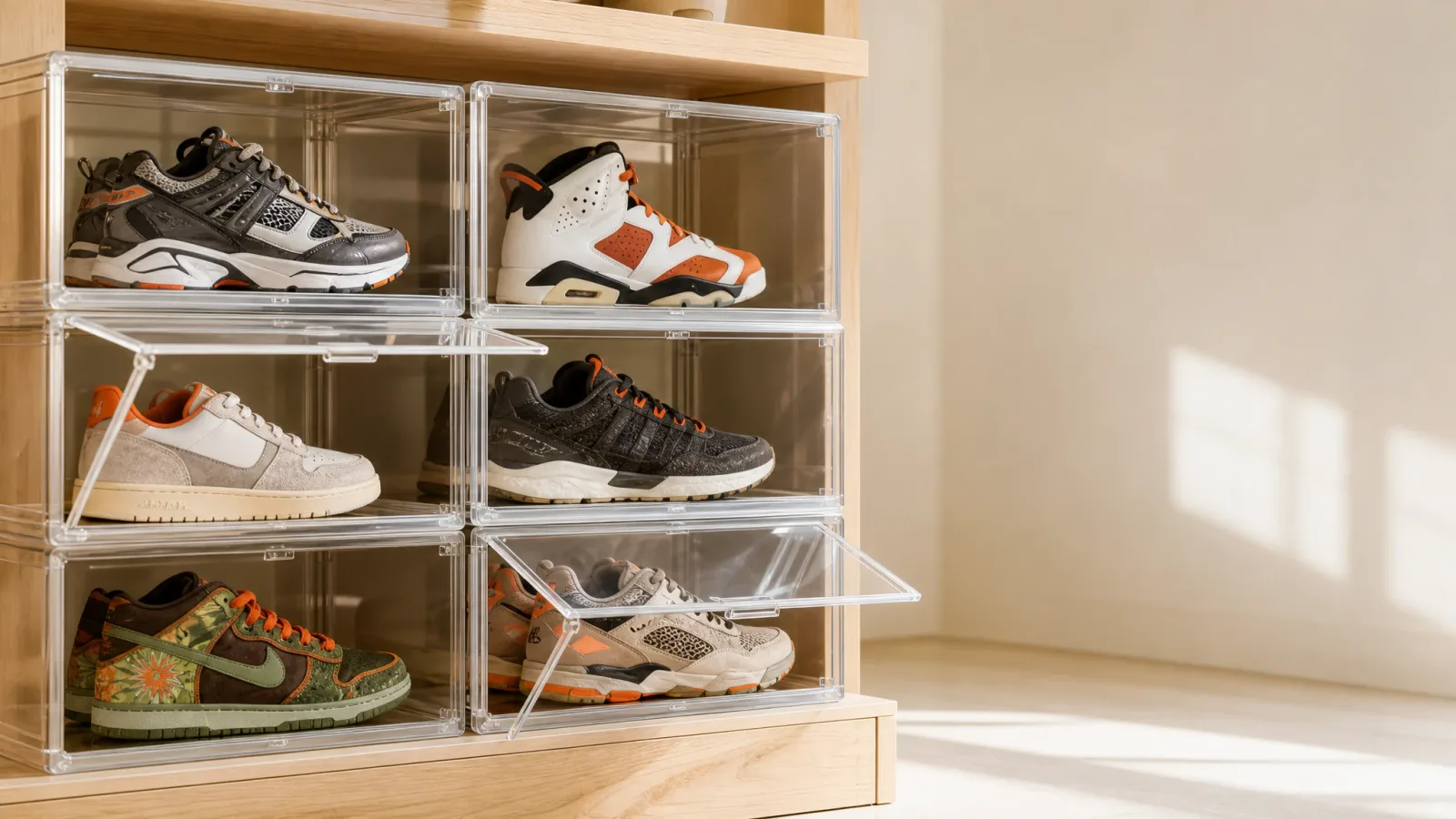
Side-by-Side Comparison
The table below maps every option against the six evaluation criteria introduced earlier. Simple values keep it scannable.
| Criterion | Spreadsheets / Notes | StockX / GOAT | Release Trackers | CYKI |
|---|---|---|---|---|
| Total Collection Value | Manual calculation | No | No | Yes, automated |
| Cost-Basis Tracking | Manual entry | No | No | Yes, per pair |
| Valuation Methodology | Manual lookup (you choose source) | Last-sale data (StockX) / asking prices (varies) | N/A | Real completed sales, updated daily, gaps explained |
| Database Completeness | Unlimited (you enter everything manually) | Strong on hyped pairs, thin on older/regional models | Release-focused only | +100k models |
| Ease of Adding Pairs | Slow (manual data entry) | Not designed for cataloguing | Not designed for cataloguing | Search, select size, rack it |
| Platform | iOS, Android |
| Price | Free |
A brief note on the table: spreadsheets score well on flexibility and cost because you control everything manually. That flexibility is also their weakness. Every "manual" label in the spreadsheet column represents time you spend maintaining data that a dedicated app updates for you.
Which Option Is Right for You?
The right tool depends on how many pairs you own and what you want from your data.
Under 10 pairs, manual updates are fine. A spreadsheet works. You will need to cross-reference StockX or GOAT for current prices whenever you want an update, but the maintenance burden is manageable at this size. Keep it simple.
Quick per-pair price checks, no portfolio needed. StockX last-sale data is the most reliable free option for checking what a single pair sold for recently. Keep in mind you are seeing transaction prices, not guaranteed sell prices. GOAT is useful for browsing, but cross-check against completed sales when accuracy matters.
You want to know what the entire rack is worth. If you want total collection value, cost-basis tracking across every pair, and a way to compare your portfolio against the broader sneaker market, a dedicated sneaker collection app is the only option that delivers this without manual effort. Spreadsheets cannot automate valuations. Marketplaces cannot aggregate your collection.
You want to learn more about how the sneaker market moves and test your expertise. If you want to see how your sneaker collection is doing against the market, believe you can beat the market with a fantasy lineup, or are keen to compete and show off your sneaker market knowledge, a dedicated sneaker collection is your go-to solution.
CYKI is the recommended option for that third and fourth profile. If you have reached the point where you no longer remember exactly what you own, what each pair cost, or how the collection is performing, that is the moment a dedicated app earns its place on your phone. Real resale data. Daily updates. Gaps explained. One rack, kept current.

Conclusion: Your Collection, Known
Most best sneaker app lists solve different problems. They point you toward marketplaces and release trackers, tools built for buying. The collector who already owns the pairs needs a different kind of tool: a sneaker collection tracker that shows the full picture without requiring a weekend of manual price lookups.
We built CYKI for that collector. Add your pairs, see what the rack is worth, track it against the market, and become even more sneaker market savvy. No payment details required to start.
Some pairs are personal. Some are valuable. Most are both.