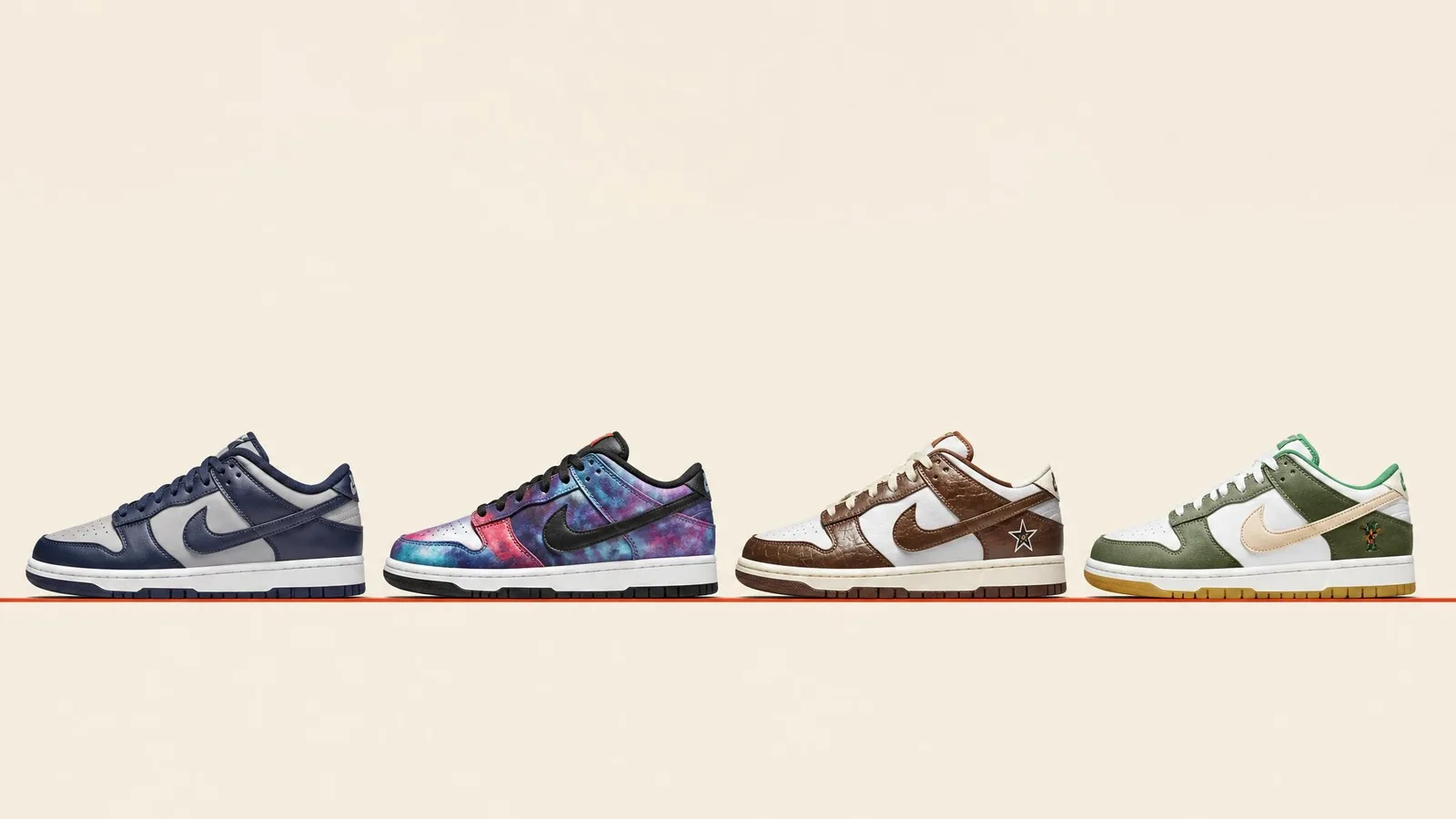
Your Dunk rack holds Lows, Highs, SBs, GRs and collabs, but the names on the box are not always enough to tell you how to organize your Nike Dunk collection correctly. A mis-filed pair throws off every category it touches.
Organising a Nike Dunk collection starts with identification, not storage. The 4 sub-lines are Dunk Low, Dunk High, SB Dunk Low and SB Dunk High. Within each, pairs split into general releases, packs and collaborations. A style code on the box label resolves any naming ambiguity.
This piece breaks down the sub-line taxonomy, walks through the physical differences between SB and non-SB Dunks, gives you a collaboration identification checklist, and shows you how to file each pair in your sneaker catalogue.
Nike Dunk Model Names Explained
Every Dunk in your rack belongs to exactly 1 of 4 sub-lines: Dunk Low, Dunk High, SB Dunk Low or SB Dunk High. No exceptions.
The sub-line name appears in the model name field on the box label. If the label reads "SB Dunk Low," it is an SB. If it reads "Dunk Low," it is not. That single line of text is your first classification decision.
Low vs High is a silhouette distinction. The Dunk High has a taller ankle collar that is visible even through the box window. The model name field confirms it, but you can usually spot it before pulling the lid off.
SB vs non-SB is a deeper split. The SB line was built for Nike's skate shop distribution network, which means SB Dunks carry different construction specs and reach a different retail channel than standard Dunks. Treating them as the same product is the most common cataloguing mistake collectors make.
Within each sub-line, releases split into 3 types: general releases (GRs), packs and collaborations. The sub-line plus the release type gives you the full classification for any pair you own.
How to Organise Nike SB and Non-SB Dunks
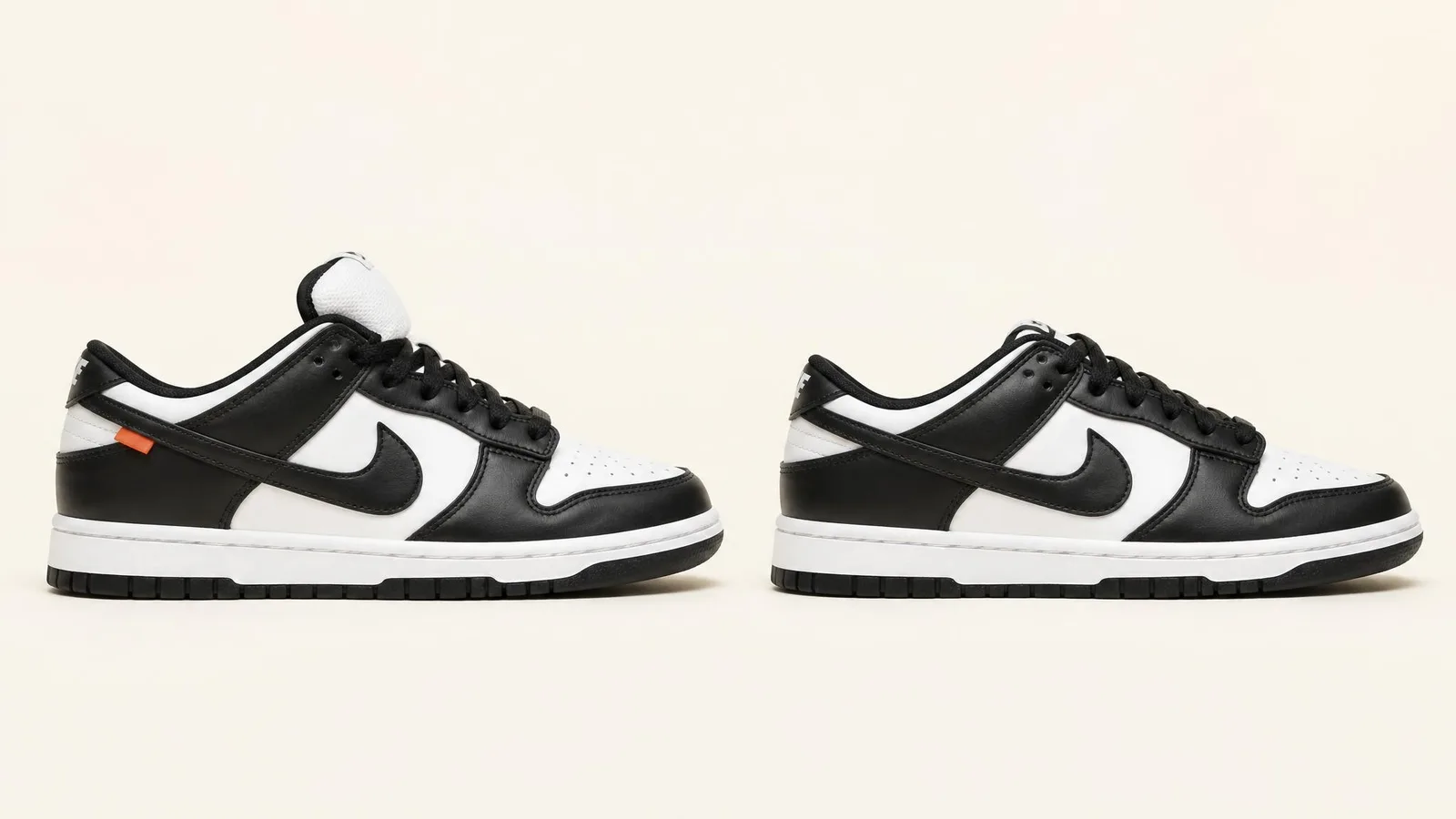
SB Dunk Lows and standard Dunk Lows share the same silhouette outline. Sitting side by side on a shelf, they can look nearly identical. The differences are in the construction.
SB Dunks have a thick padded tongue and a Zoom Air insole. Standard Dunks do not. Those specs were added when the Nike SB line launched in 2002, specifically for skateboarding functionality rather than aesthetics. If you pick up a Dunk and the tongue feels noticeably thicker and more cushioned, you are holding an SB.
Distribution separates them further. SB Dunks reach collectors through the select Nike SB skate shop network. Standard Dunk Lows and Highs are distributed broadly through Nike.com and retail partners. The retail channel a pair came through often tells you more than the colourway name printed on the box.
When the box label is ambiguous or missing, check the style code. SB Dunks and standard Dunks carry different SKU prefix series. Cross-reference the style code on KicksDB or The Sneaker Database to confirm which line the pair belongs to. The style code is unique to a specific product; the colourway name is not.
File SB Dunk Lows and SB Dunk Highs as separate sub-line entries from their non-SB counterparts in your rack, even when the colourway name is the same across both lines. A collection tracking app that lets you separate these sub-lines will keep your rack accurate from the start.
General Releases, Packs and Collaborations: The Nike Dunk Taxonomy
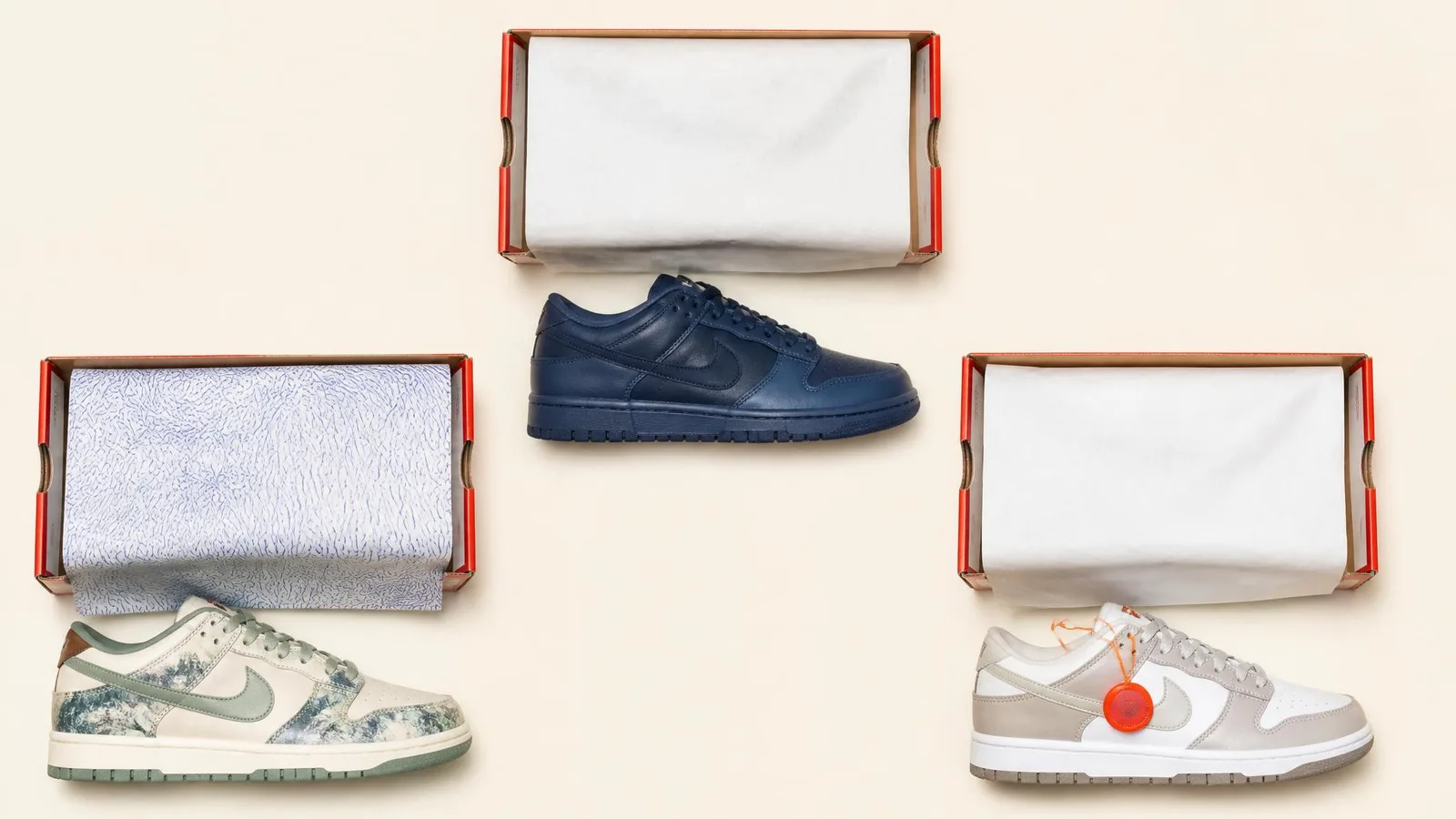
Once you know which sub-line a pair belongs to, the next step is identifying its release type. Every Dunk falls into 1 of 3 categories: general release, pack or collaboration.
General releases are produced in large quantities and distributed broadly. If you bought a Dunk through Nike.com or a mainstream retail partner without any special access or draw, it is almost certainly a GR. GRs make up the majority of Dunks on most collectors' racks.
Packs are officially named multi-colourway drops released under a shared theme. The Ugly Duckling Pack (2005, SB) and What The Dunk (2007) are well-known examples. Pairs in a pack share design DNA and are released simultaneously or in sequence under the same pack name. Filing them as a group lets you track which pairs in the set you own and which you are still missing.
Collaborations carry 3 identification signals. First, a named external partner (brand, artist or institution) appears in the official product title. Second, a co-branding detail appears on the shoe itself: a hang tag, woven label or unique hardware. Third, the retail channel is more restricted than a standard GR.
Verified non-SB collaboration examples include the Nike Dunk Low x Off-White (2021, 50 colourways) and the Nike Dunk High x Ambush (2020). Verified SB collaboration examples include the Nike SB Dunk Low x Supreme (from 2002), the Nike SB Dunk Low x Grateful Dead (2020, Bear colourway) and the Nike SB Dunk Low x Concepts.
An unusual colourway designed by Nike's internal team is not a collaboration. The distinction matters: a collaboration requires a named external partner integrated into the product design and official title.
A pair can belong to 2 categories simultaneously. A Supreme SB Dunk is a collaboration. The Ugly Duckling pairs are a pack. Some releases are both a collaboration and a pack entry. Knowing both classifications helps you file accurately rather than guessing at a single label.
Your Nike Dunk Collaboration Identification Checklist
Apply these 5 steps to any pair in your rack before filing it.
-
Read the model name field on the box label. It will state Dunk Low, Dunk High, SB Dunk Low or SB Dunk High. This gives you the sub-line classification.
-
Note the style code (SKU) from the box label. The style code is the most reliable single identifier for any Dunk. Colourway names are inconsistent across retail sources and can be reused across different silhouettes and release years. The style code is unique to a specific pair.
-
Cross-reference the style code on KicksDB or The Sneaker Database. These databases confirm the official product title, release year and release type (GR, pack or collaboration). If the Nike Dunk style code on the box label does not match what you expected, the database result overrides your assumption.
-
Check for collaboration signals. Look at the official product title: is a named external partner listed? Inspect the physical shoe for co-branding details such as a woven label, hang tag or unique hardware. If neither a named partner nor co-branding is present, the pair is a GR or a pack release, not a collaboration. If you are unsure of the shoe's condition while inspecting it, our guide on How to Grade Sneaker Condition walks through that process.
-
Check for a pack name. If the official product listing references a shared theme name, note it alongside the pair's classification. This lets you track how much of the pack you own and what gaps remain.
How to File Each Dunk in Your Rack
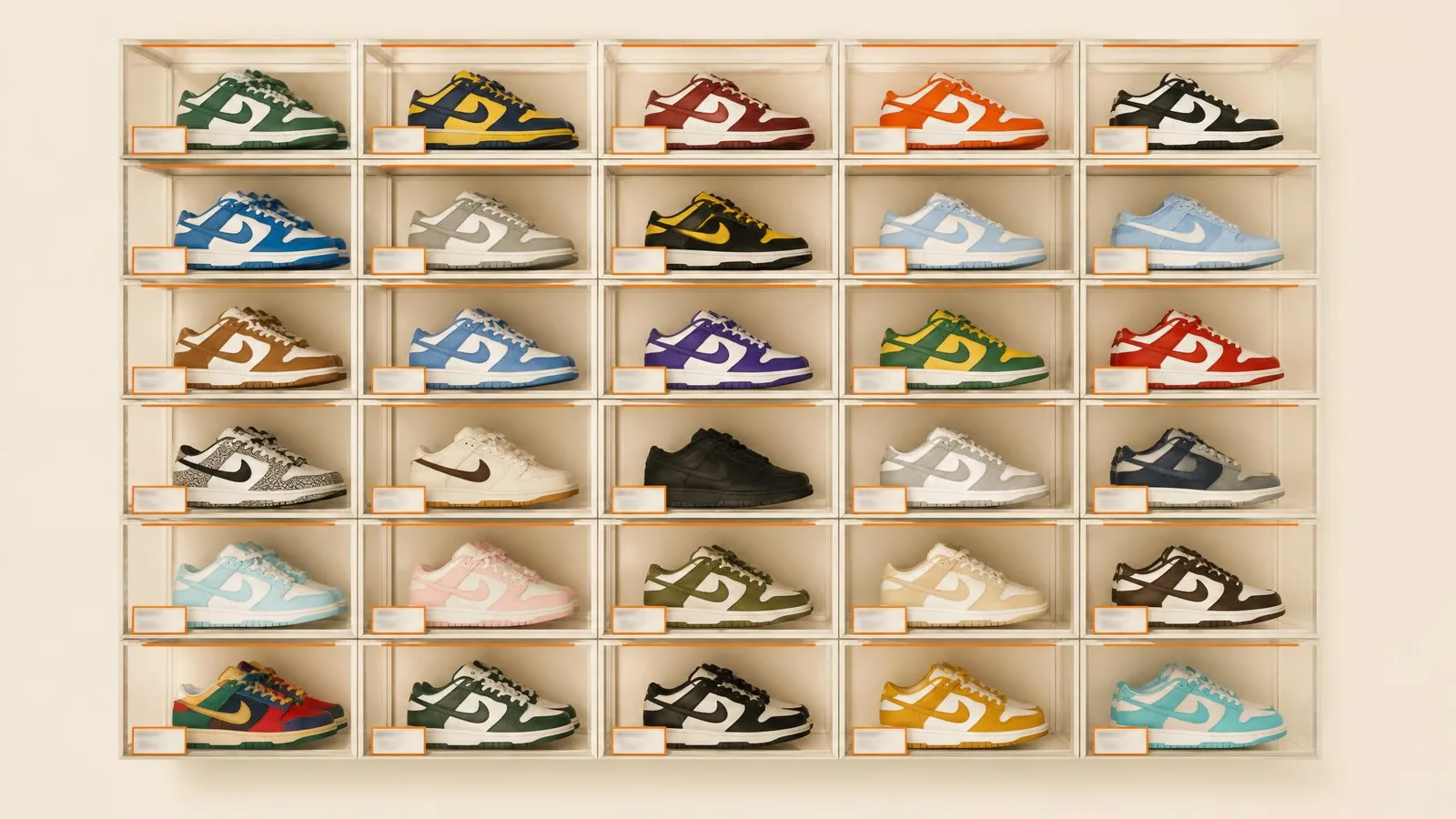
Once you have identified each pair's sub-line and release type, file them in your rack using CYKI's sneaker catalogue. Search for the pair by name or style code, select the correct model, choose your size and rack it under the right sub-line, whether you add pairs manually or use a migration feature later.
File SB Dunks and standard Dunks as separate entries. Do not group them under a generic "Dunk" tag. The sub-line distinction matters when you later want to see how your SB pairs move relative to your GRs.
Group pack pairs so you can see which entries in a set you own. A complete pack and a partial pack are different assets in a collector's rack.
After filing, you can compare your Dunk cohort against the CYKI 100 Nike Dunk cohort to see how your specific sub-line mix tracks against the broader Dunk market. This is a benchmark reference, not a buy signal.
Your rack value estimate is based on resale marketplace data and updated regularly. A correctly filed pair in the right sub-line category will return a more relevant estimate than a mis-filed one.
Frequently Asked Questions
What is the difference between a Nike Dunk Low and an SB Dunk Low?
The silhouette is the same but the construction differs. SB Dunk Lows have a thick padded tongue and a Zoom Air insole added for skateboarding. Standard Dunk Lows do not. SB Dunks also reach shops through the Nike SB skate shop network rather than mainstream retail. The box label and style code confirm which line a pair belongs to.
How do I know if my Nike Dunk is a collaboration or a general release?
Check the official product title for a named external partner. Then inspect the shoe for co-branding details: a hang tag, woven label or distinctive hardware. If neither is present, the pair is a GR or a pack release. An unusual colourway designed by Nike's own team does not make a pair a collaboration.
How do I identify a Nike Dunk pack release?
Pack Dunks are released under an official shared theme name, such as the Ugly Duckling Pack or What The Dunk. Cross-reference the style code on KicksDB or The Sneaker Database. The official product listing will reference the pack name if the pair belongs to one.
What is the best app to track a Nike Dunk collection?
CYKI lets you search for each pair by name or style code, file it under the correct sub-line, and see your rack value estimated from resale marketplace data. After filing, you can compare your Dunk cohort against the CYKI 100 Nike Dunk cohort. Different platforms pull from different data sources, which is part of why different apps show different prices.
Why should I use the style code instead of the colourway name to identify a Dunk?
Nike reuses colourway names across different silhouettes and release years. The style code on the box label is unique to a specific pair and is the most reliable single identifier you have.
Conclusion
Identification comes before organisation. Once you know which of the 4 sub-lines a pair belongs to and whether it is a GR, a pack or a collaboration, filing it correctly takes seconds. If your rack also holds Jordans, the same identification-first principle applies. The Air Jordan collection tracking guide covers the seven-field system that distinguishes retros from originals across models and years. This Nike Dunk collector organisation guide is the framework; the action step is yours.
Search for each pair in the sneaker catalogue, select the model, choose the size, and file it under the right sub-line. Then check the CYKI 100 Nike Dunk cohort to see how your filed Dunks track against the broader market. CYKI is the Nike SB collection app built for exactly this workflow. File each Dunk under the correct line and release.