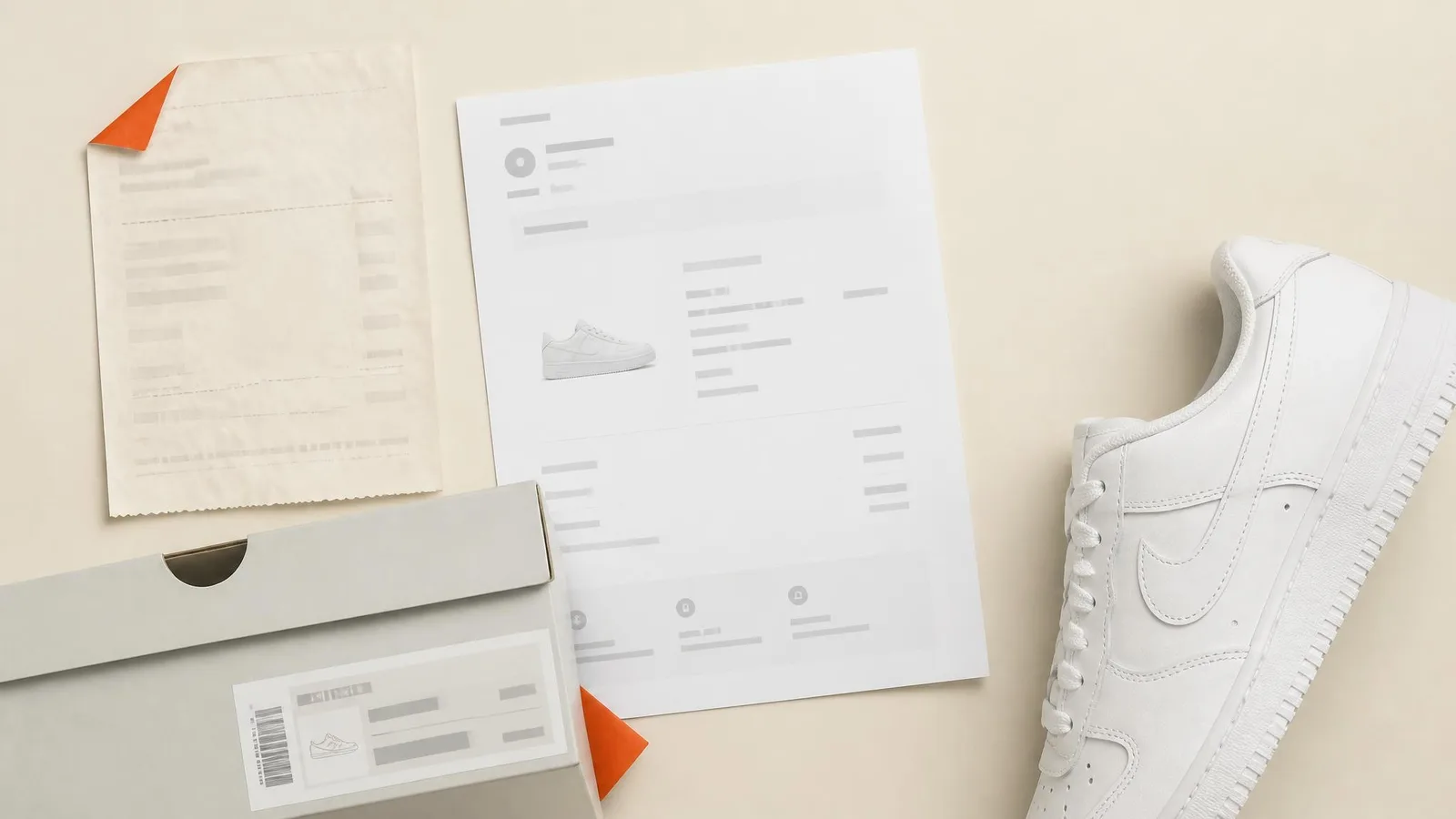
You remember the pair you queued for. You remember the bargain you found secondhand. You might even remember what you wore the first time you took them out.
What you paid? Less clear.
Somewhere between your first few pickups and a rack full of pairs, the paperwork stopped keeping up. Receipts disappeared, boxes got separated, and purchases ended up scattered across different accounts.
You do not need to recover every receipt to build a useful collection record. You need to separate what you can document, what you can reasonably reconstruct, and what you still do not know.
To rebuild your sneaker collection records, start with receipts and order histories, use box labels to identify each pair, and cross-check gaps against payment records and old messages. Record the source behind each figure. Keep documented purchase costs, estimates, and unknown amounts separate, and never substitute today's resale value for what you originally paid.
The goal is not a perfectly filled dashboard. It is a collection record you can trust.
If you are starting from scratch, the companion guide covers 7 things worth recording for every pair.
First, Separate Three Different Questions
Before searching your inbox, get clear on what you are trying to recover.
What is the pair? The model, style code, colourway, size, and release version.
What did you pay? Your actual purchase price, plus any additional costs you choose to track separately.
What might it sell for now? A market estimate influenced by the exact pair, size, condition, available sales data, and selling circumstances.
These are different facts supported by different evidence.
A box label can help identify the shoe without telling you what you paid. A bank statement can confirm a payment without identifying the shoe. A current marketplace estimate can suggest a resale value without revealing anything about your original purchase.
Do not give the entire record a single "verified" label when only one part is supported.
Start With Receipts and Order Histories
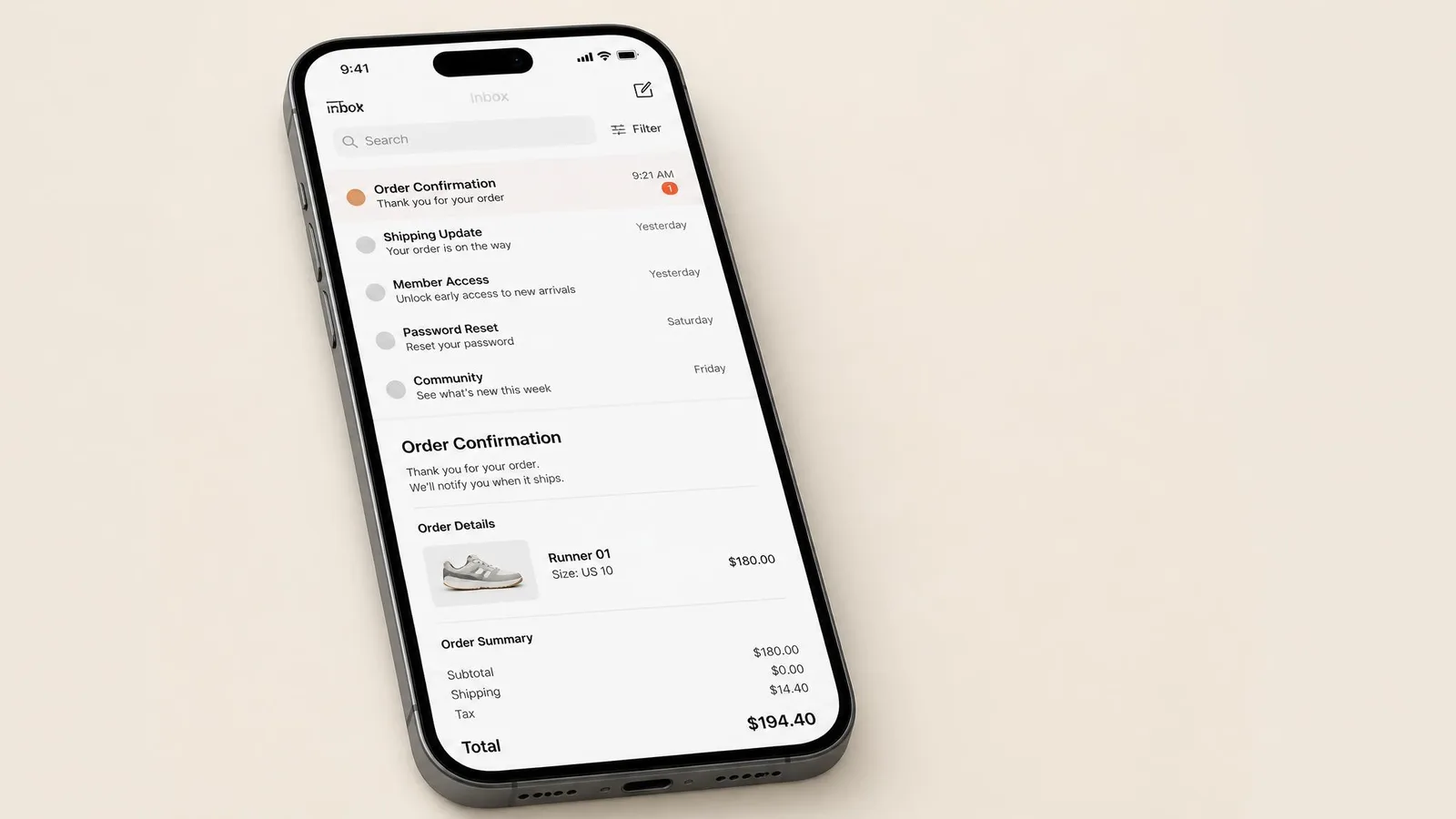
A detailed receipt or completed order record is the best starting point because it can connect a specific item to a transaction.
Search your email for retailers and platforms you have used, including Nike, Adidas, JD Sports, Foot Locker, StockX, and GOAT. Try combinations of:
- The retailer or platform name
- "Order confirmation," "receipt," or "invoice"
- The sneaker model or style code
- An approximate purchase year
- An order number found in an old message
Check older email addresses as well as your current inbox. If you have used different accounts over the years, your purchase history may be spread across them.
Then check any accessible retailer and marketplace order histories. Save the records you can retrieve rather than assuming they will remain available indefinitely. If an order is missing, customer support may be able to help, but do not count on every platform retaining every purchase.
For paper receipts, photograph or scan the readable information. Keep a backup somewhere separate from the shoes.
Save the details, not just the headline price
For each purchase, record:
- The item and size
- The purchase date
- The seller or platform
- The order or receipt number
- The item price and currency
- Shipping, taxes, and fees where available
- Discounts or refunds
- A copy of the supporting record
Be consistent about what "price paid" means in your collection.
For example, a hypothetical purchase might include a $180 item price, $12 shipping, and $18 tax. That is $210 spent, not $180. Keeping the components separate lets you see both figures without confusing them.
Marketplace charges can affect that total. StockX's buyer-fee guidance explains that applicable charges vary by transaction and marketplace. Use the actual invoice rather than reconstructing an old purchase from today's fee rules.
Also check that the order was completed. A confirmation for a cancelled purchase, or a pair you later returned, does not belong in your current collection's purchase total.
Treat marketplace receipts as purchase evidence
A detailed StockX or GOAT order record can support purchase cost just as a retailer receipt can. What matters is the information it contains and whether you can match it to the pair you own.
Save any available listing details or condition descriptions too. They may help document how the pair was described at purchase, although they do not establish its condition today.
Whether you see yourself as a sneaker collector vs sneaker reseller, the distinction remains the same: a purchase record documents a past transaction, not a current valuation.
Use Box Labels to Identify the Pair
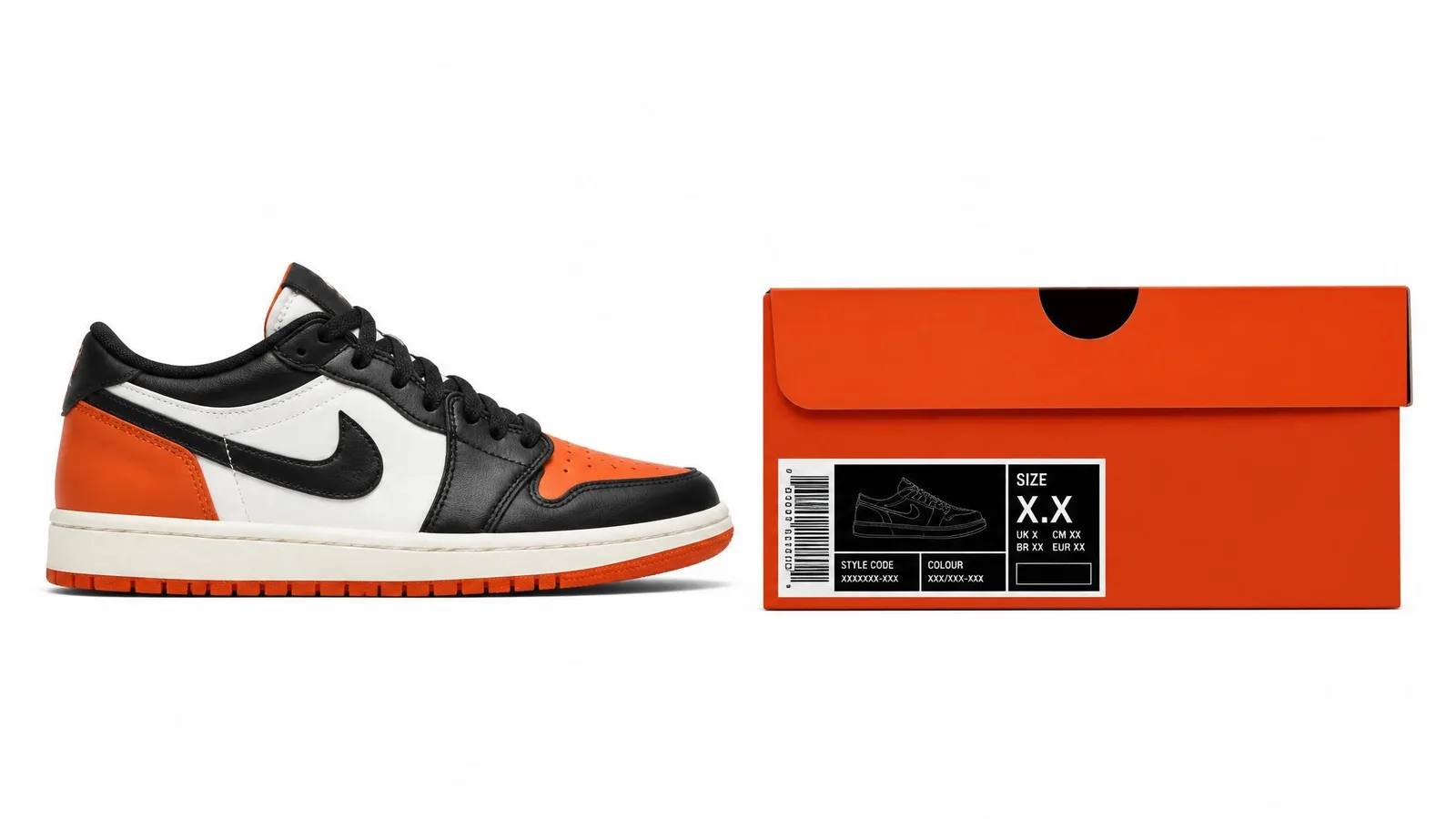
When the receipt is gone, the box is a useful lead.
Read the style code, size, and colour information, then compare the label with the shoes themselves. A box can be mismatched, particularly after a secondhand purchase or years of storage.
Where available, cross-reference the style code against the brand's product information, an archived retailer listing, or a sneaker database. Check that you have the correct release and sizing category rather than a similarly named pair.
Photograph the shoe labels and box label so you can revisit them later.
Style code, colourway, and size are among the 7 things worth recording for every pair. Recovering those details is useful even if the purchase amount remains unknown.
But keep the limits clear:
- A box label does not establish what you personally paid.
- A printed retail price is a reference price, not a receipt.
- A matching style code is not, by itself, proof of authenticity.
- A release date is not necessarily your purchase date.
"Identity matched; purchase cost unknown" is a perfectly useful record. It tells you exactly what you have recovered and what is still missing.
Cross-Check Payment Records and Old Messages
If there is no itemised receipt, look for evidence that can connect the transaction to the pair.
Useful places to check include:
- PayPal activity
- Bank and credit card statements
- Messages with a private seller
- Old listings or saved screenshots
- Shipping confirmations
- Photos taken around the purchase
- Calendar entries or travel dates that help narrow the search
The key is the connection between the payment and the item.
A $240 payment to a seller proves that money changed hands. It does not necessarily prove that you paid $240 for the sneakers you are documenting. The payment might have covered another item, several pairs, or a deposit.
An old conversation naming the model, size, and agreed price can help connect those dots.
For example:
Purchase cost reconstructed from a $240 payment and a seller conversation naming this model and size. Original receipt unavailable.
That is more informative than simply marking the price "verified."
Check bundle purchases carefully. If you paid one amount for several pairs, the transaction total may be documented while the per-pair amounts are not. Record the bundle and explain any allocation rather than presenting each assigned figure as an independently confirmed price.
Use Memory Without Turning It Into False Precision
Memory can help narrow a search. It should not quietly become proof.
You might remember buying a pair at retail, paying below asking price, or picking it up during a particular trip. Record that context, then look for evidence that supports it.
Useful notes might read:
- "Bought around summer 2021; exact date unknown."
- "Remember paying approximately £150–£180 in cash."
- "Purchased at an outlet; original retail price does not reflect the amount paid."
Avoid turning "around £160" into "£159.99" just because the field accepts a precise number.
Do not default to original retail price
Original retail price answers a different question: what the shoe was priced at on release.
You could have paid retail, a resale premium, a discounted price, or an amount agreed in a trade. Knowing the release price does not tell you which happened.
Keep retail price in a separate reference field if it is useful. Only use it to inform a purchase estimate when you have a reason to believe you bought at retail, and label that assumption.
Leave genuinely unknown costs unknown
If you cannot support even a rough estimate, record "unknown."
Do not enter zero to mean "I cannot remember." Zero is a number, and it can make spending or profit figures misleading.
If your collection tool does not support unknown amounts cleanly, add an explicit note and avoid treating its resulting cost or profit total as complete.
For gifts and trades, record how you acquired the pair and any cash component separately. Do not force every acquisition into the shape of a normal purchase.
Give Purchase Costs a Clear Evidence Status

A simple system is enough. Apply it to the purchase-cost field, not automatically to every detail about the pair.
StatusWhat it meansExampleDocumentedAn itemised record connects the pair to the amount paidA completed order showing the model, size, and final totalReconstructedMultiple records support the amount and identify the pairA payment matched to a seller conversationEstimatedThe figure relies partly on memory or an explicit assumption"Approximately £160, based on memory"UnknownThere is not enough evidence to enter a useful amountPair identified, but no purchase information recovered
These are organisational labels for your own records, not guarantees that a platform, buyer, or insurer will accept the evidence.
Save a short source note alongside the status. "Reconstructed from PayPal and seller messages" will mean more to you in a year than "medium confidence."
If your app does not have dedicated confidence fields, use a consistent format in its notes or in a companion record.
Keep Purchase Cost Separate From Collection Value
Missing receipts do not automatically prevent you from estimating what a pair might sell for today.
They do prevent you from calculating a reliable difference between that estimate and an unknown purchase cost.
Current value depends on market evidence and the details of the pair: the correct release, size, condition, and other factors relevant to a sale. Purchase cost depends on your own transaction history.
CYKI's valuation methodology explains its use of resale marketplace data, its fallbacks when data is limited, and its condition adjustments. It also makes clear that displayed values are estimates, not guaranteed sale prices.
Keep that distinction visible in your collection:
- Documented purchase total: the spending you can support
- Estimated purchase amounts: figures that still rely on assumptions
- Unknown-cost pairs: purchases excluded from a reliable spending total
- Estimated collection value: a separate market-based figure
For example, if 18 of your 30 pairs have documented costs, describe their combined purchase amount as "documented spend for 18 pairs." Do not present it as the total cost of all 30.
And remember: an estimated market value above your purchase cost is not realised profit. What you actually receive from a sale can differ, including because of fees and selling costs.
Rebuild the Collection in Small Batches
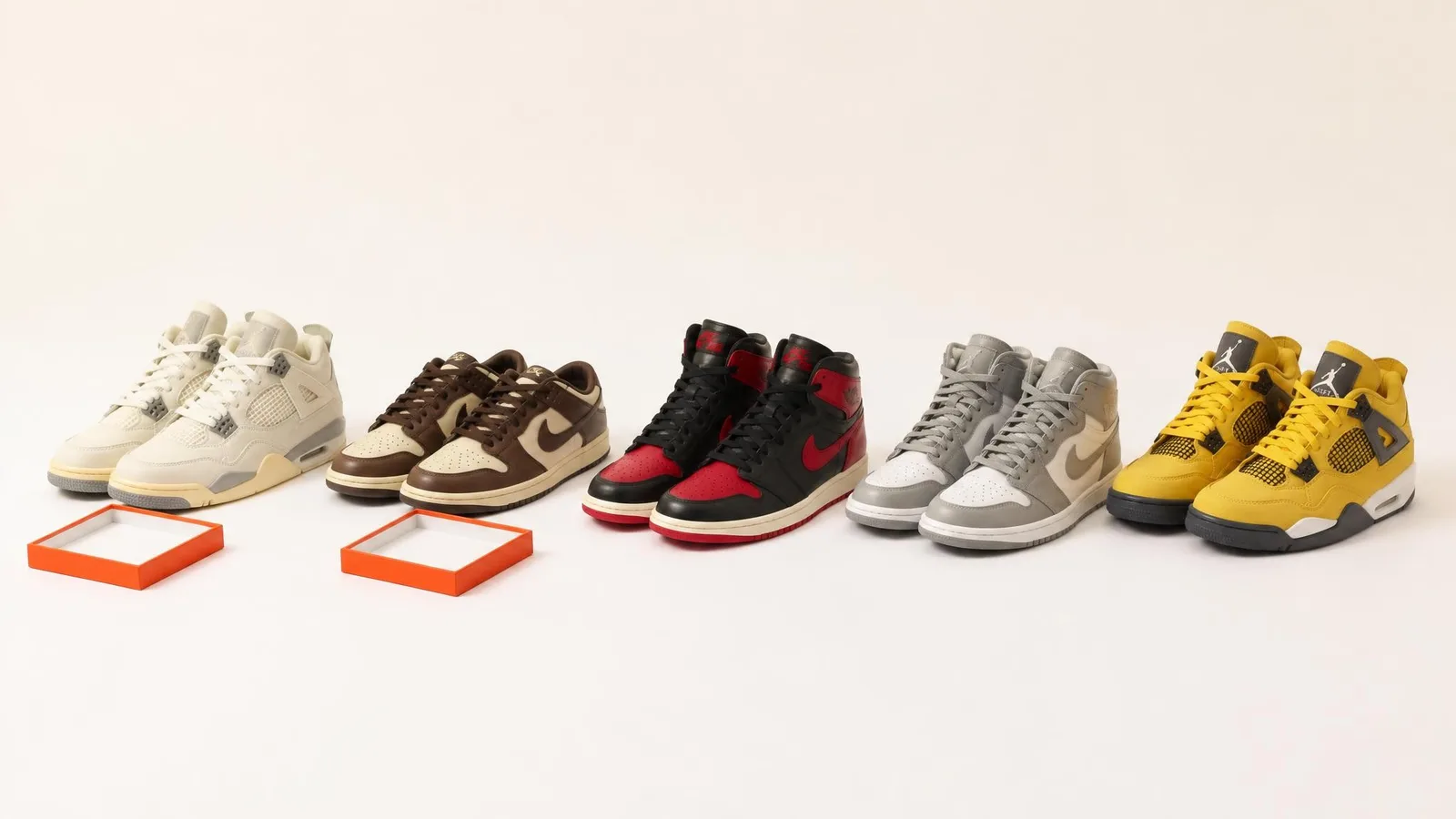
You do not need to finish the whole rack in one sitting.
Start with five pairs you can identify easily:
- Photograph each pair and its labels.
- Match any box to the shoes.
- Search for receipts, order records, or payment evidence.
- Enter the purchase information you can support.
- Add a source note and evidence status.
- Leave unresolved fields clearly marked.
- Save the supporting files with names you can recognise.
If you own duplicates in the same size, give each physical pair a separate identifier. Otherwise, it is easy to attach the same receipt to 2 entries.
Once the easy pairs are done, work through the uncertain ones. Keep a short list of unresolved questions so you do not repeat the same searches.
From there, capture new purchases when they arrive: save the receipt, record the amount, and photograph the pair. A small habit now is easier than another reconstruction project later.
FAQ: Rebuilding Sneaker Collection Records
How do I find out what I paid for old sneakers?
Start with email receipts and accessible retailer or marketplace order histories. Then check payment records and messages. Match the amount to the specific pair before treating it as documented purchase cost.
Can I use StockX or GOAT purchase history as proof of purchase?
A detailed completed-order record can support the item, purchase date, and amount paid. Save the available invoice and order details. Whether another party accepts it as proof depends on their requirements.
Can I use the price on the box if I lost the receipt?
Record it as a retail-price reference, not automatically as your purchase cost. It does not account for discounts, resale premiums, fees, or how you acquired the pair.
What if I have no receipt, box, or transaction history?
Identify the shoes as carefully as possible and record what you know. Use a clearly labelled estimate only if you have a reasonable basis for one. Otherwise, leave the purchase cost unknown.
What documentation should I keep for sneaker collection insurance?
Keep photographs, item descriptions, labels, receipts, and any available purchase records. The California Department of Insurance's home inventory guidance notes that photographs can be especially useful when a receipt cannot be obtained.
Ask your own insurer what evidence, valuations, or appraisals it requires for your collection and policy. A collection tracker does not, by itself, establish coverage or an agreed claim value.
Should I use today's resale price as my original purchase cost?
No. Today's estimated resale value and your historical purchase amount answer different questions. Keep them in separate fields.
Build a Record You Can Explain
A trustworthy collection record does not need every field filled. It needs each entry to say what you know and how you know it.
Start with the receipts and order histories you can recover. Use boxes and labels to identify the pairs. Cross-check payments and messages where the paperwork is incomplete. Label estimates honestly, and let unknown amounts stay unknown.
Then review the 7 things worth recording for every pair to round out each entry.
Pick five pairs today. Recover what you can, record the gaps, and keep going. The aim is not to make your collection look perfectly documented. It is to make the record match reality.