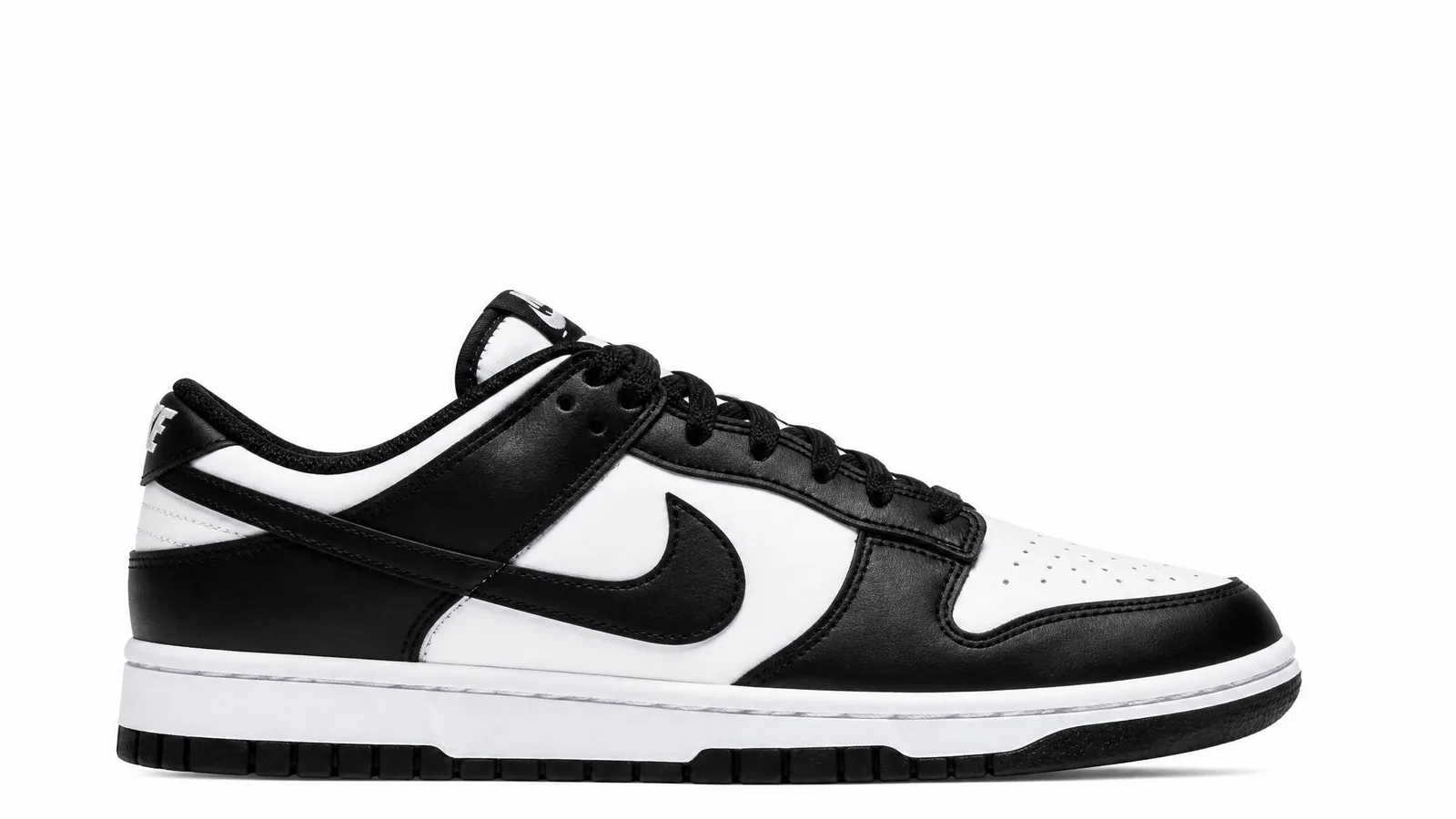
The Nike Dunk Low Retro White/Black, style codes DD1391-100 (men's) and DD1503-101 (women's), is the Panda Dunk in black and white. It launched at $100 in March 2021, sold out instantly, and then Nike restocked it so many times that resale collapsed. A StockX observation dated September 23, 2026 showed a buy-now of roughly $52. The gap between what you paid and what it is worth today is real, and the reasons are not complicated.
This is the honest collector's guide: not what you hoped the pair is worth, but what the data shows and the 3 levers that still move the number.
How Nike Made the Panda Ubiquitous
The Panda Dunk restock history explains the entire price story. The shoe launched on March 10, 2021 at a Nike Dunk Low Panda retail price of $100 and sold out the same day. That initial gap between supply and demand created the first resale premium.
Then Nike kept releasing it. The restocks came through 2022, 2023, and 2024 at a pace House of Heat characterized as near-monthly. Each drop added thousands of pairs to a market that was already cooling. When buyers know more supply is coming at predictable intervals, resellers cannot hold inventory for appreciation. The premium dies.
At the December 2023 restock, Nike raised the retail price from $100 to $110. That price increase reflected a standard pricing adjustment across the Dunk line, not a signal of scarcity. Resale prices on the secondary market continued to fall regardless.
The supply pressure is not over. A sneaker news account on Instagram confirmed a new Dunk Low Next Nature in another black-and-white colorway for 2026, which adds yet another option for buyers who want the look without paying above retail for the original. If you own multiple Dunks and want to see where each one sits, a guide to organizing a Nike Dunk collection covers how GRs, SBs, and collaborations break down.
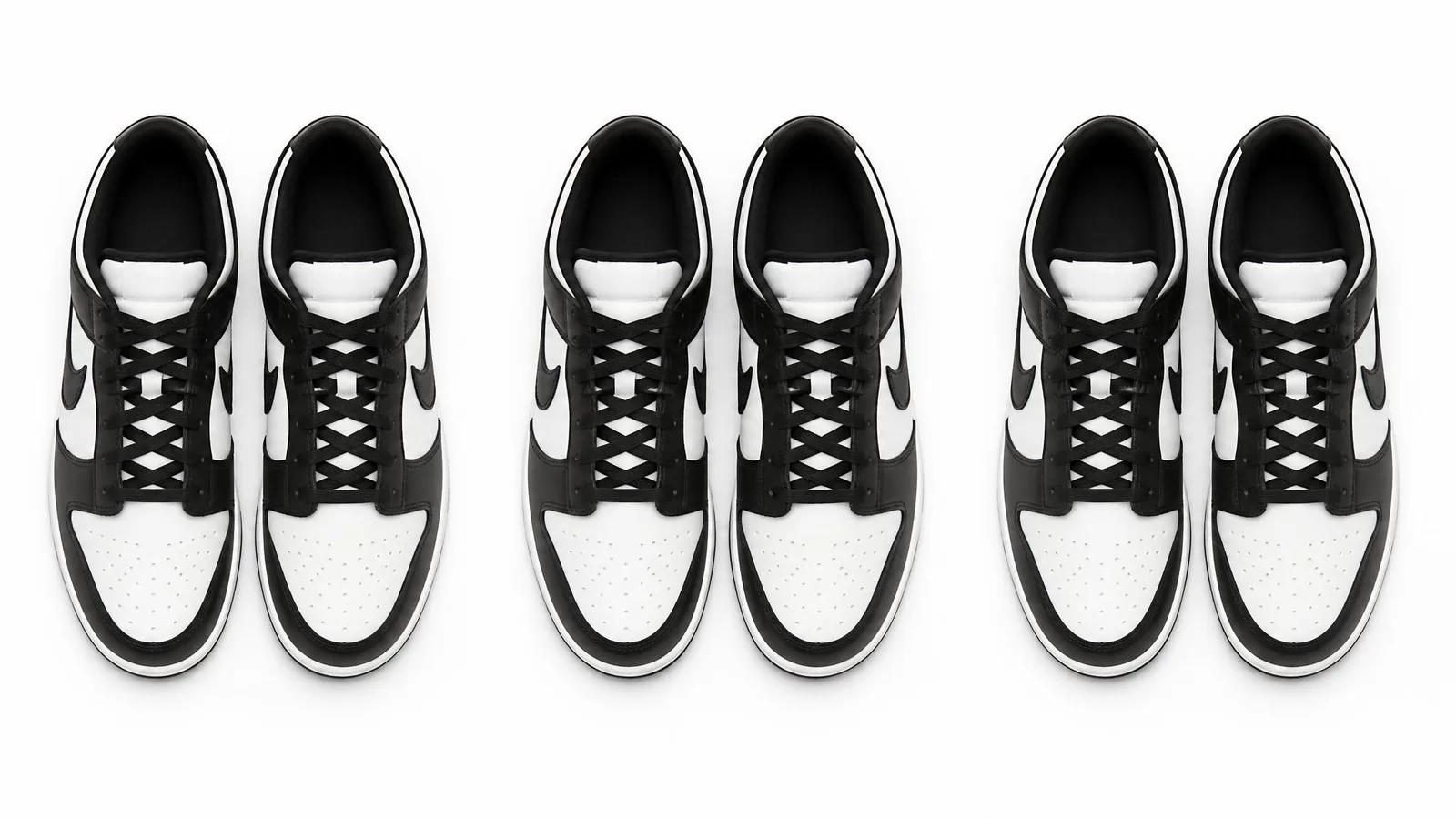
From $100 at Launch to Where It Sits Today
Panda Dunk resale value trends follow one arc: a sharp spike, then a long slide driven entirely by supply.
Start with a dead stock men's pair bought at retail on launch day for $100. During the 2021 to 2022 peak, that same pair traded in the $250 to $350 range on the secondary market, a window Denim Exchange records captured across that period. Buyers who missed the initial drop were paying 2.5x to 3.5x retail to get a pair.
Repeated restocks ended that window. By mid-2022 through 2023, buyers could add to cart online or walk into a store. The resale premium collapsed because the scarcity was gone.
The 2026 data tells the rest. As of a StockX observation dated September 23, 2026, the buy-now sat at roughly $52, with a 12-month range spanning $25 to $177. The 3-month range narrowed slightly to $25 to $150. A volume-weighted figure adds context: Underpriced, citing StockX data recorded on July 14, 2026, found a 3-month average of $68 across 3,027 completed sales. That average reflects what pairs actually moved for, not outlier asks.
For most mid-range sizes in worn condition, the pair sits below both the original $100 retail and the revised $110. Platform fees and shipping reduce net proceeds further. These figures are observations from specific dates, and prices change. For a live rack value estimate based on recent resale marketplace data, rack your pair in CYKI and check the pair P/L against what you paid. You can also benchmark the Panda against the broader Dunk market through the Nike Dunk cohort in the CYKI 100.
The Three Levers That Still Move the Price
Whether Panda Dunks are worth the money on the secondary market depends on 3 factors specific to your pair, not on the colorway's cultural status.
-
Size. Nike's restock quantities at the smallest and largest ends of the size run are proportionally smaller than for mid-range sizes. Very small and very large sizes tend to retain a modest premium relative to sizes 9 to 11, where supply is deepest. If you want to understand why shoe sizes affect resale value beyond the Panda, that breakdown covers the mechanics.
-
Condition. The difference between a dead stock pair and a worn pair is significant in dollar terms on any authenticated platform. StockX and GOAT require authentication and typically mandate the original box for dead stock listings. A worn pair listed without authentication documentation trades at a substantial discount. Understanding how condition is graded helps you price your pair realistically before listing.
-
Box presence. The box is not cosmetic. Many authenticated platforms treat an original box as a requirement for a dead stock listing. A pair without its box may still be listed, but at a lower condition tier. That reduces both the price ceiling and the pool of buyers willing to pay top dollar.
A worn mid-size pair without its box is competing directly with new retail supply. That is the honest math.
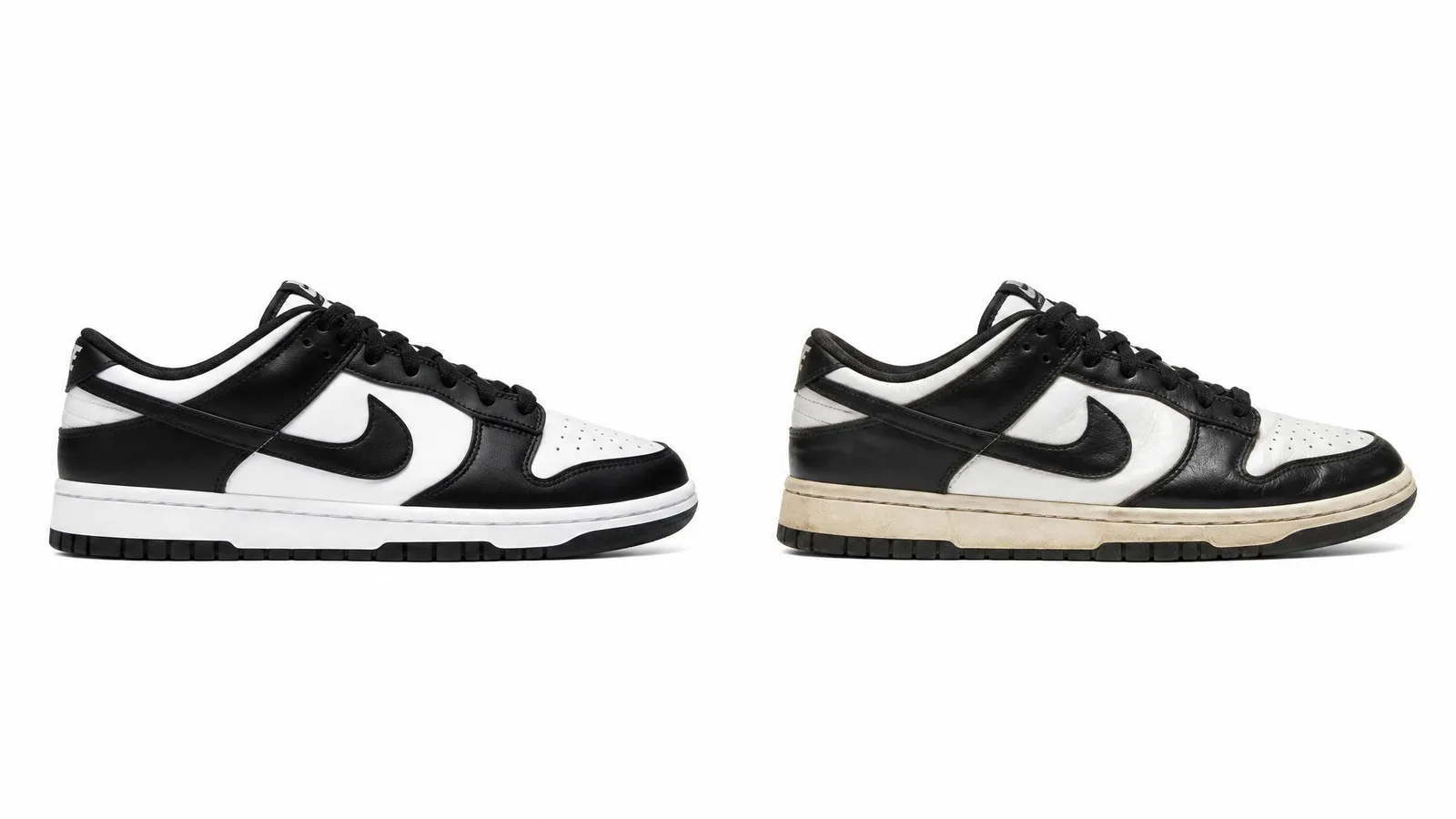
How to Tell If Your Panda Dunks Are Fake
The Panda is the most widely faked Dunk on the market. High volume makes counterfeits easy to move because casual buyers assume that a common shoe does not attract fakes. It does.
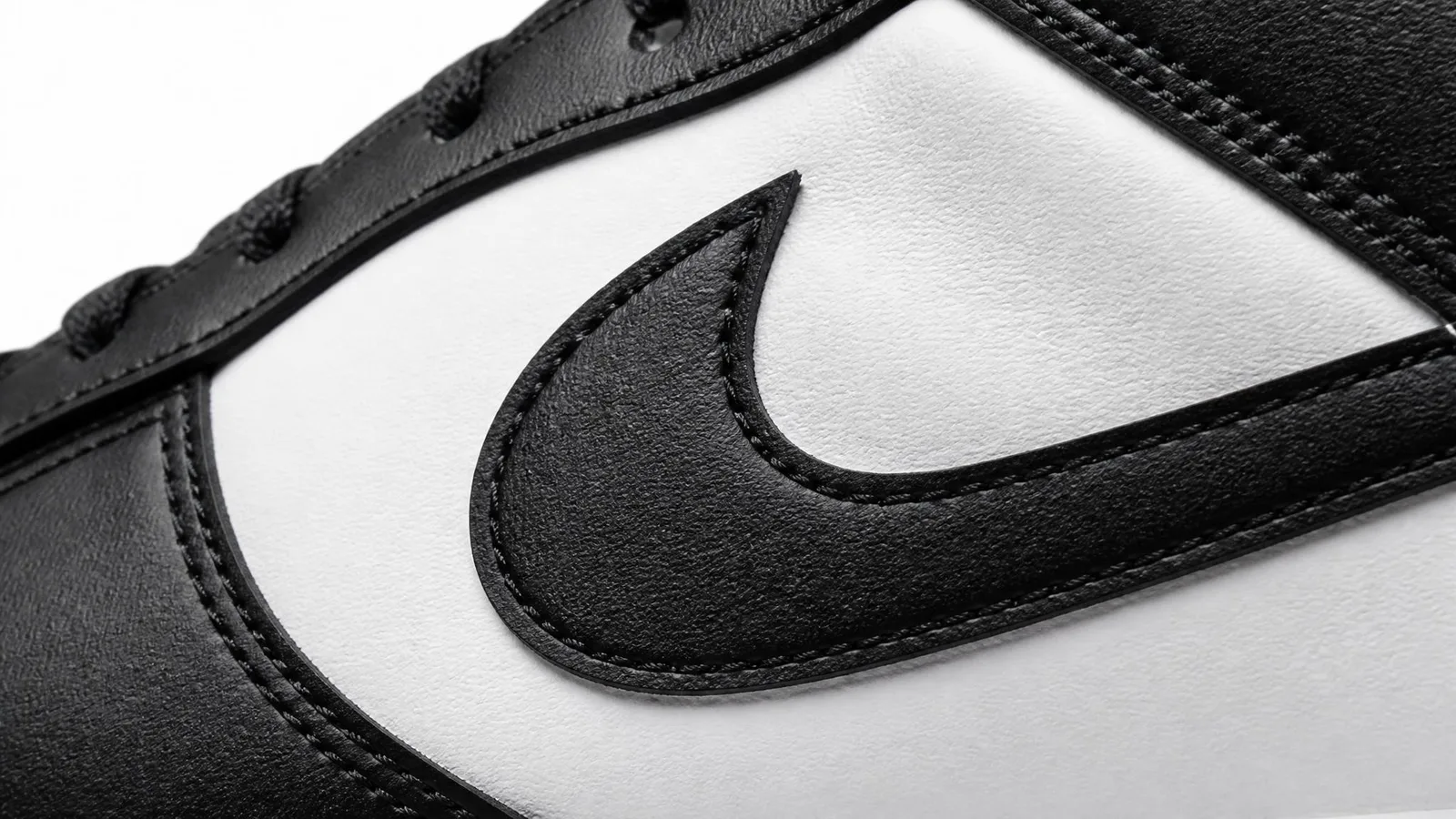
One concrete tell works without tools, UV light, or specialist equipment. On an authentic pair, the top of the Swoosh has a pronounced, gradual curve. On a fake, that curve is abrupt and the logo appears visually thicker overall. Hold the shoe at eye level and look at the tip of the Swoosh from the side. The difference is subtle on a quick glance, which is exactly why most buyers miss it.
The Swoosh curve is one tell, not a guarantee. For any second-hand purchase above a threshold where you would feel the loss, use a professional service. A comparison of authentication services breaks down how the major options stack up.
Rack Your Pandas in CYKI and See the Pair P/L
The market data in this piece tells you how much Panda Dunks cost on specific dates from specific sources. CYKI tells you what your pair is worth against what you paid.
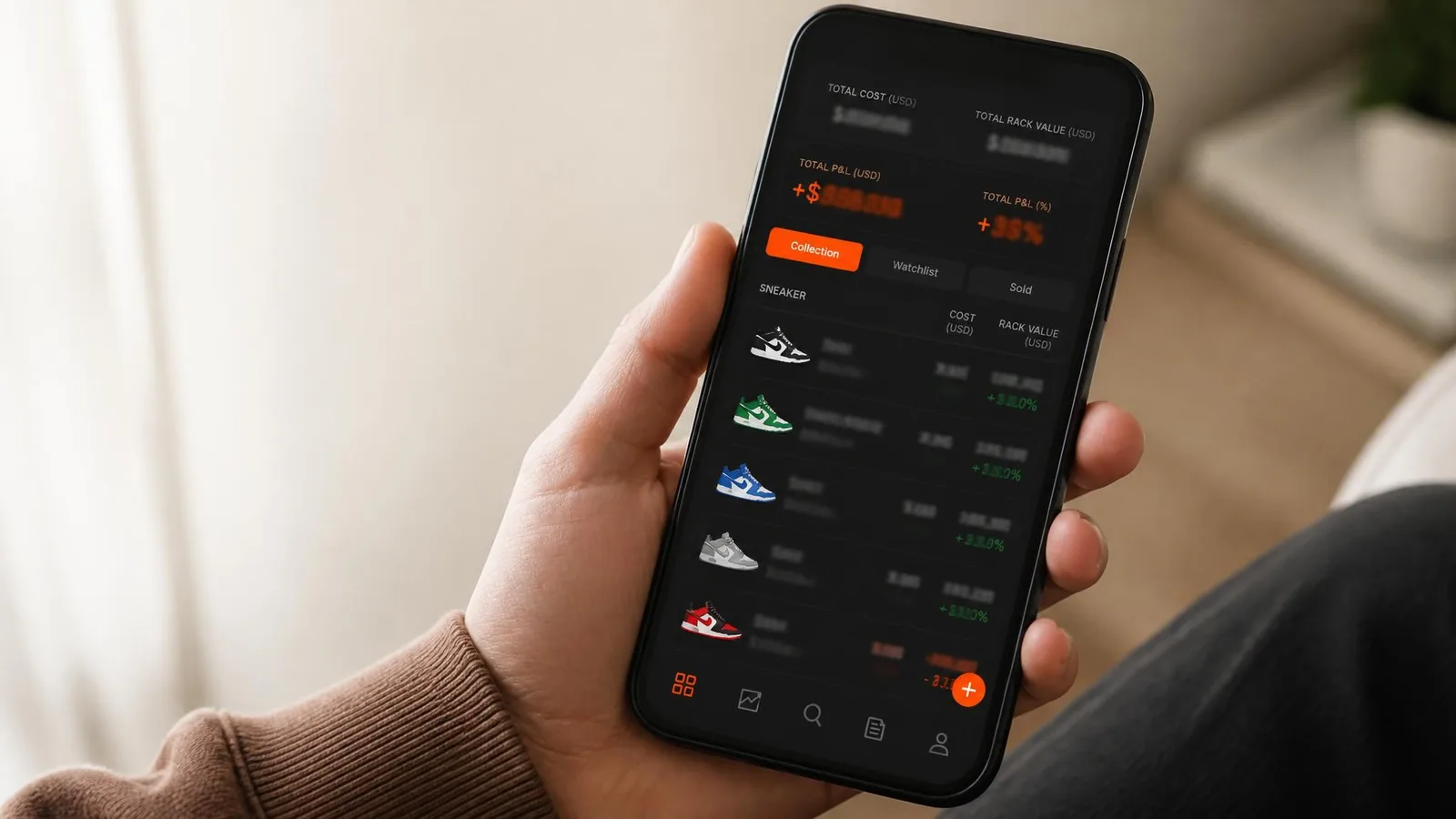
Rack the pair in CYKI, enter your cost basis, and the pair P/L updates against rack value, which is estimated from recent resale marketplace data. If you own more than 1 Dunk, the Nike Dunk cohort in the CYKI 100 lets you benchmark your collection against the broader market.
Rack your Pandas in CYKI and see the pair P/L against what you paid.
FAQ
Does the box matter for Panda Dunk resale?
Yes. Authenticated platforms such as StockX and GOAT typically require the original box for a dead stock listing. A pair sold without its box is listed at a lower condition tier, which reduces the asking price ceiling and the pool of buyers willing to pay top dollar. Box-present pairs command a meaningful premium over box-missing pairs in equivalent condition.
Which Panda Dunk size holds the most value?
Extreme sizes at both ends of the size run tend to retain a modest premium relative to the most common sizes. Nike's restock quantities at those sizes are proportionally smaller. If you are in a common size (men's 9 to 11), you are competing with the widest supply and the lowest price floor.
Is there a price difference between men's and women's Panda Dunks?
The men's pair (DD1391-100) and the women's pair (DD1503-101) are separate SKUs with their own resale histories. Size overlap exists in the smaller end of the men's run and the larger end of the women's run. For overlapping sizes, check the specific SKU's data on the platform you are using rather than assuming a single price applies across both.