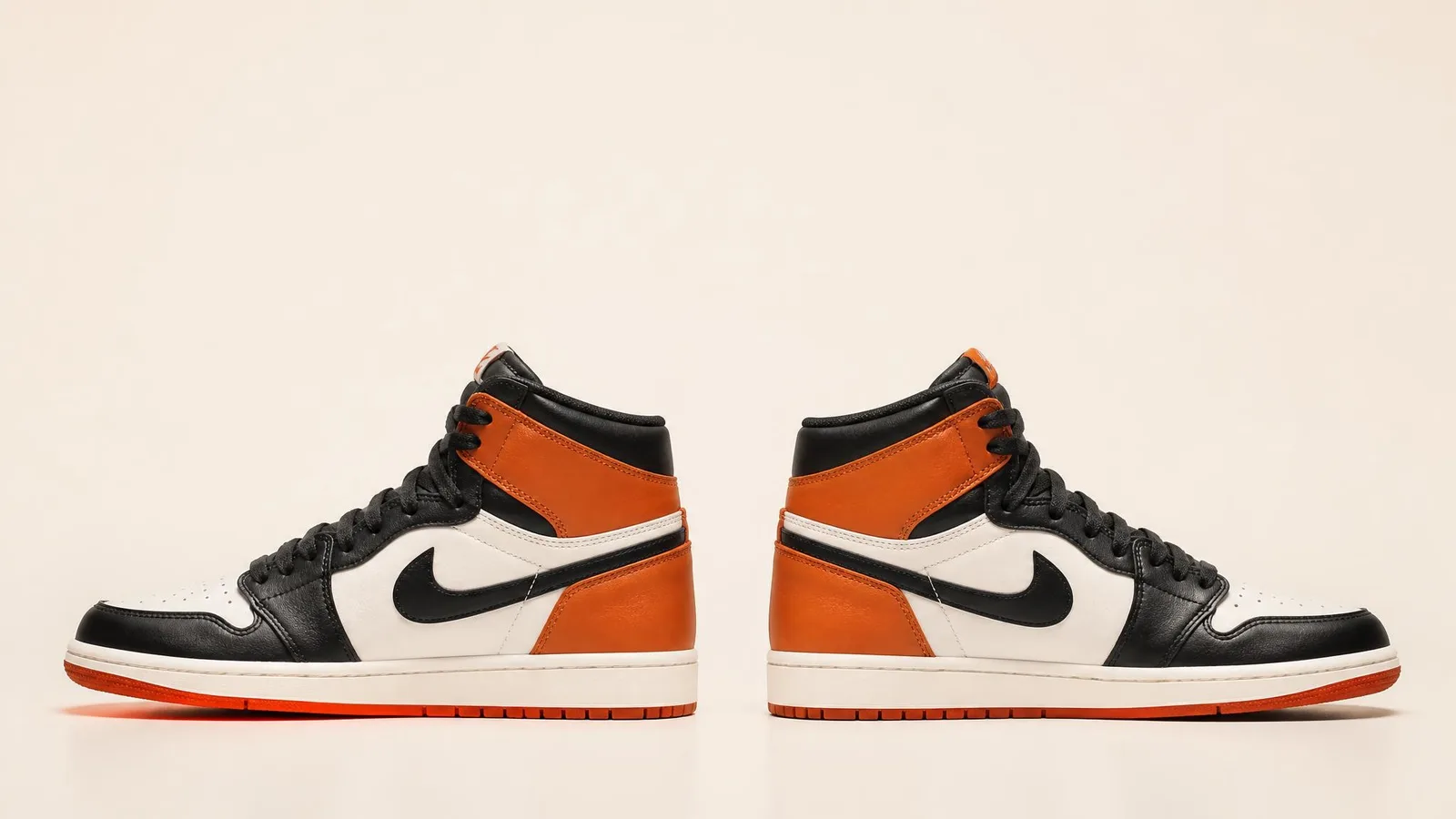
You own 2 identical pairs of the same Jordan 1 colorway. One tongue tag reads "Made in Vietnam." The other reads "Made in China." Both are authentic.
The country on your sneaker's origin label is a legal trade compliance marking. It identifies where the shoe was manufactured under customs law. It is not an authenticity certificate, and it is not a quality grade. Whether a pair is genuine depends on whether it came from an authorised factory, and that is something no origin label can tell you.
This piece explains what the country-of-origin label on a sneaker means, where Nike shoes are manufactured across Vietnam, Indonesia, and China, and why the same Nike shoe ships with a different country label depending on production allocation. It does not teach authentication. If you need a pair verified, that is a different process entirely.
What the Country-of-Origin Label on a Sneaker Means
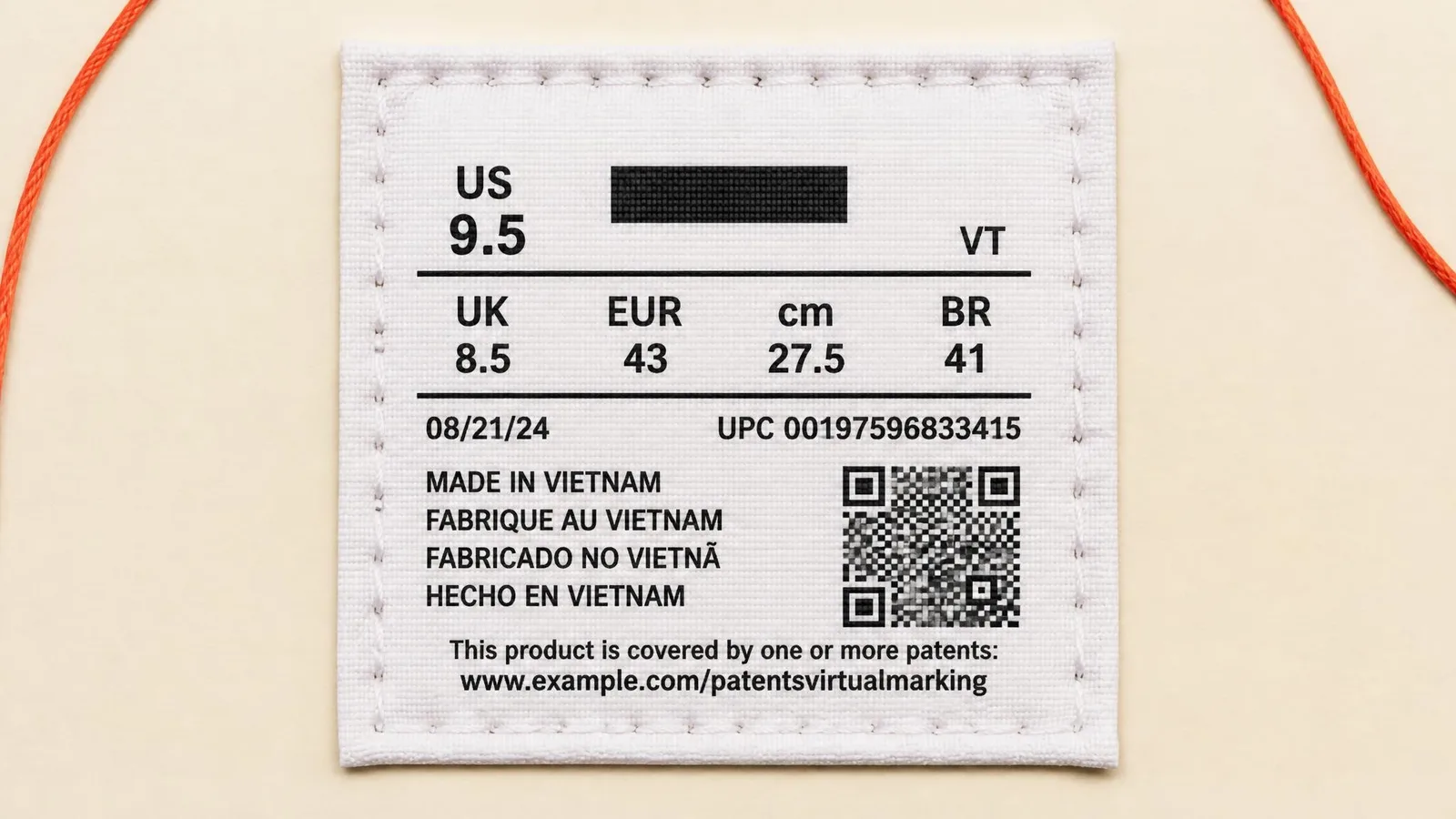
The label identifies where the product was "substantially transformed." That is a trade-law concept. It means the country where the shoe took its final manufactured form. It is not a quality designation, a factory rating, or a stamp of approval.
On a sneaker, you will typically find this marking on the tongue tag, the insole stamp, or the box label. Some pairs carry it in more than 1 location. The placement is a legal requirement, not a branding decision.
The label tells customs authorities and consumers which country is responsible for final manufacture. That is its entire purpose. It says nothing about which factory made the shoe, whether that factory is authorised by the brand, or what quality controls were applied during production. A tongue tag reading "Made in China" and one reading "Made in Vietnam" communicate the same type of information: geography, and geography alone.
Nike's Manufacturing Countries: Vietnam, Indonesia, and China
Nike's footwear production spans 96 finished goods factories across 11 countries. The 3 largest by volume are Vietnam, Indonesia, and China. Roughly 51% of Nike footwear comes from Vietnam, 28% from Indonesia, and 17% from China, a breakdown drawn from Nike's FY2025 annual report and documented by Cosmos Sourcing. Those 3 countries account for the vast majority of every Nike and Jordan shoe on the market.
The largest concentration of Nike suppliers in Vietnam sits in the southern industrial region around Ho Chi Minh City, a cluster that Vietnam Briefing reported on in 2026. Indonesia's factories are concentrated on Java. China's are spread across several provinces in the south and east.
Nike publishes an interactive Manufacturing Map at manufacturingmap.nikeinc.com. It lists every independent factory and material supplier by name and location. If you want to see the authorised supply chain for yourself, the data is public.
Jordan Brand is a wholly owned subsidiary of Nike, Inc. Its shoes are manufactured within the same authorised factory network. Jordan Brand's authorised factories sit in Vietnam, Indonesia, and China. A Jordan 1 labeled "Made in Vietnam" and one labeled "Made in China" are both products of that network. The label tells you geography. It does not tell you anything else.
Why a Jordan 1 Can Say "Made in China" and Still Be Real
Nike allocates production of a single model across multiple authorised factories in different countries at the same time. The reasons are operational: managing global capacity, responding to tariff shifts, and meeting regional demand on schedule. No single factory produces every unit of a popular release.
This means 2 pairs of the same Jordan 1 colorway, bought from the same retailer in the same week, can carry different country-of-origin labels. Both are the same product. Both were built to the same specification. The label difference reflects which factory in the network filled that portion of the order.
Nike's manufacturing geography has shifted over decades. Primary production moved from South Korea and Taiwan in the 1980s and 1990s to China in the 2000s, then progressively toward Vietnam and Indonesia from the 2010s onward. That shift tracks labour costs, trade policy, and logistics infrastructure. It does not reflect a quality tier system. No authorised country replaced another because it produced a better shoe.
Counterfeits come from unauthorised factories. Those factories can be located in any country, including the same countries where authorised production happens. The country printed on a counterfeit pair's tongue tag reflects where the counterfeit operation chose to print. It is not a useful signal in either direction.
What the Label Does Not Prove
The label cannot confirm whether the factory that made the shoe is authorised by Nike. 2 shoes with identical country labels can come from an authorised factory and an unauthorised one. The label does not distinguish between them.
The label carries no quality ranking between countries. Nike applies the same quality standards and inspection requirements across its authorised factory network regardless of geography. Whether a 'Made in China' label means a sneaker is fake is the wrong question. The right question is whether the pair came from an authorised factory. No country label answers that.
Whether Jordan shoes made in China are fake follows the same logic. Jordan Brand operates authorised factories in China. A China label on a Jordan shoe is not evidence of inauthenticity. It is evidence that the shoe was assembled in China. Full stop.
Counterfeit producers replicate the entire shoe, interior labels included. The country printed on a counterfeit tongue tag reflects a printing decision, not an origin fact you can trust. If you want to verify a specific pair, that requires a different process. You can read more about what authentication services actually cover.
Recording Country of Manufacture in Your Sneaker Collection
Country of manufacture is a useful data point to record when cataloguing a pair, in the same way you record colorway, size, or condition. You can read more about what to record when cataloguing a pair. It is a label field, nothing more.
It carries no authentication weight and no value signal. Your rack value is an estimate based on resale marketplace data. The country on the tag is not part of that calculation.
In CYKI, you can record country of manufacture as a label field alongside your other pair details. Whether you add pairs manually or use a migration feature later, the field is there for completeness. Do not read anything into it beyond what the label itself says.
The factors that drive the estimated value of a pair in your rack are model, colorway, size, how to grade sneaker condition, and market demand. Country of manufacture is not among them. Record it if you want a thorough catalog. Then move on.
Frequently Asked Questions
Are Nike shoes made in Vietnam authentic?
Yes. Vietnam is Nike's largest authorised manufacturing country by volume, accounting for roughly 51% of footwear production in Nike's FY2025 reporting. A Vietnam label on your pair means it was assembled in Vietnam. It is not a guarantee of authenticity on its own, but Vietnam is where the majority of authorised Nike production happens.
Why does my Jordan 1 say "Made in China"?
Because Nike allocated that portion of the production run to an authorised factory in China. Jordan Brand operates within the same factory network as Nike. If you collect Jordans and want to keep a thorough record, see how to track your Air Jordan collection. China remains 1 of the 3 largest manufacturing countries for Nike footwear. The label reflects where the shoe was assembled, not whether it is real.
Are Nike shoes made in Indonesia real or fake?
Indonesia accounts for roughly 28% of Nike's authorised footwear production. A shoe assembled there is not inherently suspect. The label confirms Indonesian manufacture. It does not confirm or deny authenticity.
How can I tell if Jordans are fake by checking the country label?
You cannot. The country-of-origin label is not a reliable authentication tool. Counterfeit producers replicate labels, including the country marking. If you need to verify a specific pair, professional authentication is the path. Read more about what authentication services actually cover.
Does country of manufacture affect sneaker resale value?
It does not. Resale value is driven by model, colorway, size, condition, and market demand. For a deeper look at why shoe sizes affect resale value, that variable alone is worth understanding. Country of manufacture is not a pricing variable in resale marketplace data. Recording it in your collection is useful for completeness, but it has zero impact on what your pair is estimated to be worth.
Conclusion
The country on your shoe's origin label tells you where it was manufactured under trade law. It does not tell you whether the factory was authorised, whether the pair is authentic, or whether it is worth more or less than an otherwise identical pair with a different label. An origin label does not guarantee quality because brand-set quality standards apply uniformly across the authorised factory network, not by geography.
Record country of manufacture in your rack as a label field if you want a complete catalog. It is useful context for what drives your collection's estimated value, but the country on the tag is not part of that equation. Log it and move on.