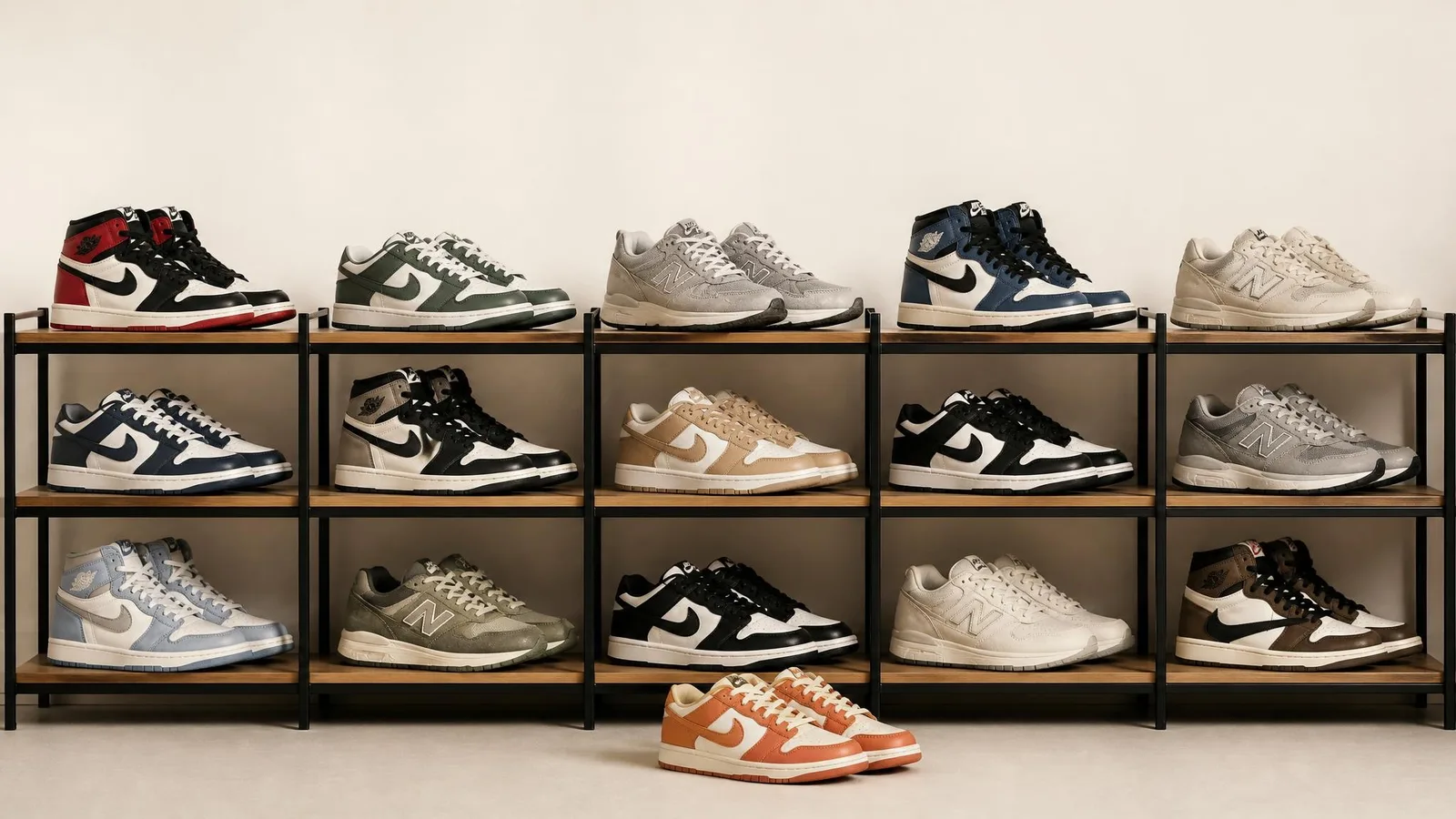
The rack has outgrown the room. New pickups sit on the floor because the shelves are full, and the move date is circled on the calendar. Knowing how to downsize a sneaker collection starts before a single pair hits a listing. A good downsize sets a clear goal, protects grails first, builds a consider-leaving list, estimates real net proceeds, and stages sales in small batches. Wear frequency alone is a blunt tool. This guide is built for collectors who hold pairs for more than rotation, and it starts with reviewing your rack in full before anything leaves it.
Start With a Goal, Not a Pile
Grabbing pairs off the shelf at random leads to regret or paralysis. Pick one of 3 goal types before you open the rack.
The first is space: reclaim a specific number of shelves or boxes. The second is cash: a target net figure after fees, informed by your rack value and cost-basis P&L on each pair. The third is a collection size ceiling, a hard pair count that forces intentional choices going forward. A Complex writer documented adopting a strict 10-pair cap, a move that reshaped purchasing habits entirely.
The goal determines the scope. If you only need to free 10 shelf slots, you do not need to review 60 pairs. Write the goal down before you start. Decisions made without a reference point drift toward keeping everything or panic-selling things you will miss.
Audit Your Rack Before You Decide Anything: A Sneaker Collection Audit
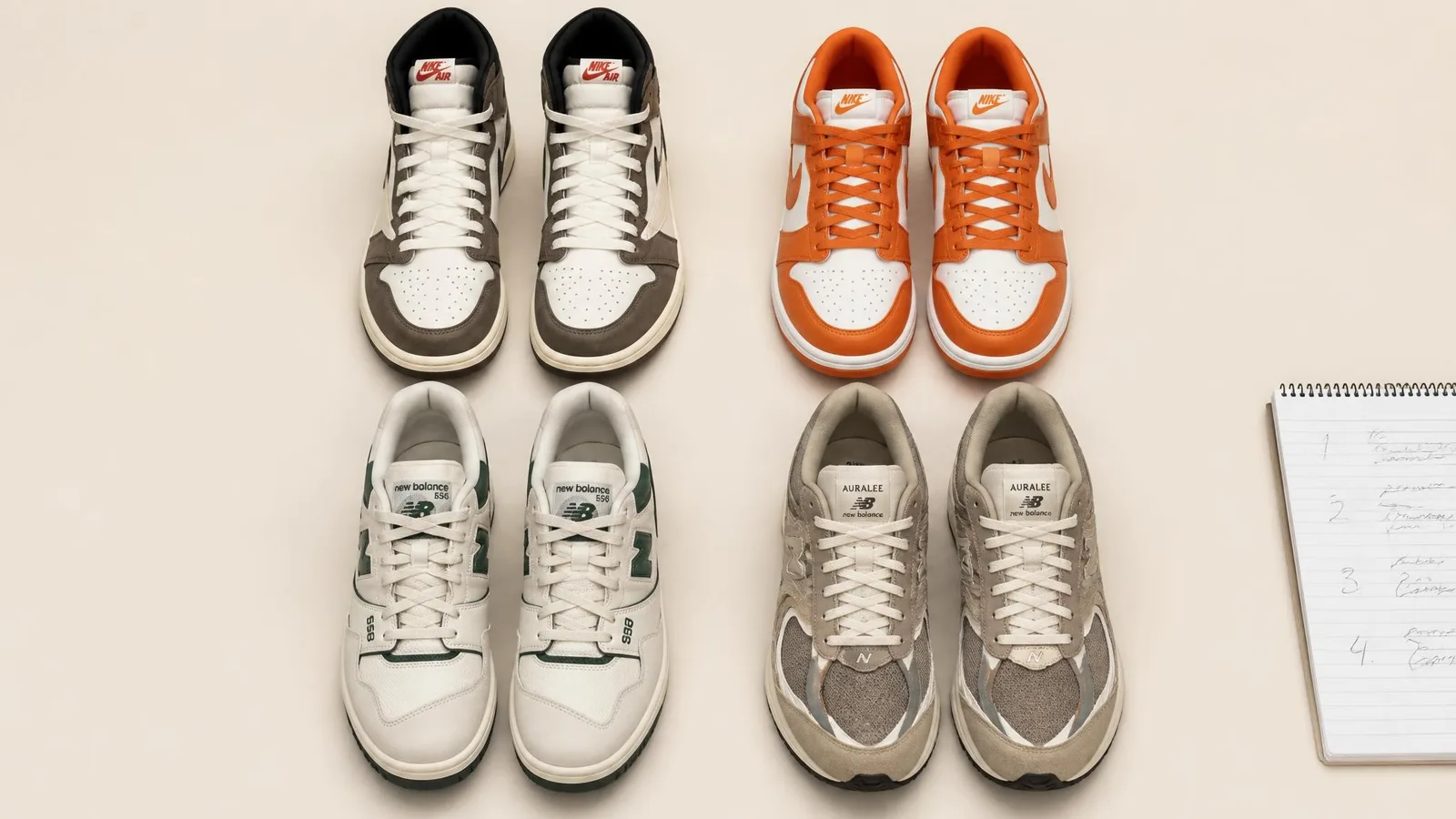
You cannot make good decisions from memory. Before a single pair goes on the consider-leaving list, every pair needs to be accounted for. Brand, model, colourway, what you paid, and an estimated current value based on resale marketplace data. Sneaker Freaker's downsizing guide positions this catalogue step as the foundation before any sell decision, and the collector community reinforces it consistently.
A spreadsheet works. It creates its own maintenance problem, though. Every price you looked up 6 months ago is already stale. Purpose-built collection tools pull estimated rack values from resale marketplace data automatically, so the picture you work from reflects current market conditions. You can catalog your full collection in a weekend if you set aside a few hours.
The audit also surfaces surprises: duplicates you forgot you owned, pairs whose estimated rack value has shifted significantly since purchase, and dead stock pairs whose unworn condition changes how they should be priced. That information shapes every decision that follows.
Protect Your Grails First
Grails are not just the most expensive pairs on your rack. They are the ones you could not replace at any price. A Travis Scott Jordan 1 tied to a trip. A collaborative New Balance from a run that is never coming back. A Dunk colourway that marks a specific chapter. The market price is irrelevant here. What matters is whether the pair is genuinely irreplaceable.
The test is simple: would selling this pair feel fine in 12 months? If the honest answer is no, it does not go on the consider-leaving list. Full stop.
Limited collaborations and pairs connected to cultural moments can sit at a price trough during a downsizing window. Selling now to declutter could mean letting go of the one pair that recovers most later. You can track your grails over time so you know when conditions shift, but protection is the default until proven otherwise.
Protection is not hoarding. It is being deliberate about what earns its place on the rack and refusing to let declutter momentum override real attachment.
Low Wear Does Not Mean a Pair Should Go
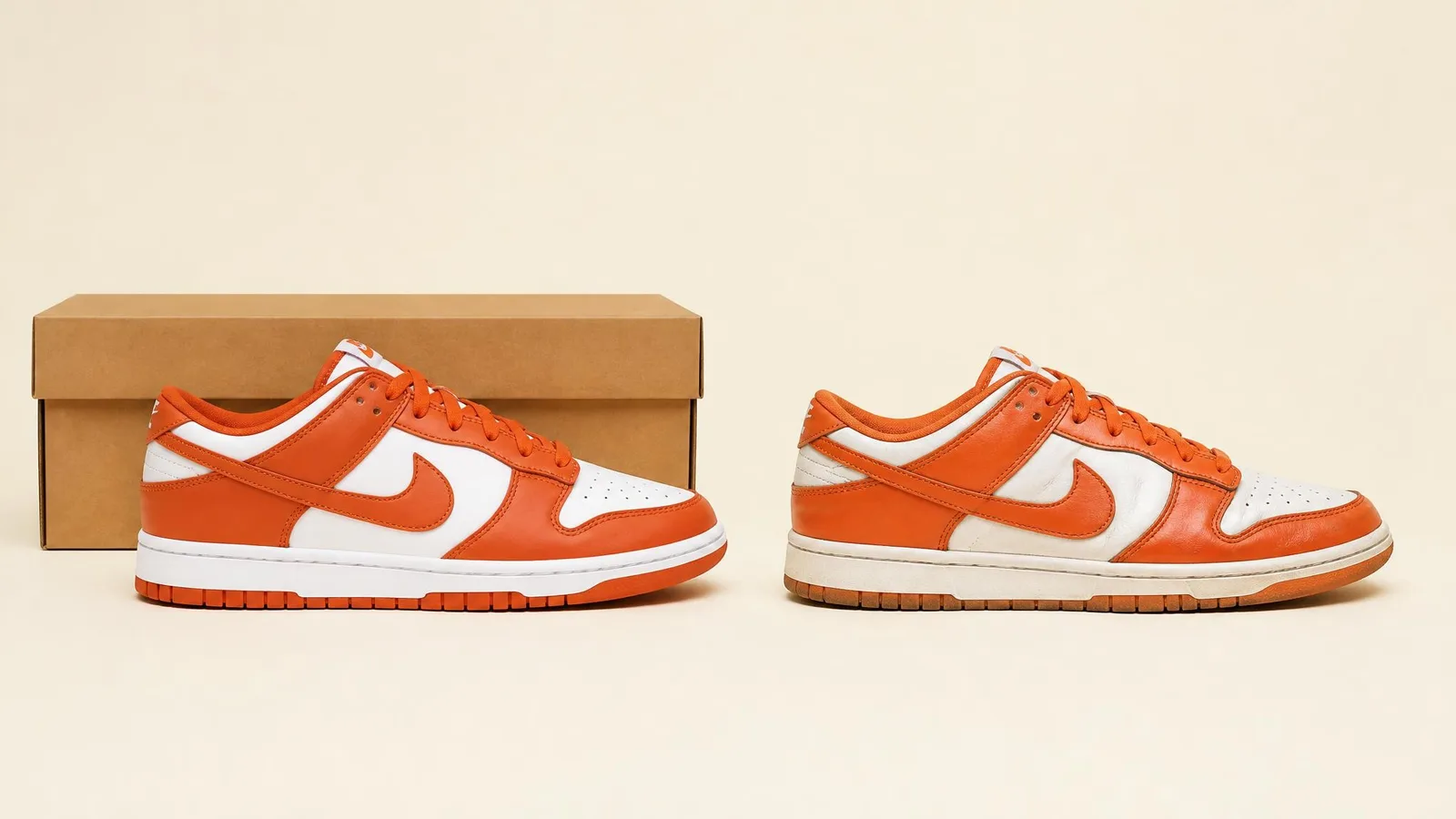
A pair worn 0 times in 2 years might be dead stock held intentionally, a pair waiting for the right occasion, or a piece you are not ready to release. Wear frequency is a data point. It is not a verdict.
The pairs most worth questioning are unworn duplicates of the same model in the same size, pairs you cannot recall why you bought, and pairs where the meaning has genuinely faded rather than simply been deferred. Those are different categories, and they deserve different answers.
A collector versus reseller mindset matters here. A reseller's decision is straightforward: move what is not moving. A collector weighs personal meaning, cultural significance, and resale timing as equally valid factors. One Reddit collector reduced their collection from 50 to 24 pairs while adding 8 new pairs during the same period, a reminder posted to r/Sneakers in 2022 that the process is rarely a clean break. Attachment is real and inconsistent.
The right question is not "Have I worn this?" It is "Would letting this go feel fine in a year?"
How to Build Your Consider-Leaving List
The consider-leaving list is not a commitment to sell. It is a staging ground. Build it before any pair goes live.
- Start with duplicates. Unworn pairs of the same model, same size, no meaningful distinction between copies. These are the clearest candidates.
- Flag faded purchases. Pairs where the reason for buying has completely disappeared. No story, no rotation spot, no sentimental hold.
- Check the numbers. For pairs where you have no personal attachment, compare estimated rack value against your cost-basis P&L. If the return is favourable based on resale marketplace data, the pair is a reasonable financial candidate. If not, holding may make more sense.
- Add uncertain pairs with a cooling-off window. Pairs that no longer fit your rotation or aesthetic direction but that you are not certain about go on the list with a 2-week revisit date. If the feeling holds, they move forward. If doubt creeps back, they stay.
- Adopt a one-in-one-out rule going forward. This framework, widely cited across collector communities and documented in a NikeTalk discussion thread, prevents the list from becoming necessary again. When a new pair arrives, a candidate goes on the list.
Before any pair moves from the list to a live listing, check current estimated resale values from resale marketplace data and factor in realistic net proceeds. A pair on your watchlist for price movement is not list-ready yet.
What Selling Actually Returns: Net Proceeds and Platform Costs
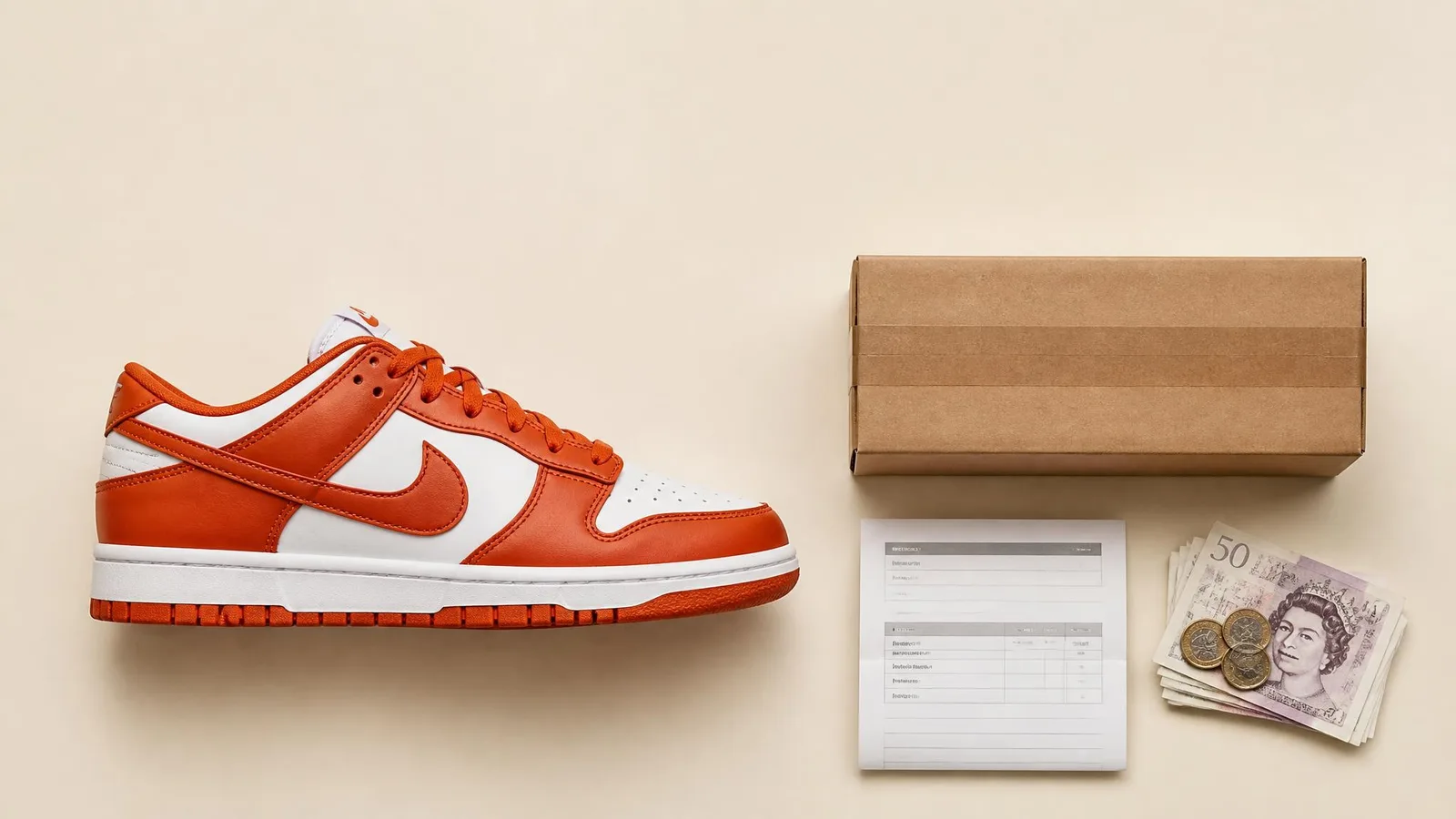
The gap between asking price and net proceeds catches most first-time sellers off guard. Platform seller fees, authentication charges, and shipping costs all reduce what you receive. Depending on your jurisdiction, tax obligations may reduce it further.
Resale platforms take a percentage of the final sale price on the seller's side before shipping is deducted. The precise rate varies by platform and changes over time. Check current fee schedules directly on each platform before pricing a pair. Do not rely on a number someone posted in a forum last year.
Peer-to-peer sales avoid platform fees but carry a different cost: buyer dispute exposure. On major resale platforms, buyer dispute policies can result in returns or chargebacks even when you acted in good faith. Peer-to-peer platforms remove the authentication layer and shift all condition risk to you as the seller.
A practical approach: before adding a pair to the consider-leaving list as a financial candidate, estimate what your pairs are worth using resale marketplace data, then subtract realistic costs. Compare that net figure against your cost-basis P&L to calculate your cost basis accurately. If the net return does not justify the sale, hold the pair or adjust your goal. Rack value is an estimate, not a guaranteed sale price.
Sell in Batches, Not All at Once
Listing everything at once creates its own problems. It floods your own supply, which can depress individual sale prices if you are selling multiple pairs from the same silhouette family. It overwhelms the logistics of packaging and dispatch. It removes the option to pull a pair back if you change your mind.
Small batches of 3 to 5 pairs let you learn platform mechanics, test price points, and adjust based on early results before committing the rest of the list. Dead stock pairs and collaborations benefit the most from staged timing rather than a rushed single-event listing.
Staging also gives you time to reassess. Pairs that felt obvious at the start of the process sometimes look different after the first batch sells and you see how the rack feels without them.
Fraud risk is worth acknowledging before your first listing. Buyer dispute policies on major platforms can result in returns even when a seller acted in good faith. For high-value pairs, understand the platform's dispute process before listing. This is not alarmist. It is preparation.
Frequently Asked Questions
Should I sell my sneakers or keep them? If removing the pair would feel fine in 12 months, it is a reasonable candidate. If there is any genuine doubt, keep it off the live listing and put it on the consider-leaving list with a cooling-off period instead.
How do I avoid sneaker downsizing regret? The consider-leaving list plus a cooling-off period before any live listing is the strongest structural guard. Selling in small batches also preserves the option to stop at any point.
What sneakers should I keep in my collection? Grails, pairs with irreplaceable personal meaning, limited collaborations you could not reacquire, and any pair where the honest 12-month test produces doubt. Those stay.
Does wearing a pair ruin its resale value completely? Condition affects estimated value, but a worn pair is not necessarily unsellable. Honest description and condition grading matter more than the binary dead stock or worn question.
How do I know what my collection is actually worth before I start? A full audit using a tool that pulls estimated values from resale marketplace data gives you a baseline. Rack value is an estimate, not a guarantee, but it is more useful than memory or a price you looked up months ago.
Conclusion
Downsizing a sneaker collection is a decision process, not a disposal event. The sequence matters: goal first, full rack audit, grails protected, consider-leaving list built, net proceeds estimated, then small batches listed. The single most protective habit is the consider-leaving list. Build it before any pair goes live.
Start the audit in CYKI. Get estimated rack values from resale marketplace data for every pair you are considering, and let the data inform the list. When you are ready to sell sneakers online, the numbers will already be in front of you.